
You feel the potential inside you. You know you’re capable of so much more than what your surroundings expect. The path society outlined — the conventional one — doesn’t work for you. It’s that traditional route where you follow the script, the template, the pre-made plan that’s supposedly for everyone.
You’re supposed to grow up a bit, go to school, get good grades, then go to college or university, keep getting good grades so you can become a rookie in some career you had to choose when you didn’t understand anything about yourself, your strengths, or what you even want to do in life. Yet somehow, miraculously, you need to make this choice, a decision that will impact your entire future from that point forward.
And this decision is critical because if you choose the wrong specialization, your life is doomed. You won’t be able to earn enough money to support yourself, to support your family that you’re supposed to start after you finish your education. You’ll need to buy property on credit that your salary from your new career can afford. You’ll need to buy a car and several pieces of furniture from a list.
Somewhere during this period, either during your university life or after, you’re supposed to find your spouse, create a family with them, have children. And then comes the next wonderful algorithm. You wake up. You wake up with difficulty, because today will be another hard day, and you have to do things you don’t really want to do, maybe things you really hate, things that make you sick, and there’s absolutely no pleasure in starting this day.
In your mind looms the ghostly goal called “Friday,” Friday evening, when you can go party with your work friends at the local bar. Discuss the latest political news, come to some conclusions, and so on. But for now, you need to get ready for work. You make your way through traffic jams and other people, trying to find some meaning in this exercise.
Well, I did feel like this conventional path wasn’t for me. And throughout my conscious life, I’ve unconsciously been searching for ways to avoid this script, trying all possible methods that somehow differ from those prescribed in this scenario, in which I had no desire to become an actor.
I talk more about this rejection of the conventional path in my article on The Freedom Equation: How To Develop The Skills That Create Location Independence, where I explore why the standard life script never felt right to me.
I was 10 or 11 when I tried my first business in quotes — when my neighbor and I wanted to organize a lemonade stand near our house and feed passersby with meals we prepared from instant noodles, tea, coffee, and a small dessert. We were going to sell this literally for a few cents, adding a small margin to the cost of purchasing the goods, which we naturally bought with our parents’ money.
The next attempt came many years later after I finished university. My girlfriend and I organized a flower business and launched a flower salon in the city where I lived then, and started selling them. Everything went pretty well, we had such a side income because at that time I was working at my second job in an IT company, earning good money. I had money to cover the loan we took for renting the premises and purchasing the first batch of goods to get the machine spinning.
And it actually spun quite well, we had a side income, and we developed it to the point where we could even sell it. And this was, in fact, the first real experience of feeling out the life model called “business.”
There was something attractive and wildly appealing about it — the fact that we solved all the problems ourselves, no one told us what to do. The tasks were, of course, much bigger, the problems were much more complex than when you work at a job, but we did it ourselves, we did it by choice, it was interesting because it was ours. And it was a feeling of freedom, real independence from other people, and this feeling, which didn’t leave me alone, in fact, doesn’t even now.
This feeling is so attractive and addictive, like a drug, that you want to return to it again and again. But then things weren’t so rosy. There was the digital nomad life in Bali, when I discovered this lifestyle in 2014, when it wasn’t trendy and ubiquitous yet, when Bali wasn’t as crowded as it is now, and popular with everyone. Back then, Peter Levels hadn’t become famous with his digitalnomads.com, back then Canggu was 90 percent occupied by rice fields, not tourist service buildings, and there were so few people on the beaches that you could enjoy the sunset without Instagram poles constantly interrupting your view.
From that moment, I began my path as a startup founder because it was the second way I discovered to build a business. And here the playbook tells you that you need to come up with a brilliant idea, find investors to implement it, take money from them, go build a business, not necessarily looking for clients, the main thing is to pretend that everything is going well, report regularly to your investors and everyone involved in your business, grow capitalization and at some point sell it. Ideally, of course, create a unicorn — that very company that will later become world-famous, replace Facebook, and you will live happily and famously.
This path of a startup founder, though wildly attractive, seductive, alluring, and imbued with the very spirit of freedom I mentioned above, still doesn’t allow you to pay your bills, and quickly brings you back down to earth. You realize that if you don’t earn money, you simply won’t have anything to pay for housing and your own food, which is necessary even if you live the life of a digital nomad. Surprisingly, they also eat something.
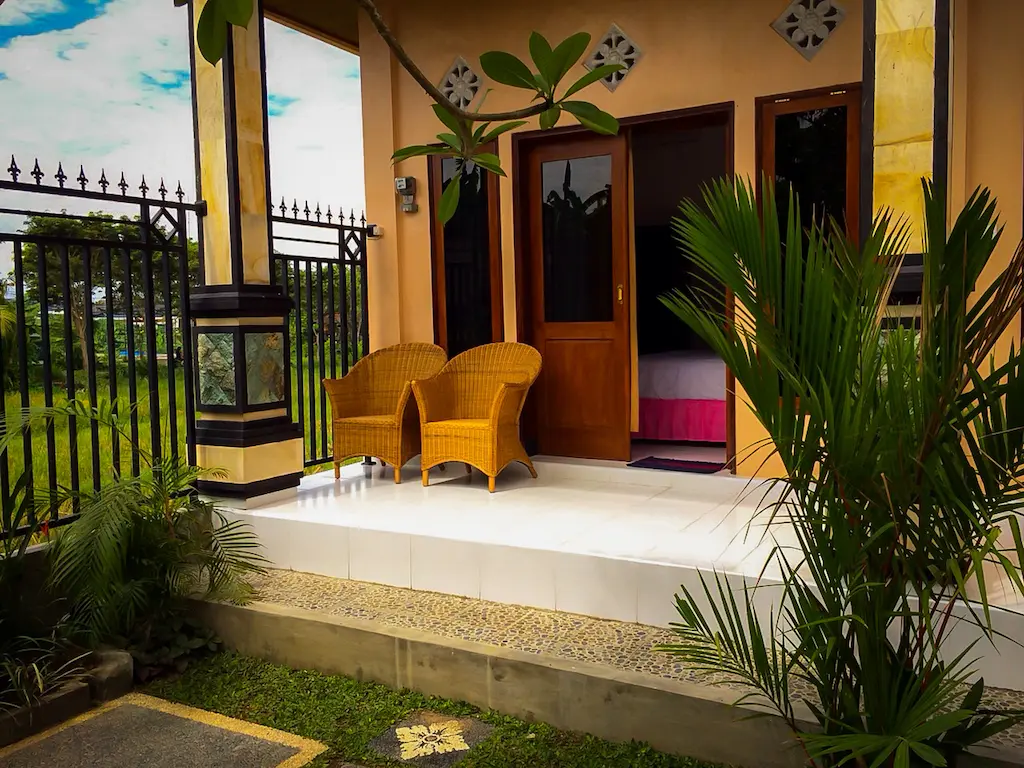
And to pay the bills, I needed a real income, and we started a business with my new partner from the Netherlands. What many do around — at that time it was a rental business, re-renting housing. We rented a guesthouse, lived in two of its rooms ourselves, and rented the rest to guests. At that time, Airbnb was just starting to develop, becoming popular in these places as well, and for us, this became the main source of income, with which we lived on Bali for almost a year.

Until one day representatives of the local authorities came to us, took our passports for illegal business activities, and deported us from the country. This is a story for a separate article, which I’ll definitely share someday, but one way or another, I had to leave. I still had a small amount of money left, and then there were attempts, a huge number of attempts to launch various businesses and projects, none of which brought the expected income.
This was an online store, online schools, startups again, an arbitrage business, basically everything that was fashionable at the time: online courses, online schools, everything that appeared. And the shiny object syndrome didn’t pass me by. I took up any opportunity that appeared on the horizon and tried to make something worthwhile out of it.
Something worthwhile didn’t really work out, what did work out was debt to the bank, several banks to be precise, which forced me to return to salaried work, because after a few years of such a life, I got tired of scraping pennies to pay for my housing, food, which, by the way, was quite crappy at the time, because I bought the cheapest of what I could afford. Living in a big city, it’s not so easy to do this, everything else went to rent and covering debts.
And after a few years of such a life, you already want to at least live a little normally. I got a salaried job again, finally closed my debts, got myself in order, started eating normally. And two things that didn’t let me go all this time, what I basically started doing long ago with that first business attempt — self-development and everything related to it.
I voraciously consumed all the content I could find online, all possible books on business, psychology, self-development, some specific skills. Mostly it was all about business and entrepreneurship, all the classics of the genre: Napoleon Hill’s “Think and Grow Rich,” Robert Kiyosaki’s “Rich Dad, Poor Dad,” about investing, all the books on self-development by Tony Robbins, Donald Trump (strangely enough), and so on. In general, I consumed all this with enviable greediness, and it all became part of my self-education.
And the second part — my freelance career. All this time, I earned my living by making websites for other people, setting up various automations, automating business processes, building and describing systems. This was interesting to me, it was something that I could do easily and effortlessly, and therefore I could combine it with my main activity, or rather, with attempts to make it. And in principle, it brought some income and allowed me to exist and pay those very loans to banks, my housing, my food, that is, my lifestyle. Although it was not as far from what I wanted for myself, but still.
The Missing Piece: Why Products Without Customers Aren’t Businesses
Here’s the truth no one tells you: 42% of startups fail because they created a product nobody wanted. This isn’t just some random statistic. This is the single biggest reason businesses crash and burn according to major startup studies. Not running out of money. Not technical problems. Building something people don’t need. Lack of market need was “the single most cited reason for failure in those studies – far more common than running out of money or technical issues.”
I searched endlessly for why my ventures weren’t working while my freelance work kept bringing in steady income. The difference was obvious in retrospect: my freelance clients came to me through word of mouth. They were past clients who recommended me to others. I never actively looked for them — they found me. I had an audience, even if it was small and informal.
I didn’t realize this was the key all those years. I was building products and hoping people would come. But here’s what I’ve discovered: if there are no customers — both potential and current — then there is no business.
What was interesting to me through all these attempts was that while I created products that failed, my freelance work creating websites for clients kept growing. Over time, I started charging more and earning more from these projects. I did less work myself, having a team that I subcontracted work to immediately, and they did 100% of it independently, paying me a share for the clients.
All this time I called my business a digital agency, which is also a common business model for beginning entrepreneurs on the internet. Because it’s a business you can start literally from scratch without initial capital, requiring no special costs. You just need to find a client, agree on a deal, and then you either independently or through subcontractors complete the work that needs to be done for them or their business.
Everything sounds wonderful in theory, but the problem is that the first part — finding a client — I never managed to do, no matter how much I tried. I tried advertising, tried sending cold emails, sending messages, networking, making websites, writing articles, posting cases on the internet, running social media, running a YouTube channel — everything you can imagine. In fact, none of this led to results.
The result was exactly zero, except for wasted efforts. Probably accumulated experience — it’s hard to say how useful it was, because it seems that so far, I haven’t made any adequate conclusions from this, all because there’s no adequate feedback from this whole process. You understand that it just doesn’t work, and what to do with it — is unclear. You’re playing a numbers game, and you just need to take quantity, and the more attempts you make, the more probability that someone will respond to them. That is, you need to send not 200 letters, but 2000 or 20 thousand letters.
Maybe that’s how it works, but there’s no guiding beacon in this sea. I get a new client, again through acquaintance. They are brought by my former client. And this is a very large order, which basically covers all my current expenses, lifestyle. And I do it in parallel with my remote work.
And I realize that I can’t drag it out any further, because the longer I drag it out, the more I immerse myself in this abyss of comfort, salary from month to month, and I rely only on it. And since I basically already have an order, yes, this is not a business, this is still a freelance project, and it takes up most of my time. And here I do part of the work myself. By the way, at this time I have already gathered a team for myself, which covers about half of the labor resources that are required.
And I decide to quit my job and completely immerse myself in developing my business. But this time I don’t want to make the previous mistakes. And everything that permeates my previous attempts to do business and earn money online, while remaining independent and not turning the business into my second job, which I, by the way, currently get.
So I now have not just bosses on the side, I am not my own boss, my boss is my client. And essentially I do what my client tells me. No matter how it sounds from the side, but freelance work is still not a business. It’s the same job, only now you don’t have one boss, as it was at work, but several, if you have several clients. They tell you what to do, and you do their projects, not yours.
All the time you spend goes to making them richer and realizing their dreams, their projects. And what about my dreams, desires, interests, my projects? How do I get closer to them? That it should be a business, I have no doubt. This is the only way I can provide for my life and make it the way I want. I need money for this, since we live in a modern society, there is no other way yet. And even if we didn’t live in a modern one, humanity hasn’t come up with another way yet.
So, what am I going to do now? I’m going to earn my audience, gather people who are interested in my way of thinking, with whom we have something in common, with whom our thought processes align, with whom our desires and goals are similar, with whom values coincide, and who find close and resonant what I share on the internet.
And yes, this opens up a whole rabbit hole for discussions that all the audience is gathered in order to make money on it. But:
- First, I don’t see anything wrong with this.
- Second, that’s how every business works.
For example, any luxury brand similarly gathers its audience, an audience of its fans, those who love beautiful things, living well, and then sells them its luxury items. Similarly, any consumer product does this, publishing information about its brand in the form of advertising, inserting it into films, inserting it everywhere possible, gathering its fans, a whole army, with whom they share interests or the lifestyle that the brand promotes, and sells them its product.
In fact, this is done by absolutely every business, because that business that sells either to end customers or to other businesses, sells it to people too, because people work in business. And, selling to business, you close the needs of some specific person or an entire group of people that they have.
Building Your Digital Nomad Freedom: The Audience-First Approach
It’s becoming clear to me that for any business, finding customers should come before creating the product. This approach completely changes the game.
The internet has created a global marketplace where anyone can put their voice out there to reach a worldwide audience. This is your true leverage. You don’t need permission to create content. You don’t need anyone’s approval to build an audience. The tools are all there, ready for you to use them.
When I look back at my flower shop venture, what made it successful? We had a physical location in a busy area with foot traffic. We didn’t create flowers in a secret laboratory and then wonder why nobody was buying them. We put ourselves in the path of customers first, then developed our product offerings based on what they wanted.
Similarly, my Bali guesthouse succeeded because we leveraged Airbnb’s existing audience. We didn’t build rooms and then scratch our heads wondering how to find guests. We went where the audience already was. As Entrepreneur Eric Ries puts it,
“The big question of our time is not ‘Can it be built?’ but ‘Should it be built?’”
The market decides what’s worth building, not our egos. This echoes what lean startup advocates emphasize: “We must learn what customers really want, not what they say they want or what we think they should want.”
This insight revolutionized my thinking. When I consulted my audience first through my freelance work, I succeeded. When I built products in isolation, I failed. It seems so obvious now.
The Flip That Changes Everything: From Consumer to Creator
The first step is to flip your perspective. Stop being a passive consumer of content and start creating. This mental shift changes everything.
Most people consume social media, products, entertainment. The path to freedom is switching to creator mode. When you create content that resonates with others, you build connections. These connections form the foundation of your audience.
For years, I was like most people — consuming rather than creating. I read books, took courses, watched videos. But the breakthrough came when I started sharing my journey, my insights, my struggles. That’s when people started to follow along. That’s when potential customers appeared.
Look at successful digital nomads who have built sustainable businesses. They didn’t start by creating some revolutionary product. They started by sharing their expertise, documenting their journey, solving problems in public.
Companies that understand this principle thrive. Glossier, for instance, didn’t start as a beauty company. Founder Emily Weiss ran a popular beauty blog for four years before launching products. By the time Glossier debuted its first moisturizer, they already had 15,000 Instagram followers waiting to buy. The audience came first, product second.
Platforms and Channels: Where Your Audience Lives
Your next step is choosing where to build your audience. Not all platforms are created equal, and your specific expertise will determine which ones make sense.
The internet gives you unprecedented reach. With platforms like YouTube, Twitter/X, podcasts, newsletters, and others, you can reach millions of potential audience members with zero gatekeepers. This is revolutionary when you really think about it.
I’ve experimented with many platforms, from blogs to YouTube to Telegram. Each has its strengths. What matters is consistency and delivering value on the platforms where your ideal audience already spends time.
For digital nomads and aspiring location-independent entrepreneurs, platforms that showcase expertise, lifestyle, and knowledge tend to work best. This is where you can display both your freedom and your expertise — the two things your audience desires most.
The challenge is not in accessing these platforms — anyone can create an account. The challenge is in creating content that resonates with a specific audience. Generic content attracts nobody. Specific, value-driven content attracts exactly the right people.
Deliver Unmistakable Value First
This step is critical. You must provide genuine value before asking for anything in return. This builds trust, demonstrates expertise, and ensures your audience actually wants what you eventually offer.
When I first started building websites for clients, I often did small improvements for free. This unexpected value made them willing to pay for bigger projects later. I was delivering value before asking for money — and they kept coming back.
In the online space, this means creating content that solves problems, answers questions, or entertains in a unique way. You’re essentially proving your worth before asking for a sale.
The mistake most make is trying to extract value before providing it. They launch products to crickets because they haven’t built an audience that trusts them. As marketing legend Seth Godin advises,
“Don’t find customers for your products; find products for your customers.”
The beauty of the digital world is that value delivery scales. A helpful article, video, or social media post can reach thousands or millions of people without costing you more than creating it for one person. This is the leverage of audience-building online. As investor Naval Ravikant explains,
“Building an audience can give you leverage. Media scales.”
A strong audience lets you launch products (or even multiple different products) with far less friction than starting from zero. It’s a form of insurance too – if your first product isn’t perfect, loyal fans might give you a second chance.
Start Selling Immediately
Here’s where I’m going to contradict conventional wisdom: once you have even a small audience, start selling immediately. You’re already operating in the market, and you have the leverage to reach an audience even without a massive following.
Many creators make the mistake of building an audience for years before monetizing. This is unnecessary. The key is to have a clear offer that genuinely helps the audience you’ve started to attract.
Look at what happened with my freelance work. I never actively sought clients — they found me through word of mouth. The projects grew larger, the rates grew higher, and eventually I was earning more while doing less of the actual work myself.
You don’t need a million followers to start monetizing. As creator economy expert Kevin Kelly explained in his “1,000 True Fans” theory, you only need about 1,000 people who love what you do to make a comfortable living. Kelly argued that “To be a successful creator you don’t need millions; … you need only thousands of true fans.” A creator who earns $100 per year from each true fan can make a decent living with just 1,000 such fans.
Product Hunt founder Ryan Hoover didn’t wait for years to monetize. He started with a simple email newsletter that grew to hundreds of subscribers in the first week. Seeing this demand, he quickly built a minimal website, which attracted significant funding and grew into a go-to platform in tech.
The lesson is clear: start small, but start selling. Don’t wait for some magical audience size threshold. Test your offers early and refine based on response.
Listen and Adapt to What Your Audience Actually Wants
This is the step that most product-first entrepreneurs miss. Once you have an audience, even a small one, pay close attention to what they’re asking for, struggling with, and willing to pay for.
Your audience will tell you exactly what to build if you listen closely enough. This eliminates the guesswork and dramatically increases your chances of creating something people will buy.
I learned this the hard way. In my startup attempts, I built what I thought was brilliant without validating demand. With my freelance work, I succeeded because I was directly responding to what clients requested.
Buffer, a social media scheduling tool, illustrates this principle perfectly. Before building their product, founder Joel Gascoigne created a simple two-page website: one page described the product concept and pricing, and the next page (when visitors attempted to sign up) simply said they weren’t ready yet but collected email addresses. This quick experiment showed real interest before a single line of code was written.
When I launched an online store years ago, I created products I thought would sell. When I did freelance work responding to specific client requests, I made money consistently. The difference? One was audience-led, the other was my untested guess.
Test Before You Build
Even with an audience telling you what they want, it’s crucial to validate specific ideas before going all-in on development.
This approach is core to the Lean Startup methodology. Instead of spending months building a complete product, create a Minimum Viable Product (MVP) or even a simple landing page to gauge interest. This can save you enormous amounts of time and money. As Eric Ries explained,
“The goal of a startup is to figure out the right thing to build – the thing customers want and will pay for – as quickly as possible.”
I’ve watched countless entrepreneurs spend their life savings building elaborate products that nobody wants. Meanwhile, those who test concepts first — even with rough prototypes or pre-sales — know exactly what will work before investing heavily. Research shows that “startups which pivot strategically (changing course based on customer feedback) grow 3.6× faster and raise 2.5× more money than those that stick stubbornly to their original plan.”
The most successful digital nomad businesses tend to start small and specific, testing concepts directly with their audience. They expand only when they have validation from real customer interest or, even better, sales.
This is exactly what happened with crowdfunded products like Pebble, the smartwatch that raised over $10 million in pre-orders from 85,000 customers before producing a single watch. By the time they finished crowdfunding, they had customers waiting and $10 million in revenue booked. They didn’t have to guess if there was a market – they knew it, because tens of thousands of people paid in advance. Compare this approach to failures like Quibi, which raised nearly $1.75 billion to create a streaming service that shut down in just six months because they built a product without validating that an audience wanted it.
As I build my own audience now, I’m testing different content types, topics, and potential offers with small experiments before going all-in. The response to these tests will guide exactly what products or services I develop. As venture capitalist Marc Andreessen noted,
“In startups which succeed, ‘the market pulls the product out of the startup’ once product-market fit is achieved – customers are basically dragging the product out of you because they need it so badly.”
Your Path to Freedom: Start Building Today
You feel the weight of that conventional path. The corporate ladder. The mortgage. The retirement plan that may never materialize. I felt it too, and I’m still fighting to create my own path.
What I’ve discovered through years of trial and error is that building an audience first is the missing key to successful entrepreneurship, especially for digital nomads and location-independent professionals. Without customers, there is no business. No matter how brilliant your product, service, or idea might be. As management guru Peter Drucker famously said,
“The aim of marketing is to know and understand the customer so well the product or service fits him and sells itself.”
When you truly understand your audience’s needs, your product will practically market itself because it’s exactly what they’re looking for.
The good news is, you can start building your audience today, right where you are. You don’t need permission. You don’t need credentials. You just need to start creating valuable content that resonates with the specific group of people you want to serve.
My path forward is clear: I’m building my audience by sharing what I’ve learned, my successes and failures, and valuable insights for others on a similar journey. I’m doing this through content, through my newsletter, and through genuine connection with the community I’m building.
Your path can start today too. Flip that switch from consumer to creator. Start sharing your unique perspective, your journey, your expertise. Focus on providing value first. The monetization will follow, probably sooner than you think.
As I explained in my article, “The Freedom Equation: How To Develop The Skills That Create Location Independence”, this path to freedom isn’t just about making money. It’s about creating a life where you control your time, your location, and your future.
I invite you to join me on this journey toward your true path. The path of audience-first entrepreneurship. The path of freedom.
Because if there’s one thing I’ve learned through all my attempts, successes, and failures, it’s this: the audience is everything. Find your people first, then build what they need. That’s the real key to business success that nobody told me. Until now.