
Author: anticodeguy

  • The Million-Dollar Product Launch Mistake You’re About to Make (And How to Avoid It)

    The Million-Dollar Product Launch Mistake You’re About to Make (And How to Avoid It)

    You just bought a domain name and finished your website. This time you did everything right. The state-of-the-art design is ready. The copywriting is exceptional. Your lead generation funnel is configured and tested multiple times without fail. Payments on the site work perfectly. Everything is there. You’ve registered an LLC. You have a bank account set up. You’ve integrated with Stripe, which is waiting to receive the first money. All contracts with suppliers are signed, and they’re waiting for their first customers that you’ll provide them.

    Everything is at the starting line. All set to begin the journey toward your first million dollars. You launch the site and check the statistics. Zero visitors. A day passes. Zero visitors. No customers. You have nothing to tell your suppliers who were ready to work since yesterday. But apparently, the launch didn’t happen. Zero customers.

    You decide to do something about it and frantically start sending the website link to your friends and acquaintances, announcing that you’ve launched a new product, a new business. They immediately visit your site, look at it, some even write feedback about what to fix here and there.

    And now you’re sitting at midnight, making changes to the site based on feedback from friends and acquaintances. Now it should work, right? But nothing happens. A week passes, a random user visits the site, naturally buys nothing. And everything continues as before. You have no business.

    You haven’t moved even a fraction of a percent toward the million dollars that was planned in your carefully developed business plan. The bank account remains at zero dollars, just as it was. Familiar situation?

    This is actually a bit sugar-coated, and I’ve softened the story for understanding, but in my case, for example, I also had people working who I had to pay salaries to. As a result, my budget went into negative debt to banks because I paid them by taking loans.

    And now I not only have no business, but I also have debts that I need to pay off. This is an insanely frightening situation that I wouldn’t wish on anyone, but probably only by experiencing it firsthand can you understand that you’re doing something wrong.

    The Fatal Product-First Approach

    Numerous books, training programs, courses, and so on unanimously insist that you need to create a product that people need. You need to make it, give people value, and they will come to you on their own. If your product is viral, it will spread itself. But in reality, it doesn’t work that way.

    If someone had told me this or if I had read information about this many years ago, I think I would have saved a tremendous amount of money, nerves, years of my life, and probably would have already earned my first million dollars.

    Something is off here. And that something is the absence of distribution, absence of marketing, which should go first before the product itself. No matter what product you have, what value it provides, how viral it is, you need to find some way to distribute it.

    You need to place it in front of a large number of people so that some of them become interested. Some of those interested would then look more closely, learn some details, and even fewer would become buyers. This is called conversion, which represents a certain average percentage of people who, in principle, saw your offer and agreed to make a purchase and actually made it. Because the best indicator of your business is the bank account.

    If it’s $0, you have no business. If it’s negative, you also have no business – because business is a system of profit extraction. No profit = no business. You won’t have profit until you have people seeing, interested in, and buying your product.

    This may sound obvious to some now, and that’s great. But for me, for some reason, it seemed like such a strange thing at the time. Marketing and distribution always came after the product.

    For some reason, I was convinced that to sell something, I needed to have that product. It seems obvious. Because I can’t go to a store and buy emptiness in the hope that the supplier will deliver it someday. No. I go in, I see the product. The product is already there. And I can pay money for it.

    But the internet gives us slightly different possibilities. And here the logic works a bit differently. Plus, a large number of products or values that we sell via the internet, that modern internet business creates, aren’t physical things. It’s not a physical product you can touch. The product is usually virtual.

    Yes, it continues to represent value, but it doesn’t exist in reality. It exists only on computer screens, in memory, and in the form of pixels.

    Let’s cure the cancer

    In MJ DeMarco’s book “The Millionaire Fastlane,” there’s an excellent example of a highly valuable product. Imagine you invent a cure for cancer. A product that represents enormous value, and what marketing would you need for such a product?

    A hypothetical example is given. And as soon as the first patient sees the result, how long would it take for all other people to find out about it? Most likely, very little. Information about this product would spread at tremendous speed.

    This is an ideal example in a vacuum of how a viral product can be created. If its value is so great that a person who received this value will independently, without any pushing from you, spread information about it.

    But let’s look at things more pragmatically. You don’t have a cure for cancer. You don’t have a product that’s so viral that you want to tell everyone about it left and right. If you have the skills to create such a product, that’s wonderful.

    But even in this case, you need to somehow deliver it to at least that first patient who will try it. And you also need to somehow persuade them to do so. Because a huge number of obstacles arise here. They’ll need to ask if it’s medically proven, if it’s been researched scientifically, what side effects there are, if there are any risks, and so on.

    Or invent Facebook

    So, it’s not as simple as it seems. You could be Zuckerberg and create, for example, Facebook or a new social network. But if we look at how Facebook was created, we’ll see that its launch didn’t happen somewhere in a vacuum, but on a university campus.

    That is, it’s already a certain area where a huge number of people are present, in front of whom you can present it. Yes, the product has a viral system built in. And it’s more interesting to use the product when your friends are there. And the more of them there are, the more interesting the product becomes for you.

    Therefore, it’s in your interest to invite users there, to invite your friends. Again, if you have a similar kind of viral product, then this note will hardly help you. Go and conquer the world, earn your trillion dollars.

    But I assume that we’re talking here from the perspective of ordinary people who want to earn a living online at the very least. And also arrange the desired lifestyle for themselves. And in this case, we need distribution.

    We need people who will see your product, whatever it may be. Viral, non-viral, digital, or physical. I mean, if you sell it online. If you sell offline, that’s a slightly different story. But the principle, by the way, remains exactly the same.

    Because the same store where you physically take the product and carry it to your home is located somewhere near your house, it’s located somewhere near, for example, a bus stop, where there’s high pedestrian traffic, that is, where people already walk and see this store.

    And it’s more convenient, for example, when returning home from work to stop by the store, buy a product, and then go home. It doesn’t take much time, so they’re called convenience stores.

    But don’t lose control of it

    We need to do roughly the same thing with any product that relates to you on the internet. That is, we need to place it where a large number of people pass by, which is called traffic.

    If you can find such a place for yourself, these are usually some marketplaces, for example, Etsy, Gumroad, or sites that specialize in selling, usually in a certain category of goods and services or several categories, or, for example, it could be Upwork, where you put up your services.

    But this is, in general, a site that people visit in order to find these products or services. This is ready-made traffic. Or you somehow find a way to attract this traffic to your product.

    The first approach is definitely good, and, of course, you can use it, and people build full-fledged businesses on such a flow. That is, they place their product in places where there’s already traffic, and this is an excellent method.

    The only disadvantage of this method – and probably the biggest one – is that this traffic isn’t controlled by you, and this platform doesn’t belong to you. And any day something can go wrong, the platform can close, the business can fold, traffic can leave from there, they can ban you, block your products for one reason or another, and the entire business will be destroyed in an instant.

    It’s good if by that time you’ve already accumulated some resources that will allow you to get out of the situation, but in any case, ending up in it is not a pleasant matter.

    The 2-Piece Distribution Puzzle

    Our task before we build a product is to build a distribution channel and engage in its marketing, that is, promotion and placement in front of a large number of people so that with a certain conversion we have the right number of buyers. And you can already make some sales forecast and, accordingly, determine how much money your business will potentially earn.

    “First-time founders are obsessed with product. Second-time founders are obsessed with distribution.”

    – Justin Kan, Co-founder of Twitch (serial entrepreneur), in a 2018 tweet reflecting on startup lessons

    Piece 1: Traffic & Marketing

    Traffic refers to real people, not bots, who visit the resource where your product is located. Typically, this is some kind of website, or it’s an application, or some other format where the final payment button for the product is located. This is the most final stage of conversion when transactions are made.

    It’s clear that after this there are already steps for delivering this product, but this is a technical issue that we solved long ago. And I’m assuming here that, of course, you need to have the skills to deliver this product so as not to be a scammer.

    But I’m also sharing my story here, where I have absolutely all the skills, resources, opportunities to make a product. I understand how to do it, I can do it in practice, but when it comes to selling it, I get exactly zero purchases because there are no people who generally visit the site, there are no people who will convert, and there are no people who ultimately pay money.

    It is precisely this problem that marketing is designed to solve, the dissemination of information about your product. So, we know what traffic is, we know that we have a product, and we need to somehow spread information about it. This should be marketing.

    Black-and-white portrait of Vincent Dignan representing bold marketing tactics and product visibility advice

    “Great products deserve great marketing.”

    – Vincent Dignan, Growth Hacker, quoted in Dave Bailey’s startup marketing essay (2019) .

    Here too there are many ways, and the most famous, most obvious of them is paid marketing. That is, when you pay other businesses that have the traffic you need, money so that they redirect their visitors to your site.

    The most obvious examples are search engines and social networks. And each of them has its own advertising network, to which you can simply fork out money, they will redirect their traffic to your site.

    Piece 2: (Personal) Brand

    But this is also an interesting story, on the one hand, but on the other hand, it’s a thing that depends on money. And as soon as you stop, for example, investing in marketing, that is, buying this advertising, the traffic stops, and your business also ceases to exist.

    You want it to work somehow differently. Can it be done? The answer is yes. And the answer is in the business model that we’ve already discussed more than once – building a personal brand.

    Why does this work differently? If you have a brand, then people come specifically for it. A brand is what allows information about you to be spread, passed from hand to hand. If your brand is known in certain circles, then you will be recommended as an expert in a certain topic.

    And the next time, for example, the conversation turns to one topic or another, it’s your name that will come up in people’s conversations. This is the viral effect, and this is the power of word of mouth.

    By the way, I experienced it myself, when I was engaged, and still am engaged, in development services. I never spent a penny on marketing, promotion, or advertising of my services. It was always my clients.

    They recommend me, and still, for many years now, I don’t even do anything for this at all. But clients come to me who say, “we came on the recommendation of your past client or current one,” or some of my current clients recommend me, and thereby this allows me to stay afloat for many years.

    And I lived like that for several years, by the way, exclusively on such word-of-mouth power. This is a personal brand, but unfortunately, I didn’t make any efforts to develop it in any way. This was organic.

    But even organically, this is a very powerful way to spread information about yourself. What if I had deliberately engaged in its development?

    Building a personal brand involves accumulating an audience. The audience is that very traffic that will potentially see your product. That is, these are your subscribers, respectively, the information that you spread to your subscribers, that is, the content that you create online, it will be placed before the eyes of this multitude of people.

    This is the very traffic that we’re looking for here. And finally, what’s interesting, there’s a network effect at play here. That is, if you just, for example, write a post on your, let’s say, Instagram or X, then your audience will see it. And only a fraction of it, because there’s a certain algorithm for how your subscribers will see your posts.

    But you can find a way, and as soon as you have some validity in this social network, it’s much easier to do. Your post can be shared, and other people who have their own audience can share it

    And thus your content appears before a much wider circle of people, and now they can either become your subscribers or simply become interested in this product. But what happens next, these people also have subscribers and their friends, because of these are social networks.

    And here, when your content is distributed, you can get the attention of not only your subscribers but also a much larger number of people thanks to the network effect.

    For diving deeper into the topic of building personal brand read my recent article “The One-Person Brand Blueprint: Standing Out In The Digital Economy.”

    Piece Them Together

    And finally, marketing, which implies the dissemination of information about your product. It’s clear that when building your personal brand, we won’t be constantly advertising, otherwise it will be a brand screaming in all directions about sales, which doesn’t give anything except the opportunity to buy something, and this looks like another virtual brand of any company.

    No, your brand should provide value for free, it should be useful, it should serve some purpose, it should be interesting to consume, it should be something that is useful to people.

    And at some certain moment with some certain frequency, you can already sell, advertise your product to your own audience, which is gathered for your personal brand, for the same traffic that you own.

    And in this case, you don’t need to go looking for people, in this case, people already come, they already communicate with you in these social networks, and they just see your product. And this is what should be even before building the product itself, that is, building a personal brand, accumulating this very traffic.

    Then already an offer that converts to purchases, and only after that can you even build a product, if its properties imply such an approach. And what can you do with a product after you have orders for it, especially if it’s a digital product.

    So, following my own advice, here’s my product plug.

    Creating your personal brand means creating a ton of content. I’ve built and refined for moths my own system that I’ve now packaged as the ANTIghostwriter course. This is the exact system I use to create my content at a constant pace, building my personal brand traffic engine without the massive time investment most digital entrepreneurs struggle with.

    The system allows me to produce weekly:

    • 2 newsletters in the form of detailed articles with quotes, scientific data, and personal stories
    • 2 threads to promote the newsletter or other products
    • At least 3 posts per day across social platforms with various formats
    • Minimum 3 short video scripts per week

    All of this content forms my personal brand traffic engine – the foundation of my distribution strategy that ensures when I do launch a product, I already have an audience eager to buy.

    Instead of using AI as a generic content creator (which produces the robotic, templated text we all recognize and ignore), the system uses AI as an intelligent editor that preserves my authentic voice while accelerating my output.

    By building this traffic engine first, you’re essentially creating your own marketplace.

    Your Launch Must Be Successful

    The crucial shift in thinking here is understanding that distribution – having people see, engage with, and ultimately buy your offering – is the true foundation of any successful business. The product, while important, comes second.
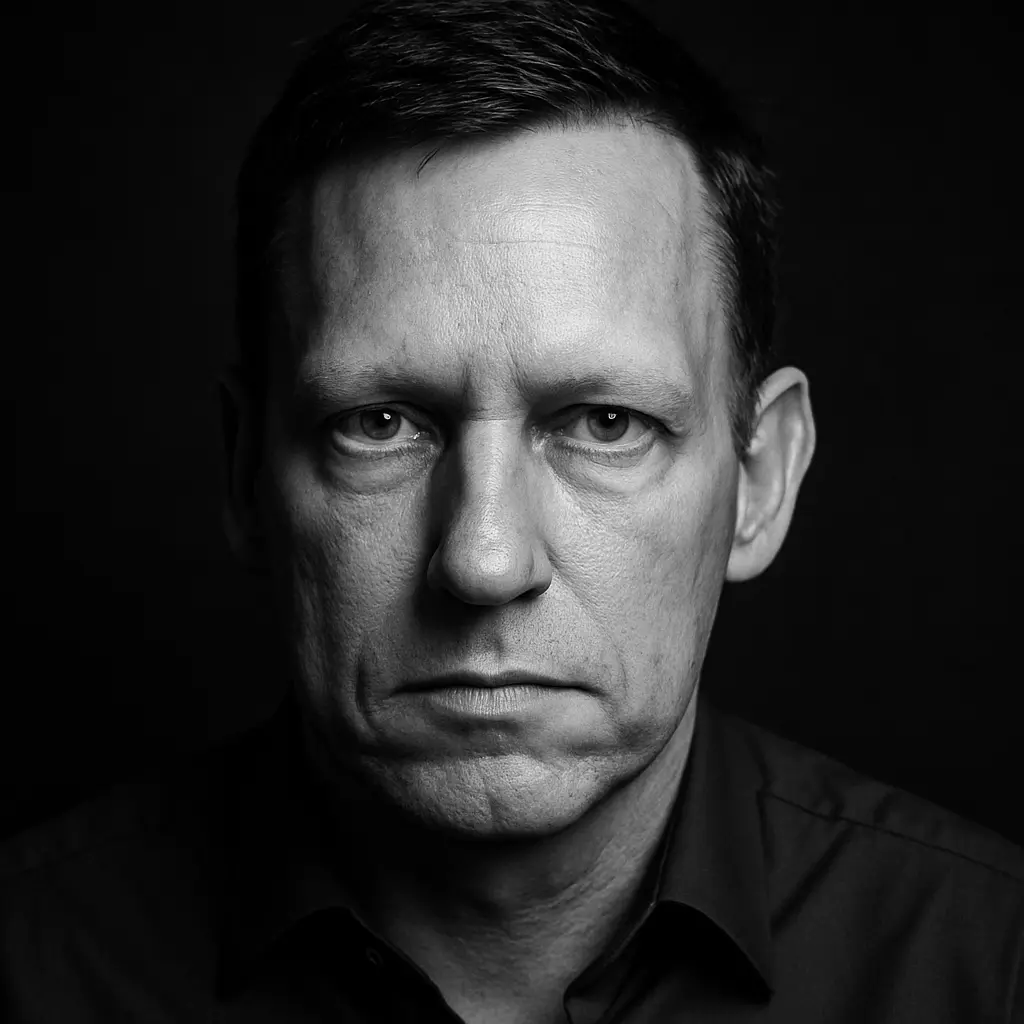
    Black-and-white portrait of Peter Thiel representing strategic thinking about product and sales in startups

    As Peter Thiel, co-founder of PayPal, bluntly states:

    “If you’ve invented something new but you haven’t invented an effective way to sell it, you have a bad business — no matter how good the product.”

    This encapsulates everything we’ve discussed.

    Remember, the best indicator of your business is the bank account. If it’s at zero, you don’t have a business yet. If it’s negative (as mine painfully was), you definitely don’t have a business. By following this distribution-first method, you ensure that money starts flowing in before you’ve committed extensive resources to product development.

    The digital world offers us opportunities to validate before we build, to sell before we create, and to ensure success before we invest. Don’t make the million-dollar mistake of building something nobody wants. Build your audience first, validate through pre-orders, and then create with confidence.

    Your future customers are waiting. But they can’t find you if you haven’t built the path to your door first.

  • Money Is Not Evil (And Other Lies You’ve Been Told About Wealth)

    Money Is Not Evil (And Other Lies You’ve Been Told About Wealth)

    Money. The relationship many people have with money is strange, to say the least. Just now, as I started saying the word “money,” I found a coin (10 Thai Bath btw) – a funny coincidence. For many, this topic is forbidden, complex, uncomfortable. For some, it’s mystified or taboo.

    It all depends on the environment you grew up in. In my case, there wasn’t a strict prohibition on talking about money, but it wasn’t really discussed either because everything seemed simple enough. Money was earned at work, spent outside of work, and was never excessive. That’s basically all we knew about money, and I didn’t have much other information.

    When we talked about serious wealth, about rich people, the conversations typically revolved around how you couldn’t become wealthy honestly. You either had to be someone’s son or daughter – someone influential or already wealthy – or have connections that gave you access to resources. The next option? Be a criminal, cheat people, somehow earn money dishonestly. These were the only ways I knew to make a lot of money, which I’d always wanted since childhood. But the only answer I got to my question sounded something like this: impossible for normal people.

    We’re incredibly lucky to live in the internet era, in the information age, when we have access to an enormous amount of information, including about people who make money and the methods they use. We can find this information ourselves and draw our own conclusions.

    This wasn’t possible during my childhood. I had to take people at their word. I couldn’t read about it anywhere except in mass media, newspapers, or on television – but TV didn’t have podcasts hosted by dollar millionaires, and newspapers didn’t write about money in useful ways. The articles about wealthy people were typically gossip about their connections and other rumors that didn’t really relate to their wealth. There was simply no information.

    A recent Bankrate survey revealed something shocking but not surprising: over 60% of Americans feel more uncomfortable talking about money than politics or religion. Only 38% would share their bank balance with friends or family. This silence is basically programmed into us.

    But what if we could reprogram our relationship with money? What if everything you’ve been taught about wealth is actually holding you back from the financial freedom you desire? Let’s explore how to break free from these limiting beliefs and create a new financial reality.

    The Hidden Money Operating System

    Money attitudes are deeply rooted in our upbringing, culture, and social norms – often in ways we don’t consciously realize. Think of it as an operating system running in the background of your mind, silently determining every financial decision you make.

    Growing up, I understood that to achieve financial security, I needed to follow the “safe” path – get a job with a guaranteed salary that would allow me to survive. This was always my fallback plan, a place I could land if everything else failed. And that’s exactly what happened.

    Today we’re talking more about attitudes toward money, why many families even prohibit discussions about it. It’s considered sacred, unacceptable, and all this comes from upbringing, religion, and the culture in which you develop, where there are certain rules about how to relate to money.

    In some cultures, money is considered sinful; in others, it’s taboo. Typically, these beliefs are passed down from generation to generation. And since these basic religious or cultural principles generally aren’t questioned but simply accepted as given, questions about why we relate to money in a particular way don’t arise.

    There are certain cultures where, conversely, the attitude toward money from early childhood is formulated in exactly the opposite way, where money is a measure of value, and you can and should earn this money if you bring value to your community – for example, Jewish families. If you were born there, you’re very lucky because you have a healthy attitude toward money.

    If not, you’ll have to do the work yourself to unravel the ball of negative attitudes and wrap new ones that you’ll need to live with. There’s no sense in denying the importance of money or turning away from it because our society, in which we now live and develop, is based on money.

    Some might say that money can’t buy happiness, that happiness isn’t in money, or that there are many things you can’t buy with money. I fundamentally disagree. In modern society, you can buy absolutely everything with money.

    You can literally buy yourself a new body, you can buy yourself health if you know who and where to approach. Today you can even buy yourself mobility, for instance, if your body is paralyzed. This isn’t some sci-fi; it’s quite practical.

    As strange as it sounds, you can buy love. Yes, maybe at first it will be somewhat artificial, but if you put effort into developing the relationship, it’s quite possible that you can build a healthy relationship from it, even if it was previously based on money.

    And if not, then these are transactional relationships, exactly the same as any other type of relationship where you give something, acquire something.

    I actually have a whole article around that topic, if want to argue with me about it, read it first: “Money Buys Everything (Despite What They Tell You): The Uncomfortable Truth About Modern Freedom”.

    The idea that happiness isn’t in money is actually a belief that practice shows isn’t true.

    First, as soon as I started to have money, as soon as I began to have a certain safety cushion of savings, I started to become much calmer and happier because now I don’t have to think about how I’ll pay bills.

    If I have a certain reserve for several months of life ahead, I feel calm, and I can focus on other things that actually bring this happiness. Yes, the mere presence of money in your account may not make you happy, but the state you acquire from having this money in your account quite brings happiness, pleasure, and shifts the focus of attention from money to other things that are the basis of happiness, good mood, calmness, absence of stress, and everything related to it.

    And finally, with money, you can acquire what will make you happy, and in such a ratio as you need. If travel makes you happy, for instance, it’s your inner need, then having a lot of money, you can travel freely, live wherever you want, you can buy yourself citizenship in countries that allow you to travel without borders, without getting visas, without extra hassle.

    Classic portrait of Mark Twain in black-and-white, illustrating his contrarian quote on the root of evil and money

    Mark Twain flipped conventional wisdom on its head when he said,

    “The lack of money is the root of all evil”

    – a striking contrast to the biblical warning about money being evil. Twain recognized that poverty and financial insecurity, not wealth itself, cause much of life’s misery.

    This perspective is supported by modern research. A 2023 survey by the American Psychological Association found that about 40% of people said money worries caused them more stress than work, politics, or even global events. On the flip side, the Financial Health Network discovered that 75% of Americans who consider themselves financially secure also rate their mental health as “excellent” or “very good.”

    So now I don’t understand all these negative attitudes toward money, except that it’s more from ignorance because if you don’t know how to handle money, how to earn it, then for you it’s a closed, taboo topic because you simply don’t have information about something else, and you only have these negative attitudes on which your relationship is based.

    It can be directed in another direction and flip all these attitudes, which I recommend doing first.

    Reprogramming Your Money Mindset

    The first step to changing this whole thing is to write out your negative attitudes toward money that you have. I’ve done this exercise several times throughout my life and noticed that they change over time, that is, some attitudes eventually go away, and some come to replace them.

    Therefore, it’s more effective to do this exercise in such a way that you write out all the negative attitudes and then replace them with positive ones. That is, literally a table in two columns, where first on the left you write the negative attitude, on the right you write how you want to remake it.

    For example, “happiness isn’t in money” → “with money, you can buy what brings me happiness.” You can even do better with specific examples to visualize it more realistically, so the picture is clearer for the conscious and subconscious.

    You can do this with just the second column, simply writing down positive attitudes that will eventually replace the negative ones, but in this case, you’ll need to look at them more often, remind yourself of them, and make sure they settle in and take root in your subconscious.

    Step 1: Identify Your Negative Money Beliefs

    So, let’s start by examining the beliefs that might be holding you back. These typically manifest as automatic thoughts that arise whenever money is mentioned, write them down in the left column of the table:

    • “Rich people must have done something unethical to acquire wealth”
    • “Money is the root of all evil”
    • “I’m not good with money”
    • “Money and spirituality don’t mix”
    • “It’s selfish to want more when others have less”
    • “I don’t deserve to be wealthy”

    For each negative belief, create a positive counter-statement in a second column of the table:

    • “Many wealthy people created value and solved problems for others”
    • “Money is neutral – it amplifies who I already am”
    • “I’m learning to manage money effectively”
    • “Money can be used for spiritual growth and helping others”
    • “My financial success can inspire and help others”
    • “I deserve prosperity when I create value for others”

    Here’s the critical part that many don’t understand: You don’t need to do anything special with this table after creating it. As I explained in my article “A Hidden Superpower You Possess: How To Use Your Subconscious To Solve The Hardest Problems In Your Life,” your subconscious remembers everything. Just the act of writing these beliefs down once embeds the information in your subconscious, which will process it automatically.

    You can also just focus on the positive column if you prefer, simply writing down the positive attitudes that will eventually replace the negative ones. In this case, you’ll need to look at them occasionally to remind yourself, ensuring they settle in and take root in your subconscious. The subconscious mind is incredibly powerful – it will work on these new beliefs even when you’re not consciously thinking about them.

    Step 2: Reset Your Emotional Triggers

    The next point is trigger focus. That is, considering everything said above, what was laid down by culture, society, other people in the mind regarding money, it immediately automatically pops up. That is, it’s such a trigger that pulls related attitudes from the subconscious.

    And our task is to shift this trigger again. That is, if you have a focus on something else, for example, on those counter-attitudes that we wrote down in the first exercise, it’s quite real that now your focus will shift to them after a certain trigger, rather than to these negative attitudes that you have.

    How does human thinking work? It has a tendency toward negativity, so most media is built on such a negative emotional charge and helps you emotionally trigger if the news is negative.

    This, I think, is understandable without any argumentation that it’s not very good from the perspective of emotional health and stress resistance, but it works flawlessly.

    If you can pay attention to how I, for example, write my content, it’s often tied to such a negative key, I start with that. Why? Because it attracts attention, it triggers something, it excites emotions inside the body. Again, why? Because you feel a threat to your existence, but not in the real world, as if, for example, a wild animal were in front of you that you need to run from or defend against, but the existence of your ego.

    Whenever money comes up, what’s your first emotional response? Anxiety? Shame? Fear?

    These are your triggers, and they need to be reset. Here’s how:

    1. Notice when money discussions trigger negative emotions
    2. Pause and take a deep breath
    3. Consciously bring to mind your new belief
    4. Repeat this process consistently until the new response becomes automatic

    A fascinating study at MIT showed that financial stress literally impairs cognitive performance because so much mental energy goes toward worrying about money. When that burden is lifted, cognitive capacity rebounds and people are freer to pursue life satisfaction.

    Step 3: Understand Income Quadrants

    Now let’s talk about the attitude toward business. All these things I said earlier about how money can only be earned dishonestly, by deceiving someone, or by being a relative of someone already wealthy, or by leveraging some connections. It’s all not true. And in the world, there’s a huge number of examples that don’t just prove otherwise, they’re a completely different story. And I personally know many acquaintances who from absolute zero build a business, earn excellent money for an excellent lifestyle, do it without any initial connections, capital, and inheritance, which, of course, is also a great option. And if you have it, then it’s actually a sin not to use it. And if there’s such an opportunity, use it, why not? But if not, if you’re just an ordinary person who doesn’t have such a privilege, then today the only way you can earn money, and at the same time control it, is through business.

    There are also investments, of course. Here I recommend, in general, to understand these concepts precisely from the perspective of basic understanding, how investments work, what business is, and what actually distinguishes a businessman from an investor. There’s also such an entrepreneur who spends his time himself, and a worker who spends his time earning money for other people.

    Black-and-white portrait of Robert Kiyosaki representing modern financial freedom and cashflow quadrant ideas

    This is the cash flow quadrant according to Robert Kiyosaki, where in his books “Rich Dad, Poor Dad” and “Cashflow Quadrant” he elaborates on this topic in a very accessible and simple language. I recommend reading it. These books helped me put everything in perspective and made me understand that I want to be in the businessman quadrant and, later, the investor. Because investments are a good thing, and indeed you can start with them right away, but provided that you live in a developed country, and you have access to borrowed money, which you can use to immediately acquire income-generating assets, for example, real estate. And this is, by the way, a good loan, which will bring you more money, even more than you’ll be repaying on this loan, will make you richer, and, accordingly, your asset also grows in value. This, by the way, is another point that’s also important to understand. But we’re talking about business.

    Cashflow Quadrant diagram by Robert Kiyosaki showing Employee, Self-Employed, Business Owner, and Investor categories

    To break free from the paycheck-to-paycheck cycle, you need to understand Robert Kiyosaki’s Cashflow Quadrant, which explains four ways people earn money:

    • Employee (E): Works for someone else, trading time for money
    • Self-Employed (S): Owns a job, not a business (still trading time for money)
    • Business Owner (B): Owns a system that generates money without constant personal involvement
    • Investor (I): Money works to create more money

    The path to financial freedom typically involves moving from the left side (E and S) to the right side (B and I) of the quadrant. This doesn’t mean quitting your job immediately – your employment can be a “backup airfield” while you build your business or investment portfolio.

    As I discovered, this framework clearly explained why some people achieve financial independence while others remain stuck despite working hard.

    Step 4: Build Your Value Exchange System

    Business is a system that allows you to extract profit in a controlled way. And the goal of any business is to extract profit. It is some kind of system that consists of several elements. We’ve broken down these elements many times, but the point is that it’s a system of exchanging values, when you create some value for your consumer, and in return receive another value in the equivalent of money, or in the equivalent of another resource, which you can exchange for money yourself. And your task is to make sure that the value you give costs you less in monetary equivalent than the one you receive in exchange for this value.

    And then the question arises about how to build this business. And I believe that one of the best options, and one that’s available to most people, is a personality business, or a one-person business, which I also talk about a lot (read my recent article “The One-Person Brand Blueprint: Standing Out In The Digital Economy”).

    One of the most accessible paths to wealth creation in today’s digital economy is building a one-person business. With the internet, you don’t need large startup capital, connections, or inheritance to begin creating value and receiving payment.

    The formula is simple yet powerful:

    1. Identify a problem you can solve or a desire you can fulfill
    2. Create a solution that costs you less to deliver than what people will pay for it
    3. Build systems to deliver this solution efficiently and repeatedly

    This value exchange is the essence of ethical business. You’re not taking from others; you’re creating something valuable and being compensated fairly for it. The more value you create, the more wealth you can accumulate – a virtuous cycle that benefits both you and those you serve.

    For digital nomads especially, the one-person business offers unprecedented freedom. You can operate from anywhere with internet access, serve clients globally, and scale through digital products that sell while you sleep.

    Step 5: Create Financial Security First

    Then, having the ability to earn money through business, you can calmly move to the investor quadrant, buy yourself assets, invest in real estate, and in everything that you consider necessary to earn more passively on your money.

    Before pursuing aggressive growth, establish what I a safety cushion – enough savings to cover several months of expenses. This isn’t just practical advice, but buying yourself a psychological freedom.

    As I experienced personally, once I built this financial buffer, something remarkable happened: my stress levels dropped dramatically, and my creativity and risk tolerance increased. I no longer had to think constantly about how to pay bills. This mental space allowed me to focus on opportunities rather than threats.

    This safety cushion serves as the foundation for wealth building. From this secure position, you can begin taking calculated risks with your business or investments without the paralyzing fear of destitution if something doesn’t work out as planned.

    Start by saving just 10% of your income automatically. As this cushion grows, you’ll feel a growing sense of calm and clarity that will compound your ability to make smart financial moves.

    The Path to Financial Freedom

    The journey to financial freedom isn’t just about tactics and strategies – it’s primarily about transforming your relationship with wealth at the deepest level. The limiting beliefs you carry about money aren’t your fault, but they are your responsibility to change.

    High-contrast black-and-white portrait of Seneca symbolizing ancient wisdom on wealth and simplicity

    As Seneca wisely observed,

    “It is not the man who has too little, but the man who craves more, that is poor.”

    This ancient wisdom reminds us that our mindset determines our wealth more than our circumstances. A person with an abundance mindset can create opportunities where others see none.

    Throughout this article, we’ve examined how to identify and replace negative money beliefs, reset emotional triggers, understand income quadrants, build a value-based business, and create financial security. Each step builds upon the previous one, creating a comprehensive system for financial transformation.

    But knowledge without action is merely entertainment. The true test is implementation:

    1. Today, write out your negative money beliefs and their positive alternatives
    2. This week, notice your emotional triggers around money and practice the reset technique
    3. This month, identify which quadrant you’re in and take one step toward the Business or Investor quadrant
    4. Within 90 days, start a small value-exchange experiment – sell something that solves a problem
    5. Within 6 months, build your first safety cushion, even if it’s just one month of expenses

    Remember that financial freedom is about having options. It’s about the freedom to say no to what doesn’t serve you and yes to what fulfills you. It’s about creating impact rather than just income.

    Your relationship with money is waiting to be rewritten. The pen is in your hand.

  • The One-Person Brand Blueprint: Standing Out In The Digital Economy

    The One-Person Brand Blueprint: Standing Out In The Digital Economy

    Last week I was browsing LinkedIn and came across a profile that made me stop scrolling. It belonged to a backend developer with 15 years of experience, multiple impressive projects, and expertise in five programming languages.

    And yet… nobody knew who he was. No engagement on his posts. No recognition in his field. Despite his undeniable talent, he was completely invisible in the marketplace.

    Maybe you’ve felt this too – that disconnect between your actual value and how the market perceives you. You’ve got the skills. You’ve put in the years. You’ve built impressive things. But somehow, you’re still just another anonymous face in the tech crowd (or any crowd, honestly).

    This is the talented anonymous trap. And it’s especially common among technical pros who’ve been taught that their work should speak for itself.

    Here’s the uncomfortable truth: in today’s digital economy, your work doesn’t speak for itself. You have to speak for it. You have to build a personal brand that amplifies your unique value.

    A LinkedIn study in 2020 found that employees with strong personal brands brought measurable reputation and sales benefits to their employers. That same advantage accrues directly to you when you are your own business.

    But most personal branding advice is painfully generic. “Optimize your LinkedIn.” “Post consistently.” “Engage with others.” This superficial approach is why so many tech guys end up with personal brands that feel corporate, sterile, and utterly forgettable.

    What if there was a different approach? One that doesn’t require you to become a social media personality or compromise your authentic self?

    That’s what I want to share with you today – a blueprint for building a personal brand that’s uniquely yours, impossible to copy, and that creates genuine opportunities for freedom and income.

    Let’s break down the old rules and build something real.

    Why Your “Unprofessional” Side Is Your Greatest Asset

    The traditional approach to personal branding for tech professionals goes something like this:

    1. Pick a niche (the narrower the better)
    2. Position yourself as an expert in just that area
    3. Create content only about that specialty
    4. Maintain a “professional” image at all times
    5. Follow the same formulas as everyone else

    The result is thousands of indistinguishable profiles that blend together in a sea of sameness.

    Here’s what this approach gets fundamentally wrong: it ignores the power of authenticity and uniqueness in creating a memorable brand.

    According to Edelman’s Trust Barometer research, 63% of people trust what technical experts or peers say about a topic, versus less than 50% trusting companies. People crave authentic human connection – not corporate speak from human mouths.

    What makes you memorable isn’t just your technical expertise. It’s the unique combination of all your interests, experiences, and perspectives.

    Black and white portrait of Scott Adams, known for combining diverse skills into creative output

    Scott Adams, creator of Dilbert, explained this perfectly:

    “None of my skills are world-class, but when my mediocre skills are combined, they become a powerful market force.”

    Think about that for a moment. Adams wasn’t the best cartoonist. He wasn’t the best comedian. He wasn’t the best business writer. But the combination of these skills made him impossible to compete with.

    Your personal brand works the same way.

    Let me give you a concrete example. There are thousands of web developers in the world. There are thousands of people interested in productivity systems. There are thousands who live the digital nomad lifestyle.

    But how many web developers create content about productivity systems while traveling as a digital nomad? Far fewer.

    That intersection of interests creates a unique brand position that’s much harder to copy. It also attracts a more specific audience that resonates with your particular combination of interests.

    People evaluate personal brands based on how authentic and aligned they appear across multiple domains. They can sense when someone is genuinely sharing their full self versus putting on a performance.

    This stands in stark contrast to the corporate “stay in your lane” mentality that encourages specialists to only ever talk about their specialty. That approach might work for companies, but it’s a prison for individuals.

    Your so-called “unprofessional” interests – whether that’s gaming, electronic music, meditation, or travel – aren’t distractions from your brand. They’re essential components of it.

    Take Pieter Levels, for example. He’s a Dutch programmer who could have positioned himself simply as a developer. Instead, he built his brand around the intersection of coding, travel, and the digital nomad lifestyle. His products – Nomad List and Remote OK – emerged naturally from this authentic combination of interests. Now his one-person business generates over $2 million annually.

    Your personal stories create emotional connections that technical credentials alone cannot. When I share my experiences relocating to Southeast Asia while maintaining clients, it resonates with others who aspire to that lifestyle in a way that just talking about web development never could.

    The key insight here: Your most powerful brand differentiator isn’t what you do – it’s who you are.

    The Five-Leg Framework for an Uncopiable Personal Brand

    “Your brand is what people say about you when you’re not in the room.”

    – Jeff Bezos

    Black-and-white portrait of Jeff Bezos representing iconic branding and the power of reputation

    This perfectly captures the essence of what we’re trying to build – a reputation and perception that works for you even when you’re not actively present.

    Building this kind of durable personal brand isn’t about random posting or following the latest platform trends. It’s about creating a systematic framework that consistently communicates your unique value.

    The following five-leg framework creates a stable foundation for your personal brand. Like a table, if any leg is missing, the whole structure becomes wobbly (it doesn’t work like that with 5 legs, but still). But with all five in place, you have something solid that can support your goals for freedom and income.

    Let me walk you through each leg.

    Leg 1: Map Your Unique Interests

    Every truly memorable personal brand is built on a unique combination of interests that creates an uncopiable position in the market.

    The first step is mapping your interests – the specific combination of professional skills, personal interests, life experiences, and perspectives that make you uniquely you.

    Here’s a practical exercise:

    Take a blank page and write down

    • Your core professional skills (programming languages, design abilities, project management, etc.)
    • Your personal interests (travel, music, gaming, fitness, etc.)
    • Your life experiences and perspectives (places you’ve lived, major challenges overcome, unique cultural viewpoints)

    Now draw lines connecting related elements. These connection points are gold mines for content and positioning that no one else can replicate.

    Visual constellation map connecting interests like IT, freedom, and business for unique personal branding

    For example, my constellation includes IT, systems, traveling, and many more. The connections between these elements boil down to Freedom, which create unique perspectives I can share that few others can.

    Your constellation isn’t just a personal exercise – it becomes the foundation for how you position yourself publicly. When you consistently create content and products at the intersection of your unique interests, you build a brand position that’s extremely difficult for others to copy.

    Leg 2: Develop Your Signature Perspectives

    Once you’ve mapped your unique constellation, the next step is developing your signature perspectives – distinctive viewpoints that set you apart from others in your field.

    These aren’t just random opinions. They’re carefully considered positions based on your unique experience and expertise. They answer questions like:

    • What do you believe that most people in your industry don’t?
    • What have you learned from your unique combination of experiences?
    • What problems do you solve differently than others?
    • What conventional wisdom do you disagree with?

    For example, one of my signature perspectives is that systems thinking can be applied to creative work without killing creativity – something many creatives would disagree with.

    Your signature perspectives don’t need to be controversial for controversy’s sake, but they should clearly differentiate your thinking.

    Here’s how to develop them:

    1. List the major problems and challenges in your field
    2. Write down your approach to solving each one
    3. Compare your approaches to conventional wisdom
    4. Look for meaningful differences and dig into why you think differently
    5. Refine these differences into clear, articulate perspectives
    Black-and-white portrait of Simon Sinek symbolizing the role of purpose and “why” in personal branding

    As Simon Sinek famously put it,

    “People don’t buy what you do; they buy why you do it.”

    Your signature perspectives communicate your “why” in a way that resonates with like-minded people.

    When you consistently share these perspectives, you attract an audience that thinks similarly – creating a powerful alignment between your brand and your ideal clients or customers.

    Leg 3: Create Content That Resonates

    With your interest constellation mapped and signature perspectives developed, the next leg of the framework is creating content that resonates with your target audience.

    This is where many technical professionals get stuck. Despite having valuable knowledge, the actual process of consistently creating content feels overwhelming.

    The key to sustainable content creation is following the 80/20 rule: about 80% of your content should deliver free value (insights, tutorials, observations), while only about 20% should promote your products or services. This builds trust and goodwill with your audience.

    According to a 2016 Sprout Social survey, 46% of people will unfollow a brand that posts too many promotions. The “give, give, give, then ask” approach builds a foundation of trust that converts much more effectively than constant selling.

    But there’s still the challenge of actually producing all this content consistently, especially if:

    • English isn’t your first language but you want to reach a global audience
    • You’re already busy with client work or other projects
    • You want your content to sound authentic, not generic or robotic
    • You need to create content across multiple formats (articles, social posts, threads, video scripts)

    I faced these exact challenges myself. As a non-native English speaker running a web development agency, I struggled to consistently create authentic content that preserved my voice while being polished enough for a global audience.

    The solution I developed was a framework I now call the ANTIghostwriter system. Unlike traditional ghostwriting (which replaces your voice entirely) or generic AI tools (which produce robotic content), this approach uses AI as an intelligent editor rather than a content creator.

    The key insight was realizing that most people use AI backwards – they ask it to generate content first, then try to inject their personality after. This inevitably feels generic. Instead, I start with my authentic thoughts and use AI to help structure, polish, and scale them across different formats.

    This system allows me to create an entire content ecosystem from a single article – including newsletter content, social media posts, threads, and video scripts – while maintaining my authentic voice and saving hours of time.

    The most valuable thing I learned was that authenticity doesn’t have to be sacrificed for efficiency. By using the right processes and tools, you can scale your content creation without losing what makes your brand unique.

    Whatever approach you choose for content creation, remember that consistency matters more than perfection. It’s better to publish regularly with your authentic voice than sporadically with polished but generic content.

    Leg 4: Build Distribution Channels You Own

    Creating great content is only half the battle. Without effective distribution, even the most brilliant insights will go unnoticed.

    Most people make the mistake of building their entire presence on platforms they don’t control – LinkedIn, X, Instagram, TikTok. While these platforms are important for visibility, they should never be your only channels.

    Why? Because you don’t own them. Their algorithms can change overnight, rendering your carefully built audience unreachable.

    The solution is building what Kevin Kelly calls your “1000 True Fans” through channels you actually own and control.

    The most valuable owned channel is an email list. Unlike social platforms, email gives you direct access to your audience without algorithmic interference. According to marketing data, email has a 40x higher conversion rate than social media for selling products and services.

    Here’s a practical approach to building your distribution strategy:

    1. Create a simple landing page that offers a valuable free resource related to your expertise (guide, template, checklist)
    2. Drive traffic to this page through your social content
    3. Collect email addresses in exchange for the resource
    4. Nurture this audience with regular valuable content
    5. Use this direct channel for major announcements and offers

    Lenny Rachitsky, a former Airbnb product manager, built a newsletter that exceeds $300,000 in annual revenue from subscribers who value his insights on product management and tech. His approach wasn’t building a massive audience on social platforms – it was creating deep value for a specific audience through a channel he owned.

    Beyond email, consider building a community around your brand. This could be a Telegram group, Discord server, or private forum where like-minded people can connect. Communities create powerful network effects that amplify your brand’s reach.

    The key insight here is that while social platforms help you find your audience, owned channels help you keep them. Both are necessary for a complete personal brand strategy.

    Leg 5: Monetize Through Alignment

    The final leg of the framework is monetization – converting your brand’s value into income streams that support your freedom goals.

    The mistake many make is choosing monetization models that feel disconnected from their brand or content. This creates friction in the conversion process and often feels inauthentic to your audience.

    The solution is choosing income streams that feel like natural extensions of your content and expertise.

    Here are some aligned monetization models for one-person brands:

    Digital Products: These have the highest margins and best scalability. They could be courses, templates, guides, or software that solve specific problems for your audience. For technical professionals, templates and systems are often the easiest starting point.

    Membership Communities: Creating a paid community where you share deeper expertise and facilitate connections. This could be a Discord server, Telegram chat, or dedicated platform.

    Services: While less scalable than products, high-ticket consulting leverages your expertise at premium rates. As your brand grows, you can charge increasingly more for direct access to your knowledge.

    Software: If you have technical skills, creating a SaaS product that solves problems for your audience can be extremely lucrative. Nathan Barry built Kit (formerly ConvertKit) after identifying a need for an email marketing tool tailored to creators.

    The key to successful monetization is making the transition from free to paid content feel seamless and logical. Your paid offerings should solve deeper versions of the problems your free content addresses.

    For example, if your free content helps people identify productivity problems, your paid product might provide a complete system for solving those problems.

    This aligned approach to monetization feels authentic because it directly extends the value you’re already providing. Your audience doesn’t feel a disconnect between what attracted them to your brand and what you’re selling.

    Read my recent article “Your Experience Is Worth Million Dollars: How To Build A One-Person Knowledge Business” to dive deep into the topic of monetization your knowledgeю

    Paul Jarvis, entrepreneur and author of “Company of One,” emphasizes that staying small and focused often leads to greater profitability than constant expansion. This is the essence of the one-person brand business model – creating sustainable, profitable systems that support your desired lifestyle without requiring an ever-expanding operation.

    Your Brand, Your Freedom

    We started this journey talking about the talented anonymous trap – having valuable skills but remaining invisible in the marketplace. Now you have a blueprint for breaking free from that trap and building a personal brand that truly stands out.

    Let’s revisit the five legs of the framework:

    1. Map your unique interest constellation to find uncopiable positioning
    2. Develop signature perspectives that differentiate your thinking
    3. Create resonant content that builds trust and showcases your expertise
    4. Build distribution channels you own to maintain direct audience access
    5. Monetize through aligned offerings that extend your brand’s value

    Together, these create a stable foundation for a personal brand that generates both recognition and income.

    The beauty of this approach is that it doesn’t require you to become someone you’re not. In fact, it’s the opposite – it asks you to bring more of yourself to your professional identity, not less.

    This authenticity is your greatest protection against both competition and disruption. In a world increasingly shaped by AI and automation, your unique human experience and perspective become more valuable, not less.

    Black-and-white portrait of Derek Sivers representing unconventional thinking in personal branding

    Researcher Derek Sivers once wrote,

    “What’s obvious to you is amazing to others.”

    Your knowledge, perspectives, and expertise – things that seem ordinary to you – can be transformative for others who haven’t walked your path.

    Your journey as a tech professional, digital nomad, or remote worker has given you insights that others would pay to access. Your personal brand is the bridge that connects that value to the people who need it.

    The digital economy rewards those who stand out authentically. It creates unprecedented opportunities for individuals to build businesses around their unique knowledge and perspectives.

    Whether your goal is location independence, financial freedom, or simply doing work that feels more aligned with who you are, a strong personal brand is the foundation that makes it possible.

    Don’t wait for perfect conditions or a fully formed strategy. Start today by sharing one authentic insight from your unique constellation of experiences. Your future self – perhaps working from a cafe in Bali with income flowing in from multiple sources – will thank you for taking that first step.

    Your brand isn’t just how others see you. It’s the key that unlocks the freedom you’re seeking.

  • Your Experience Is Worth Million Dollars: How To Build A One-Person Knowledge Business

    Your Experience Is Worth Million Dollars: How To Build A One-Person Knowledge Business

    There’s a million-dollar product sitting in your head right now.

    I’m not exaggerating or throwing empty motivation at you. The unique combination of your experiences, skills, and knowledge forms something impossible to replicate – something people would gladly pay for.

    When I did research for this article (yes, with ChatGPT Deep Research function), I found something wild – the global creator economy reached an estimated $250 billion in 2023, up from just $104 billion in 2022. It’s projected to reach $480-528 billion by 2027-2030. This is a legitimate economic shift happening right before our eyes.

    Yet most tech professionals are still stuck in the same old pattern: trading hours for dollars, building someone else’s dream, and feeling that constant tension between wanting freedom and craving security. Sound familiar?

    I’ve been in the same trap. Working as a web developer, I’d create value for clients but always hit the same ceiling – my time. No matter how much I charged per hour, there were only so many hours. Meanwhile, I’d watch people with arguably less technical skill build thriving businesses by packaging their knowledge into digital products that sell while they sleep.

    This whole approach – the one-person knowledge business – completely flips the traditional model. Instead of constantly grinding for the next client or project, you build systems that leverage your unique expertise into products that can be created once and sold infinitely.

    Here’s what’s interesting – this model actually protects you better from market changes and even AI disruption than traditional employment. Why? Because it’s anchored in the one thing no one else has: your unique human experience and perspective.

    Let me show you how it works.

    Your Personal Brand Is Your Ultimate Competitive Advantage

    Think about this: No one else has lived your exact life. No one has your precise combination of experiences, insights, technical skills, and perspective.

    Black and white portrait of Scott Adams, known for combining diverse skills into creative output

    Scott Adams, creator of Dilbert, once perfectly captured this idea when he wrote:

    “None of my skills are world-class, but when my mediocre skills are combined, they become a powerful market force.”

    This is the essence of what makes a personal brand so powerful. Just like in music, where the same seven notes can create infinite combinations of songs, your unique blend of interests and skills – even if none are world-class on their own – creates something impossible to replicate.

    Let’s get one thing straight – when I talk about personal branding, I’m not talking about posting inspirational quotes on LinkedIn or taking selfies on Instagram. I’m talking about authentically sharing your knowledge, your systems, your approaches in a way that solves real problems for people like you.

    Most tech professionals I meet make the same mistake. They think, “Well, everyone already knows what I know” or “My knowledge isn’t valuable enough to sell.” This is a cognitive distortion that your brain creates. We perceive reality through our own consciousness, which is always biased toward our own experience. Thinking everyone else thinks exactly like you is fundamentally wrong.

    The information in your head – whether it’s about relocating to Southeast Asia as a remote worker, organizing your projects in Notion, or managing distributed teams – has immense value to someone earlier in their journey than you.

    Here’s how the model works: You build an audience by sharing valuable content. This audience consists of people who resonate with your specific perspective and knowledge. When you have an audience, you have a direct channel to people who might buy what you create.

    Let’s look at some examples

    Let me clarify one thing here first. I’m still not an expert in this field, and I have not built a million-dollar one-person brand yet. But I’m on my way there, and I share all my findings on the market as I study the topic.

    The approach I recommend follows what marketing strategist Gary Vaynerchuk (Gary Vee) calls the “give, give, give, then ask” principle. About 80% of your content should deliver free value – insights, tutorials, observations – while only about 20% should promote your products. This builds trust and goodwill that converts to sales much more effectively than constant hard-selling.

    When you build this kind of authentic connection with an audience, something magical happens – they’ll prefer to buy from you even when similar products exist elsewhere. They trust you. They feel connected to you. They want to support you specifically. As marketing guru Seth Godin puts it,

    “People do not buy goods and services, they buy relations, stories, and magic.”

    Black and white portrait of Seth Godin, marketing thinker emphasizing trust and storytelling

    Let me give you some real examples of people who’ve built successful one-person knowledge businesses:

    Ali Abdaal started as a UK doctor who created YouTube videos about productivity. He monetized his expertise with a premium course called “Part-Time YouTuber Academy” priced at around $1,500. Despite the hefty price tag, the course sells out multiple cohorts because his large audience (3M+ YouTube subscribers) trusts his credibility. Ali reportedly generated over $4 million in 2021 via courses and sponsorships.

    Pieter Levels is a Dutch programmer who deliberately remains a one-person business while running multiple SaaS platforms like Nomad List (a membership site for digital nomads) and Remote OK (a remote jobs board). His one-person companies surpassed $2 million/year in revenue without employees, exemplifying the “company of one” ethos.

    Lenny Rachitsky, a former Airbnb product manager, grew a paid newsletter (Lenny’s Newsletter) into a one-person media business exceeding $300,000 in annual revenue from thousands of paying subscribers who value his insights on product management and tech.

    Each of these creators built their business on their authentic expertise and found a way to package it into scalable digital products.

    But what about you? What million-dollar product is sitting in your head right now?

    From Mind To Market: Building Digital Products That Scale Your Value

    Within my research I came across a statistic that blew my mind: According to Adobe, there are now over 200-300 million people worldwide who can be considered “creators” (creating content online for income, at least part-time). A 2023 Adobe study put the figure at 303 million creators – that’s roughly 1 in 4 internet users.

    Yet only about 4% of creators earn over $100,000/year. Why such a small percentage? Because most creators never take the critical step of moving from content to products.

    Let me walk you through the process of turning what’s in your head into something people will happily pay for.

    Step 1: Identify Your Unique Knowledge Stack

    The most valuable digital products come from the intersection of your expertise and other people’s problems. But to find this sweet spot, you need to first recognize what makes your knowledge unique.

    What systems have you built for yourself that others might want? What processes have you refined? What mistakes have you made that others could avoid?

    Here’s a practical exercise: Make three columns on a page. In the first, list all your technical skills (coding languages, tools, platforms). In the second, list your experiences (companies you’ve worked with, places you’ve lived, challenges you’ve overcome). In the third, list the problems you’ve solved for yourself or others.

    The intersections between these columns are gold mines for product ideas.

    For example, as a web developer who successfully relocated to Southeast Asia while maintaining clients, I have unique insights into both technical work and lifestyle design. This combination creates a knowledge stack that’s far more valuable than either component alone.

    Black-and-white close-up portrait of Naval Ravikant looking serious, symbolizing wisdom in building one-person businesses

    As Naval Ravikant insightfully put it:

    “Making money isn’t even something you do. It’s not a skill. It’s who you are, stamped out a million times.”

    This gets to the heart of what we’re doing – finding ways to scale your unique value without scaling your time.

    Step 2: Choose Your Digital Product Format

    Digital products have the highest margins and scalability for a one-person business. Once created, they can be sold unlimited times with minimal additional cost.

    According to economic analysis, “digital business models [like software] have almost zero variable costs from the first unit”, unlike traditional manufacturing. This is why software companies often enjoy 80-90% gross margins.

    Here are the main formats to consider:

    Information Products: These include ebooks, courses, guides, templates – anything that packages your knowledge in a structured way. They’re the easiest to create and can range from a $5 Notion template to a $1,500 comprehensive course (and beyond, of course).

    For example, I know many tech professionals who sell Notion templates that organize project workflows, content calendars, or personal productivity systems. Some earn six figures annually from these simple digital assets.

    Membership Communities: Creating a private community where you share expertise and facilitate connections. This could be a Discord server, Telegram chat, or dedicated platform where like-minded people gather around your knowledge area.

    Software or Tools: If you have technical skills, creating software that solves specific problems can be extremely lucrative. This could be a SaaS product, a plugin, an app, or even just a specialized script.

    Nathan Barry, initially a solo content creator, built ConvertKit (now just Kit) after identifying a need for an email marketing tool tailored to creators. What started as essentially a one-person startup is now a company doing $30M+ in annual recurring revenue.

    Consultation Services: While less scalable than pure digital products, high-ticket consultation leverages your time at premium rates. As your brand grows, you can charge increasingly higher rates for direct access to your expertise.

    The key is choosing a format that organically fits your knowledge and your audience’s needs. If you’re unsure, start simple – perhaps with a detailed guide or template – and let audience feedback guide your next steps.

    Step 3: Start Selling Early (Don’t Wait For Perfection)

    One of the biggest mistakes people make is waiting too long to launch their first product. They think they need a huge audience or a perfect product before they can start selling.

    Black and white portrait of Reid Hoffman, entrepreneur and co-founder of LinkedIn

    Reid Hoffman, LinkedIn founder, famously said:

    “If you’re not embarrassed by the first version of your product, you’ve launched too late.”

    This perfectly captures the right mindset. Your first product will likely be rough. The first iteration almost always turns out mediocre – like that Russian saying “первый блин комом” (the first pancake is always lumpy). But that’s exactly how it should be.

    The iterative process is crucial because it gives you real feedback from actual customers. No amount of planning can replace that.

    I made this mistake myself with several products I developed over the years. I spent months building what I thought people wanted, only to launch to crickets. Why? Because I had no audience and no channel for distribution.

    Start with something simple that solves a specific problem. A $27 guide. A $47 template. A $97 mini-course. The price point isn’t the important part – getting something into the market is.

    Step 4: Build Your Audience While You Create

    Remember that stat about the creator economy growing to $250 billion? That market is not just creators, but the audiences they serve. Without an audience, even the best product will fail.

    Building an audience is fundamentally about consistently delivering value related to your expertise. Every piece of content should either educate, entertain, or inspire – ideally all three. To dive deeper into this topic, read my article “The Three Content Categories: How To Attract an Audience That Buys”: https://anticodeguy.com/articles/the-three-content-categories-how-to-attract-an-audience-that-buys/.

    The mistake many make is treating their content strategy like a sales pitch. According to a 2016 Sprout Social survey, 46% of people will unfollow a brand that posts too many promotions. The “give, give, give, then ask” approach builds trust first.

    Think of it like this: If you’re solving problems for free in your content, people will naturally wonder, “What would their paid solution look like?”

    One practical approach: Document your own journey solving problems related to your expertise. Share your processes, tools, and results. This not only demonstrates your knowledge but also attracts people facing similar challenges.

    Step 5: Price For Value (Not For Time)

    One of the most powerful shifts in the one-person business model is pricing based on value delivered rather than time spent.

    Think about it: When you buy food at a store rather than growing it yourself, you’re paying for convenience, speed, and aggregation – not just the raw materials. The same principle applies to knowledge products.

    Your audience will pay to avoid:

    • Spending months learning what you already know
    • Making expensive mistakes you’ve already made
    • Wasting time figuring out systems you’ve already perfected

    This is why a course that saves someone six months of trial and error can easily be worth $500, $1,000, or more – even if it only took you 40 hours to create.

    Ali Abdaal’s YouTube course costs around $1,500 because people trust that his expertise (evidenced by his millions of subscribers) will save them years of figuring it out themselves.

    When pricing, ask yourself: “What is the true value of this solution to my ideal customer?” Not: “How many hours did it take me to create?”

    Step 6: Leverage Organic Distribution Through Your Brand

    The final piece of the puzzle is distribution – how your product reaches potential customers.

    The beauty of the personal brand business model is that distribution happens organically through the audience you’ve built. Your reputation becomes the channel.

    Kevin Kelly’s famous “1000 True Fans” theory explains that you don’t need millions of followers – just about 1,000 people who truly value your work and will buy anything you create. At $100 per year per true fan, that’s a $100,000 annual income.

    The advantages here compared to traditional product businesses are enormous:

    • No advertising costs
    • No middlemen taking cuts
    • Direct relationship with customers
    • Immediate feedback loop
    • Built-in trust factor

    Your personal brand creates a moat that competitors can’t easily cross. Even if someone creates a similar product, your audience will still prefer yours because of the relationship they have with you.

    This doesn’t mean you’ll never face competition, but it does mean you have an inherent advantage in your specific niche with your specific audience.

    Your Knowledge Journey Starts Now

    Let’s circle back to where we started – that million-dollar product in your head.

    The path from expertise to income isn’t complicated, but it does require consistent action. The beauty of digital products is their incredible leverage – they’re created once but can generate income for years.

    Black and white portrait of Paul Jarvis, advocate of sustainable small-scale businesses

    As Paul Jarvis, entrepreneur and author of “Company of One,” puts it:

    “Staying small is my end goal… I look toward betterment instead of infinite growth.”

    This captures the essence of the one-person knowledge business – creating sustainable, profitable systems that support your desired lifestyle without requiring an ever-expanding operation.

    Research shows that one-person businesses with high-margin digital products are among the most resilient business models. While only about 9% of small businesses have revenues over $1M, that number is growing thanks to the leverage provided by digital tools and platforms.

    The biggest barrier isn’t technical know-how or even having enough expertise – it’s overcoming the mental block that what you know isn’t valuable enough. Remember, what seems obvious to you is amazing to others.

    Just as I’m doing with this article – sharing my understanding of knowledge monetization systems – you too can package your unique insights into products that create value for others.

    Don’t wait for perfect conditions or a massive audience. Start today by identifying one specific problem you can solve for people like you. Create something simple that addresses that problem. Put it out into the world.

    Your future self – perhaps sitting in a cafe in Chiang Mai or Bali, income flowing in from digital products while you work on your next creative project – will thank you for taking that first step.

    The experience in your head is worth millions. But only if you share it.

  • From Procrastination to Production: How to Actually Complete Tasks That Matter [Part 3]

    From Procrastination to Production: How to Actually Complete Tasks That Matter [Part 3]

    This is the third article in the three-part series about mental decluttering. I highly recommend reading the previous ones if you haven’t done so yet.:

    1. Mental Decluttering: How to 10x Your Focus In A World Of Constant Noise [Part 1]
    2. Mental Decluttering: 5 Proven Techniques to Reclaim Your Mental Bandwidth [Part 2]

    Free your mind, complete your tasks. Think about how many times you’ve put off something important. That visa application that’s been sitting on your to-do list for weeks. The client project with the approaching deadline. The business idea you’ve been meaning to validate. We all do it – we postpone, delay, and find increasingly creative excuses to avoid certain tasks, especially the ones that really matter.

    But here’s what’s fascinating: these unfinished tasks don’t just sit quietly on your to-do list. They actively drain your mental energy, create stress, and occupy space in your mind that could be used for more productive thinking. Scientists call this the Zeigarnik effect – unfinished tasks maintain a state of cognitive tension that continues until the task is completed.

    For remote professionals and digital nomads, this challenge is even more pronounced. Without the structure of an office or the social accountability of colleagues physically present, it’s easier to postpone difficult tasks. You have freedom, but that freedom comes with the responsibility of managing your own task completion – a skill many find surprisingly difficult to master.

    Research from the University of California found that the average person is interrupted or switches tasks every three minutes and five seconds. More troubling, it can take up to 23 minutes to get back into a state of flow after being interrupted. For remote workers constantly battling distractions from Slack, email, and social media, this creates a perfect storm that makes completing important tasks nearly impossible.

    But what if there was a systematic approach to not just managing tasks, but actually completing them – especially those challenging ones that seem to resist our best efforts? What if you could transform from someone who perpetually procrastinates into someone who consistently produces results?

    In this article, I’ll share what I’ve learned about the psychology of task completion and introduce a powerful system I’ve developed for getting things done – no matter how challenging or unfamiliar the task might be. This is a battle-tested approach that’s helped me overcome procrastination and accomplish tasks I previously thought were beyond my capabilities.

    Why Your Brain Resists Important Tasks (And How to Flip the Script)

    Have you ever noticed that the most important tasks on your list are often the ones you avoid the longest? There’s a neurological reason for this. When your brain encounters a task it perceives as challenging, unfamiliar, or potentially threatening to your self-image, it activates the same neural networks involved in physical pain. Your brain is literally trying to protect you from the discomfort of tackling something difficult.

    I experience this myself regularly. When faced with a technical challenge I’ve never encountered before – like figuring out how to configure a home file server or solving an unusual client request – I feel this immediate resistance. My brain offers up plenty of more appealing alternatives: check email, read a post, maybe just take a quick break first. Sound familiar?

    For remote workers, this challenge is compounded by isolation. When you’re working alone from your apartment in Chiang Mai or a co-working space in Medellin, you don’t have the immediate social pressure of a boss looking over your shoulder or colleagues to bounce ideas off. You’re left with only your own willpower to overcome that initial resistance.

    “Procrastination is not a time management problem. It’s an emotion management problem.” – Tim Pychyl, procrastination researcher

    The tasks that weigh most heavily on our minds are typically ones that fall into one of these categories:

    1. Tasks we don’t know how to complete (skill gap)
    2. Tasks with unclear first steps (ambiguity)
    3. Tasks that threaten our self-image if we fail (ego threat)
    4. Tasks with delayed or uncertain rewards (motivation gap)

    For technical professionals especially, this creates an interesting paradox. We’re often extremely confident and competent in our specialized domain – be it coding, design, systems analysis (that’s me btw), or project management. But when faced with tasks outside our expertise – like negotiating rates with a client, setting up legal structures for our business, or even making decisions about healthcare in a foreign country – we can experience a paralyzing level of resistance.

    One study in the Journal of Personality and Social Psychology found that unfinished tasks impair performance on unrelated tasks because part of the mind remains “occupied” with the incomplete goal. In other words, procrastination doesn’t just delay one task – it sabotages your ability to focus on everything else.

    I’ve seen this pattern in my own life countless times. When I was working two jobs while also trying to build my own project and take on freelance work, I quickly discovered that the unfinished tasks didn’t just sit quietly in the background – they constantly pulled at my attention, even when I was supposedly focusing on something else.

    What’s particularly interesting is that our brains don’t distinguish well between the relative importance of incomplete tasks. That nagging feeling about needing to respond to a minor email can consume just as much mental bandwidth as the major client project with a looming deadline. It’s as if your mental operating system assigns equal priority to all open processes, regardless of their actual importance.

    The good news is that once you understand this mechanism, you can use it to your advantage. The same system that creates the weight of unfinished tasks also provides a neurological reward when you complete them. Studies show that task completion releases dopamine – the same neurotransmitter involved in all types of rewards. This creates a natural high that, once experienced regularly, can become almost addictive.

    But how do you get started when the resistance is strongest? This is where you apply the next systematic approach to breaking through initial resistance and building unstoppable momentum.

    The 7 Techs to Demolish Any Task (No Matter How Intimidating)

    When people talk about productivity, they usually focus on either motivation or time management. But in my experience, neither of these addresses the core issue for remote professionals: how to overcome the initial resistance to difficult tasks and build a reliable system for consistent completion.

    You can try pushing harder or managing time better. But understanding the psychological barriers to task completion and systematically dismantling them works like magic. I use these techniques over years of remote work across multiple countries, so they are tuned specifically for the challenges digital professionals face.

    Tech 1: Task Isolation

    The first step is simple but powerful: isolate exactly what needs to be done. Most procrastination happens because we keep tasks vague and undefined. “Set up business structure” is overwhelming. “Research LLC formation requirements in Estonia” is specific and actionable (and can be done easily by AI).

    I’ve found that the more precisely I define a task, the less my brain resists it. This is because vague tasks trigger uncertainty, and uncertainty triggers your brain’s threat response. By clearly defining the specific action required, you reduce that threat response.

    For technical tasks, this might look like:

    • Instead of “Fix website bug,” use “Identify why contact form submissions aren’t being delivered to email”
    • Instead of “Work on client project,” use “Create wireframe for homepage based on client requirements document”
    • Instead of “Set up development environment,” use “Install and configure Docker for local WordPress development”

    For personal or business tasks that often get postponed, be even more specific:

    • Instead of “Figure out visa situation,” use “Download visa application form from embassy website”
    • Instead of “Improve finances,” use “Set up automatic monthly transfer of $500 to emergency fund account”
    • Instead of “Find new clients,” use “Write outreach email template for contacting potential e-commerce clients”

    The technique is straightforward: whenever you notice yourself avoiding a task, check if it’s defined specifically enough. Can you picture exactly what completing the first step looks like? If not, break it down further until you can.

    For remote workers juggling multiple projects and clients, this isolation step is critical. Without the external structure of an office environment, you need to create that clarity yourself. I personally use Todoist or Telegram Saved Messages on the go just for task isolation – when I notice myself procrastinating, I immediately write down the specific next action that would move the task forward.

    Tech 2: Complexity Assessment

    Once you’ve isolated the task, honestly assess: do you know how to do this, or is it new territory? Many tasks remain uncompleted not because of laziness but because we simply don’t know where to start.

    Black and white portrait of Henry David Thoreau, symbolizing simplicity, clarity, and deliberate living

    Henry David Thoreau (Author, 1817–1862):

    “Our life is frittered away by detail… Simplify, simplify, simplify! I say, let your affairs be as two or three, and not a hundred or a thousand.”

    When I first needed to set up a home file server, I procrastinated for weeks because I didn’t know the first thing about server configuration. The mistake I made was treating it like a motivation problem when it was actually a knowledge problem.

    The complexity assessment is simple:

    1. Ask: “Do I know how to complete this task?”
    2. If yes, proceed to Tech 3
    3. If no, convert the task from “Do X” to “Learn how to do X”

    This shift is subtle but powerful. Instead of feeling inadequate for not completing the task, you’re now giving yourself permission to be a learner first. The resistance drops dramatically when you acknowledge that research and learning are legitimate first steps.

    For remote professionals, this often means:

    • Searching for tutorials or documentation
    • Asking in relevant online communities
    • Consulting with more experienced colleagues
    • Using AI tools like ChatGPT to break down unfamiliar concepts

    I’ve found that 80% of my most-procrastinated tasks fell into this category – I was avoiding them not because I was lazy, but because I didn’t know how to do them. Once I gave myself permission to approach them as learning opportunities rather than performance tests, the resistance melted away.

    Remember: You don’t need to know everything before starting. You just need to know the next step.

    Tech 3: First Principles Analysis

    For particularly complex or ambiguous tasks, breaking them down to first principles is incredibly powerful. This is about identifying the fundamental elements of the task and building your approach from the ground up.

    Elon Musk famously used this approach when tackling problems others thought impossible. Instead of accepting conventional wisdom about how expensive rocket launches had to be, he broke the problem down to the raw materials cost of a rocket and built SpaceX’s approach from there.

    For everyday tasks, the process looks like this:

    1. Ask: “What is the core goal I’m trying to achieve?”
    2. Strip away assumptions about how it “should” be done
    3. Identify the simplest possible approach that could work

    When I needed to create a file server, I first assumed I needed to understand Linux server administration, networking protocols, and security best practices. But by applying first principles thinking, I realized my core goal was simply “store and access files remotely.” This reframing opened up simpler solutions I hadn’t considered.

    For remote workers, first principles thinking is especially valuable when facing unfamiliar bureaucratic or technical challenges in new countries or contexts. Instead of getting overwhelmed by all the specific rules and procedures, focus on the fundamental outcome you’re trying to achieve.

    This approach also works remarkably well with AI tools. When I faced that server configuration challenge, I broke it down to its simplest elements and used ChatGPT to guide me step by step through the process. The combination of first principles clarity and AI guidance let me complete a task in hours that I had been avoiding for weeks.

    Tech 4: Momentum Building

    Once you’ve isolated the task, assessed its complexity, and analyzed it from first principles, the next step is to build momentum – and this is where most productivity systems fail.

    Traditional advice says “just start” or “take massive action.” But neuroscience shows us that the most effective way to overcome inertia is through minimum viable effort – the smallest possible action that moves you forward.

    The technique is simple:

    1. Identify the smallest meaningful action you could take right now
    2. Commit to just that one small step
    3. Use the resulting momentum to take the next small step

    For instance, when I needed to apply for a visa but felt overwhelmed by the process, I didn’t try to complete the entire application at once. My first step was just to open the official website and download the form. That’s it. Once that was done, the next small step naturally presented itself.

    This approach leverages what psychologists call the Zeigarnik effect in reverse – once you start a task, your brain wants to see it through to completion. The key is making that first step so small that it bypasses your brain’s resistance mechanisms.

    For remote professionals, I recommend the “2-minute rule” – if a task takes less than two minutes, do it immediately. For larger tasks, identify a sub-task that takes less than two minutes and start there.

    Another powerful momentum-building technique is “timeboxing” – committing to work on a task for a short, defined period. You can use 25-minute Pomodoro sessions, but for particularly resistant tasks, even 5 or 10 minutes can be enough to get started.

    What’s fascinating is how quickly resistance disappears once you’re in motion. The hardest part is almost always the beginning.

    Tech 5: Environment Optimization

    Your environment either supports or sabotages your task completion efforts. This is especially true for remote workers who don’t have the structure of a traditional office.

    I’ve discovered that different tasks require different environments, and setting up the right conditions before beginning dramatically increases my completion rate.

    For deep, focused work (like coding or writing):

    • Minimize visual distractions (clean workspace)
    • Block digital interruptions (notifications off, focus mode on)
    • Signal to others you’re unavailable (headphones, status indicators)
    • Optimize for your energy cycle (work on difficult tasks during your peak hours)

    For administrative or routine tasks:

    • Create a comfortable, moderately stimulating environment
    • Have all necessary references easily accessible
    • Set up batching systems for similar tasks
    • Use appropriate background noise or music

    For creative or brainstorming work:

    • Change your physical location
    • Introduce novel stimuli
    • Allow for movement and varied postures
    • Reduce time pressure

    As a digital nomad, I’ve learned to quickly assess and optimize my environment wherever I am. I prefer to work from my place, but if you don’t have such opportunity, go to co-working spaces, and look for quiet corners with minimal visual distractions. Or in cafes, position yourself away from high-traffic areas. In hotel rooms, create a dedicated workspace separate from leisure areas.

    The key insight is that willpower is a limited resource, and every bit of friction in your environment drains it unnecessarily. By optimizing your surroundings, you conserve mental energy for the task itself rather than fighting distractions.

    One technique I’ve found particularly effective is creating environmental triggers – specific setups that signal to your brain it’s time for focused work. This might be a particular playlist, a specific desk arrangement, or even a ritual like making a certain type of coffee before starting. These triggers build powerful associations over time, making it easier to get into a flow state quickly.

    Tech 6: Progress Tracking

    One of the most demoralizing aspects of challenging tasks is feeling like you’re not making progress. This is especially true for complex projects with no clear endpoint or for learning processes where improvement is gradual.

    Visible progress tracking creates a feedback loop that sustains motivation. When you can see that you’re advancing, even slowly, it becomes much easier to continue.

    The technique has three components:

    1. Break the larger task into measurable milestones
    2. Create a visible record of progress (digital or physical)
    3. Celebrate the completion of each milestone (see the next tech)

    Use different tracking methods depending on the type of task:

    • For project work: Kanban boards and Task Lists (ClickUp, Trello, Notion) showing tasks moving from “To Do” to “In Progress” to “Done”
    • For skill development: Learning journals documenting specific techniques mastered
    • For habit formation: Chain methods (don’t break the chain) or streak counters
    • For complex goals: Progress bars or milestone charts

    For remote workers, this visible tracking is even more crucial because you don’t have the external validation and progress markers that come from an office environment. You need to create your own feedback systems.

    What I’ve found most effective is placing these progress trackers where I’ll see them constantly.

    The psychological impact of seeing progress accumulate cannot be overstated. It transforms the experience from “I’m struggling with this impossible task” to “I’m making steady progress on this challenging project.”

    Tech 7: Completion Celebration

    The final technique might seem silly, but it’s actually the secret to building a sustainable completion habit: deliberately celebrate finishing tasks.

    Your brain responds to rewards. When you consistently pair task completion with a positive experience, you strengthen the neural pathways that make future completion more likely.

    The completion celebration doesn’t need to be elaborate. What matters is that it’s:

    1. Immediate (right after completing the task)
    2. Consistent (the same reward system each time)
    3. Meaningful to you personally

    My own completion celebrations vary by task size:

    • For small daily tasks: A moment of acknowledgment and checking it off my list (to-do lists designed specifically for that matter)
    • For medium-sized accomplishments: A short break with something enjoyable (good tea, a walk outside)
    • For major project completions: Sharing the achievement with my partner or treating myself to a special experience

    For remote professionals, building these celebration habits is especially important because you don’t have the external recognition that often comes in traditional workplaces. You need to become skilled at providing that validation for yourself.

    What I’ve found most powerful is pairing the completion with a physical action – literally standing up, raising my arms in a victory pose, and taking a deep breath. This might sound silly, but research on “power posing” suggests that physical expressions of accomplishment actually change your hormonal state, increasing testosterone and reducing cortisol (you know what I’m talking about if you’ve been on Tony Robbins events).

    Over time, these celebrations create a powerful association between completing tasks and feeling good, which gradually transforms you from someone who avoids difficult tasks to someone who actively seeks them out for the completion high.

    Become the Person Who Finishes What Matters

    We’ve covered a lot of ground in this article – from understanding the psychology of why we avoid important tasks to implementing a systematic approach to overcoming that resistance. But there’s one final piece that ties it all together: identity.

    The most powerful change happens when you stop seeing task completion as something you do and start seeing it as who you are. “I’m a person who finishes what I start” becomes a self-fulfilling prophecy.

    As remote professionals, we don’t have the external structure and accountability that traditional work environments provide. We must create those internally.

    I’ve seen this transformation in my own life. Years ago, I was drowning in unfinished projects, incomplete learning paths, and half-started business ideas. The mental weight was enormous. Each new task felt like adding weight to an already sinking ship.

    But as I began implementing these techniques – isolating tasks precisely, assessing complexity honestly, breaking problems down to first principles, building momentum through small actions, optimizing my environment, tracking progress visually, and celebrating completions – something profound changed.

    The mountain of unfinished tasks began to shrink. The mental weight lifted. And most importantly, my self-concept shifted from “I’m bad at finishing things” to “I complete what matters.”

    For those living the location-independent lifestyle, this capacity for consistent task completion is essential for thriving. Without it, freedom quickly becomes chaos, and autonomy turns into anxiety.

    So I challenge you: Choose one important task you’ve been avoiding. Apply the techs. Experience what it feels like to complete something that’s been weighing on you. Then do it again. And again.

    The compound effect of consistent completion is life-changing. Tasks that once felt impossible become merely challenging. Challenges become routine. And gradually, the identity shift happens: you become the person who finishes what matters.

    In a world of infinite distractions and opportunities, this is perhaps the most valuable skill you can develop. Your future self – with fewer mental burdens, greater accomplishments, and deeper confidence – will thank you for starting today.

    The question isn’t whether you can do this.

    You can.

    The question is: which task will you complete first?

  • Mental Decluttering: 5 Proven Techniques to Reclaim Your Mental Bandwidth [Part 2]

    Mental Decluttering: 5 Proven Techniques to Reclaim Your Mental Bandwidth [Part 2]

    This is the second part of the 3-part series about mental decluttering. If you haven’t read the first part, I highly recommend doing so to set up the foundation of the topic: https://anticodeguy.com/articles/mental-decluttering-how-to-10x-your-focus-in-a-world-of-constant-noise-part-1/

    Let’s get straight to the point: techs you can implement in your life to declutter your mind.

    5 Proven Techniques to Reclaim Your Mental Bandwidth

    Tech 1: Physical Space Optimization

    When I talk about the impact of your physical environment, I’m not just throwing out some feel-good minimalist philosophy. There’s hard science behind this. Research in cognitive psychology has found that visual clutter competes for your attention and dramatically reduces your working memory capacity.

    For digital nomads and remote professionals, this gets even more complicated. Living out of AirBnBs or constantly changing locations means you need systems that travel with you. This is where the one-bag philosophy becomes not just convenient but mentally liberating.

    I’ve noticed that my productivity dramatically increases whenever I declutter my workspace. This isn’t coincidence – a Princeton University study showed that people working in a clean environment were able to focus longer and process information more efficiently than those in cluttered spaces.

    The technique is simple but powerful: identify everything in your immediate environment that doesn’t serve an immediate purpose, and either:

    • Store it out of sight
    • Donate/sell it if you don’t need it
    • Throw it away if it has no value

    As someone who travels frequently, I’ve learned to be ruthless about what I keep. Every physical object occupies not just physical space in your bag but mental space in your head. Try this test: take everything off your desk except what you absolutely need for your current task. Notice how your mind feels lighter, more focused.

    For digital nomads specifically, develop a “setup ritual” whenever you arrive at a new location. Spend 15 minutes arranging your immediate workspace – it’s a small investment that pays massive dividends in mental clarity.

    Tech 2: Task Externalization System

    Every time you notice you need to do something – wipe that dusty shelf, respond to that email, fix that bug in your code – and you don’t immediately do it, your brain creates what psychologists call an “open loop.” This is the famous Zeigarnik effect – unfinished tasks take up mental resources until they’re completed.

    The solution isn’t superhuman memory or insane levels of productivity – it’s simply having a system outside your brain where you record everything that needs to be done.

    I’ve found that as soon as I write down a task in my task manager, my brain stops nagging me about it. It’s like signing a contract with yourself: “I acknowledge this needs doing, and it’s safely recorded where I won’t forget it.”

    But here’s the critical part that most productivity systems miss: your system must be trustworthy. If you don’t consistently review your tasks, your brain quickly learns it can’t trust the system and goes back to nagging you.

    For my technical tasks, especially client work, I maintain a clear list of what needs to be done. I never try to remember these tasks – that would be inefficient use of my mental resources. When it’s time to work for a client, I check the list, see what needs to be done, and get to work. The rest of the time, these tasks don’t occupy my mental space.

    For digital professionals, I recommend a combination approach:

    • Digital task manager for work projects (Notion, Todoist, or even a simple text file)
    • Physical notebook for personal insights and creative ideas
    • Calendar for all time-specific commitments

    The key is consistency. Check your system daily, and trust it completely. This is about your mental freedom, so take is seriously.

    Tech 3: Digital Decluttering

    While we talk a lot about physical clutter, digital clutter can be just as mentally taxing – maybe even more so for those of us who work primarily online.

    I’ve noticed this myself – I don’t tend to accumulate physical stuff, but I’m a digital hoarder. Thanks to my expandable hard drive, I collect a massive amount of information over time. Periodically, it helps tremendously to mentally free up space by cleaning out all this digital junk, or at minimum organizing it – when everything is sorted into folders, everything in its place, it creates this feeling of order, that everything is where it should be.

    For example, I used to keep my photo archive, and I realized I needed to organize it. I started collecting these well-organized folders by year, then each folder is a separate day when the shooting took place. Now they’re all organized by specific years, by days, and this archive is just such a historical reference for me. I know what happened on what day, it serves as a wonderful reminder of moments lived.

    The cognitive load of digital disorganization is very real. A study from Stanford University found that heavy multitaskers who are constantly switching between digital tasks and dealing with information overload actually perform worse on cognitive control tests than those who maintain digital order.

    Try these specific techniques:

    • Create a consistent file naming system (YYYY-MM-DD-ProjectName works well)
    • Maintain a clear folder structure that makes intuitive sense to you
    • Schedule a monthly “digital cleanup” session (30 minutes is enough)
    • Use cloud storage with search capabilities for archives
    • Delete or archive files you haven’t accessed in over a year

    For remote workers specifically, maintaining digital order becomes even more crucial since your devices are often your primary workspace. A clean digital environment promotes the same mental clarity as a clean physical space.

    Tech 4: Financial Buffer Building

    Money concerns occupy an enormous amount of mental bandwidth. Think about how many tasks and worries in your life are directly connected to financial concerns. This is backed by neuroscience.

    A groundbreaking study published in Science demonstrated that financial scarcity imposes a cognitive tax equivalent to 13 IQ points. The same people performed significantly worse on cognitive tests when they were worried about money compared to when they weren’t. This wasn’t due to inherent ability – it was purely because financial worry consumed their mental resources.

    I’ve noticed that as soon as I started saving money and it began accumulating in my investment account, life became much easier and calmer, because I know that if anything happens, even if I’m left with nothing right now, I have somewhere to pull money from to live with my current lifestyle for several months ahead.

    And this is what I recommend doing. Well, yes, if you don’t have this, then this is the first step, it seems to me, for life to become much calmer at the very least, and you’ll worry less about things that are really covered by money.

    For digital nomads and remote workers, building this financial buffer is even more critical because:

    • Income can be irregular or project-based
    • Emergency situations abroad can be more costly
    • The psychological security of a buffer enhances your ability to take calculated risks

    The technique is straightforward but powerful:

    1. Calculate your basic monthly expenses
    2. Aim to build a buffer of 3-6 months of expenses
    3. Keep this in a separate, easily accessible account
    4. Only touch it for genuine emergencies
    5. Rebuild it immediately after using it

    Once this buffer exists, the mental freedom it provides is extraordinary. Problems that would have caused anxiety now become simple logistical issues to solve.

    Tech 5: Meditation and Mental Reset

    Meditation is scientifically proven to help with mental clarity. And this isn’t about spiritual fluff. A meta-analysis of 23 studies found that just 8 weeks of regular meditation practice led to significant improvements in attention, working memory, and executive function.

    Meditation has been present in my life in one form or another for many years, and I at least count it as one of those tools that help me feel happy in life. For those new to meditation, don’t overcomplicate it. Start with just 5 minutes daily of focusing on your breath. When thoughts arise (they will), gently return your attention to your breathing.

    The neurological benefits are profound. Regular meditators show increased gray matter density in brain regions associated with learning, memory, and emotional regulation. They also demonstrate lower activity in the default mode network – the part of the brain associated with mind-wandering and rumination.

    For digital professionals constantly processing information, meditation serves as a crucial reset button. It’s like defragmenting your mental hard drive, creating space and order where there was chaos.

    Even in the midst of a busy workday, a 5-minute meditation break can provide more mental renewal than a 30-minute social media scroll. Try the following simple technique:

    1. Close your laptop
    2. Set a timer for 5 minutes
    3. Focus exclusively on your breathing
    4. When your mind wanders (it will), gently bring it back
    5. Return to work with renewed focus

    For remote workers and digital nomads specifically, meditation can also help with the sometimes isolating nature of the lifestyle. It builds self-awareness and emotional resilience that supports better decision-making in all areas of life.

    The Ultimate Freedom Is Mental Freedom

    We’ve covered a lot of ground, from physical organization to financial planning to meditation. Each of these techniques targets a different aspect of mental clutter, but they all serve the same ultimate purpose: freeing your mind from unnecessary burdens so you can focus on what truly matters.

    The science is clear – your environment, both physical and digital, directly impacts your cognitive function. Your financial situation affects your ability to think clearly. Your ability to externalize tasks determines how much mental bandwidth you have available. And your meditation practice helps reset and clear accumulated mental noise.

    What’s especially powerful is that these techniques compound. Start with just one – perhaps the easiest for you to implement – and notice how it creates space for the next. Many people find that physical decluttering naturally leads to digital organization, which frees mental space for financial planning, and so on.

    For digital professionals and location-independent workers, mental clarity is an essential competitive advantage. In a world where everyone has access to the same tools and information, your ability to focus deeply and think clearly is what sets you apart.

    Remember this fundamental truth: the ultimate freedom is not only geographic or financial – it’s mental. When your mind is clear, organized, and unburdened, you’re truly free to create, innovate, and live intentionally, regardless of where you are in the world.

    So which of these techniques will you implement first? The journey to mental clarity begins with a single intentional step – and that step is entirely yours to choose.

  • Mental Decluttering: How to 10x Your Focus In A World Of Constant Noise [Part 1]

    Mental Decluttering: How to 10x Your Focus In A World Of Constant Noise [Part 1]

    Free your mind, free your brain. I bet almost everyone knows that feeling when you start cleaning up and organizing your space – your apartment, your room, or just your desk. After you’re done, there’s this incredible sensation of calm and satisfaction that you haven’t been able to achieve for a long time. It feels like you’ve created order not just around you, but inside your head too. Despite the physical effort and tiredness, your mind feels refreshed – like a clean slate, as if you’re starting everything from scratch.

    This doesn’t happen by accident. It’s one of the most powerful ways to relax your mind and open it up for new achievements. Sometimes in life, we find ourselves feeling backed into a corner. So many things pile up, so much happens at once, and there’s literally no space in your head to think about things like your side project, your business, or how to improve your life. You barely have enough energy to collapse on the couch, watch some Netflix, and pass out.

    Back in college, we had more energy, more physical strength and possibilities. You could go out with friends, drink something, stay up all night partying, end up at some club, and then somehow show up in the morning and ace an exam. That trick doesn’t work anymore, even though nothing seems to have changed. But something has changed. That mental space is now occupied by an enormous number of different things – physical objects, moral choices, and the responsibilities that appear after you enter adult life.

    For example, you need to pay bills, pay for housing, pay off loans. I’m specifically using money examples because they actually take up a huge amount of time and mental space. We worry about money because it’s a necessary resource for survival – there’s a direct correlation. You constantly think about how to earn more, where to find money to pay off a loan, how to make sure everything’s covered next month while still saving for a vacation. How to find money to fix the washing machine that hasn’t worked for weeks… all these separate little pieces that occupy mental bandwidth.

    A 2020 study in the Journal of Environmental Psychology found that people in cluttered homes had significantly elevated cortisol levels throughout the day – concrete evidence that disorder literally stresses us out on a biochemical level. This isn’t just about being neat – it’s about how your environment directly impacts your brain’s ability to function.

    Your Environment Is Programming Your Brain (Whether You Know It Or Not)

    Let’s talk about how our consciousness and subconscious actually work. The brain is a relatively powerful processor. If you don’t know what a processor in a computer does, it essentially processes information. It has certain input data that gets transformed somehow.

    For instance, if you need to perform a calculation, two numbers and an operator between them are input – like two multiplied by two. The processor performs calculations and converts this information into output data, the result. In this case, it’s four. Right? So there’s input information, some transformation process, and output information.

    Visual analogy of a processor transforming input into output, mimicking how the brain processes stimuli

    This is obviously a simplified mechanism, because software is also involved in these processes, which transforms all this data differently but still uses processor power to deal with everything. The point is to draw an analogy with our brain, which processes information coming from our body in exactly the same way – from various receptors. These are tactile, visual, auditory, olfactory, visceral receptors, and there should be some others too – the exact details aren’t important.

    All this data is processed by the brain, and the output is a signal telling the body what to do. For example, if a person sees some danger, the brain signals an adrenaline rush into the blood and alerts you that something’s wrong. You start feeling your body. Fear arises with the physical surge, and then you get a reflex to either run or assume a defensive position, and so on.

    Diagram showing how sensory receptors send information to the brain and trigger automatic responses

    All these things seem instinctive to us, but actually the decision is made before we even realize it all at the subconscious level, and all commands are issued to our body without our participation. We may have the illusion that we control our body, but it’s not really conscious. We don’t control it; our subconscious does it for us, regulating things like blood flow, because you don’t think about making your heart beat at a certain rhythm, right? The brain regulates all this. And it all happens in the background, without our participation. This is a very important point for understanding how our body works and how we can deal with it.

    Your Brain Is The Information Accumulator

    “Your mind is for having ideas, not holding them.” — David Allen, productivity expert

    So we understand that the brain processes information. But what is this information? It’s actually everything that comes to us from around us, and everything we perceive throughout life. This is an important point because the brain is designed to store information. Apparently, this is necessary again for its survival, for development, so that it’s possible to remember, from a natural point of view, certain moments that either represent danger or, conversely, are useful for moving through life.

    In a landmark study published in Science, researchers found that the mental load of concerns – even small ones – can significantly impair cognitive performance. In one experiment, participants showed a drop in cognitive test scores equivalent to a 13-point reduction in IQ when preoccupied with worries. This is what’s happening in your head every day with each unresolved task or cluttered space.

    For example, we remember that this food is good, leads to development, to the growth of the organism. And this creature is dangerous, it should be avoided. Accordingly, all this is remembered and stored in the brain even without our conscious participation. If you don’t think about it, it doesn’t mean it’s not there. So there’s a huge amount of information stored there that you don’t even suspect exists.

    We don’t know this for sure yet, because we haven’t yet invented a way to read information from the brain, i.e., what’s stored there. Well, we can read some of it. These are, as a rule, such reflex things, for example, which are the responsibility of certain parts of the brain. We’ve learned to catch the electrical signals it generates and can interpret them, for example, mouse movement, or typing certain words on a virtual keyboard.

    This is working now, it’s no longer theory, these are real working mechanisms that allow, for example, paralyzed people to interact with a computer and even communicate with people, which was previously completely impossible. But there’s a theory that seems very applicable in life: that the brain or subconscious stores absolutely all information and remembers everything that comes into it over time.

    Man using a computer via neural interface, illustrating real-life brain-computer interaction and focus enhancement

    That’s exactly why when you go to a psychologist, for example, in your 30s, you suddenly discover with them that a huge number of decisions you’ve made in life were made because of a childhood trauma that happened to you, occurred at age 3. It seems like it was decades ago, why do all this, but the fact is that each event forms, especially during brain development, certain neural connections.

    And this, by the way, is already a proven fact. And the way it works is this: Neural connections are responsible precisely for this logical understanding of things. When you make a conclusion about something, for example, based on other information. And that’s exactly why, by the way, artificial intelligence works based on neural networks. We’re trying to model the work of the brain that way.

    And as we can see today from the result, it gives very good results, and it really does seem that our brain works about the same way. Because you can just chat with ChatGPT and understand that there are some moments you won’t be able to distinguish from a living person.

    Black and white portrait of Leonardo da Vinci symbolizing mental depth and human genius

    “Simplicity is the ultimate sophistication.” — Leonardo da Vinci

    So what’s all this about? It turns out that as we go through life, we accumulate all this information. And certain information, usually what’s relevant to us now, that is, for our survival, as the brain thinks, the information that needs to be processed now, we’re already working with it in consciousness. That is, there’s this prefrontal cortex, which is responsible for conscious thinking, that is, the feeling that you’re now thinking about yourself as a person at the present moment, and you’re feeling yourself. This is the so-called consciousness.

    That is, what’s on your mind right now, and what’s embedded deep in the subconscious, that is, it’s already in the back of the cerebral cortex, it’s not directly accessible, but the subconscious gives it out in a certain case. Again, that is, when you see fire, for example, the subconscious can give you information that this thing is dangerous and hot, and you need to avoid contact with the flame. If there’s no flame in direct view, direct line of sight, then there’s no point in giving you this information either.

    Clutter For Your Room – Clutter For Your Mind

    “When our space is a mess, so are we.” — Dr. Libby Sander, organizational behavior expert

    A neuroscience study published in the Journal of Neuroscience found that when your visual field is cluttered, your brain has to work significantly harder. Using fMRI scans, researchers discovered that visual clutter forces the brain to allocate additional resources just to filter out distractions – reducing your ability to focus on what matters. This is exactly what happens when your workspace is messy or your digital files are disorganized.

    So, when we go through life, we accumulate a huge amount of this material, and whether to work with it or not, unfortunately, doesn’t depend on us, as we already know, this is controlled by the subconscious without our control, it can give out information, it can hide it from us. How this mechanism works is not really important, the main thing is that we don’t control it.

    Often we simply don’t control the information that comes to us in consciousness from the depths of the subconscious. And here are all the most important moments when, for example, we have an emotional breakdown, or we react emotionally to something, that is, we don’t do it consciously, we don’t sit and think “now I need to experience this or that emotion”, no, it happens automatically, that is, there’s regulation of certain hormones in the body, and then we already consciously draw conclusions about what caused, for example, this emotional outburst, this event, we make logical connections, and so on.

    So, when all this happens, and we start working with this information, we make a certain decision about what to do now, precisely at the level of our body or at the level, again, of consciousness, that is, we can think about it, decide something, for example, with this task, or, conversely, not decide.

    And we finally come to the most important thing, to order in the head. The fact is that all these things that are around you, in the space that surrounds you, they’re not just physically around, they’re in your subconscious, even if you don’t think about them, because they’re perceived by your senses.

    That is, you see them one way or another, even with peripheral vision, for example, you see that this box, which remained after unpacking the gadget, lying on the table, and it seems like you don’t pay attention to it, but it’s in your field of vision, and the brain reads this, it lies in the subconscious, and there’s this certain information, mental space, occupied precisely by this box.

    Yes, it doesn’t pose any danger, but this is information, once again, that will live there until you need to make some kind of decision. For example, if the box suddenly comes alive one moment, turns into a monster, then you’ll need to react to it somehow, it means a danger signal will come, so you need to be on the alert and you need to monitor it, everything that’s here and now, you must definitely subject to this kind of analysis, and that’s exactly what your brain does.

    That’s it for now, I think it’s a good starting point for the topic. And in the next article I will cover proven technics to reclaim your mental bandwidth. So, stay tuned and keep your mind as clear as possible.

  • Monetizing Your One-Person Business: From Audience to Income

    Monetizing Your One-Person Business: From Audience to Income

    You’ve done the hard part. You’ve started creating content. You’ve begun building an audience. People are paying attention to what you have to say.

    Now comes the question that stops many creators in their tracks: How do I turn this attention into actual income?

    It’s a critical question because attention without monetization isn’t a business yet, but a time-consuming hobby. And while hobbies are wonderful, they don’t fund your lifestyle, pay your bills, or create the freedom you’re seeking.

    But the monetization potential of a personal brand has never been greater. Consider this: in 2022 alone, 116,803 one-person businesses generated over $1 million in revenue. That’s more than double the number from the previous year. I know these are outdated stats, and I couldn’t find the recent ones, but given the rise of content creation in general, we can assume it’s significantly larger and will continue to grow in 2025.

    Even more encouraging is that these weren’t celebrities or trust fund kids with massive advantages. They were ordinary people who built audiences around their knowledge and perspectives, then converted that attention into income through strategic monetization.

    The path from audience to income is available for all of us. It’s a systematic process that anyone can implement with the right approach.

    In this article, I’ll show you exactly how to monetize your personal brand through multiple revenue streams, build products that sell themselves, and gradually transform your business income into lasting wealth through smart investments.

    I’ll also address the common challenges creators face during monetization – particularly how to maintain consistent content production while developing products.

    Because the ultimate goal isn’t just to make money from your content. It’s to build a complete “freedom machine” – a business that generates income on your terms, evolves with your interests, and eventually creates the financial independence that lets you live life exactly as you choose.

    Beyond The Influencer Trap (Why Most Creators Stay Broke)

    Let’s start by addressing the biggest mistake most content creators make: building their entire business model around platform-dependent revenue.

    You see this everywhere – YouTubers relying solely on ad revenue, Instagrammers chasing brand deals, TikTokers banking on the creator fund. They’ve fallen into the influencer trap – becoming entirely dependent on platforms they don’t control.

    This approach has several critical flaws:

    First, platform-based monetization is notoriously unreliable. Tomorrow, they can change the monetization conditions or the percentage of deductions to you, and your business can change overnight. We’ve seen this happen repeatedly – algorithm changes decimating reach, monetization policies shifting without warning, entire accounts being banned for minor infractions.

    Second, platform revenue typically pays far less than direct monetization. Ad revenue and platform-specific creator funds are designed to benefit the platform first, with creators receiving pennies on the dollar of the actual value they create.

    Third, and perhaps most importantly, this model creates no real business assets. You’re building someone else’s platform rather than your own.

    M.J. DeMarco addresses this exact issue in his books. He warns against building businesses that are completely dependent on external platforms or market whims. Instead, he advocates for creating businesses where you maintain control of the key variables – your audience relationship, your products, and your distribution.

    This is why the most successful one-person businesses move beyond the influencer model to become true business owners with products, services, and direct customer relationships.

    Look at examples like:

    • Justin Welsh, who built a content and coaching business generating $7 million in revenue with approximately 90% profit margins
    • Dakota Robertson, who started as a ghostwriter making $50,000 monthly, then launched a cohort-based course that earned $280,000 in just two weeks
    • Dan Koe, who developed online courses, newsletters, and a community into a $2.6 million per year business

    What separates these creators from struggling influencers is their business model. They used content to build an audience, but they didn’t stop there. They created products that solved specific problems for their audiences, established direct relationships with customers, and built multiple revenue streams they controlled.

    This approach requires a mindset shift. Instead of viewing yourself as a content creator who occasionally sells something, start seeing yourself as a business owner who uses content as your marketing.

    The psychology behind monetization is also critical to understand. People don’t pay for content – they pay for solutions to problems, transformations they desire, and experiences they value. When you frame your offerings in these terms rather than just as “stuff I made,” your conversion rates improve.

    Another powerful approach unique to personal brands is building in public. This means sharing your product development process transparently with your audience, involving them in decisions, and creating anticipation for the launch.

    The most sustainable one-person businesses also evolve their offerings as their interests and expertise change. Because you’ve built a brand around your whole personality rather than just one skill or topic, you have the flexibility to introduce new products that align with your evolving passions.

    This adaptability is something traditional businesses can rarely match. As Naval Ravikant notes, the internet enables “8 billion monopolies” – each person can carve out a unique market position based on their specific combination of interests and perspectives. This uniqueness creates a moat against competition that allows you to evolve your business over time without losing your audience.

    Your Revenue Machine Blueprint

    Now let’s get tactical. Here’s seven-levels system for turning your audience into a sustainable, scalable income:

    Level 1: Identify Value Gaps

    The foundation of successful monetization is identifying specific problems your audience faces that you’re uniquely positioned to solve.

    These value gaps might be:

    • Knowledge gaps (things they need to learn)
    • Process gaps (systems they need to implement)
    • Tool gaps (resources they need to access)
    • Community gaps (connections they want to make)
    • Experience gaps (transformations they desire)

    The key is listening carefully to your audience rather than assuming you know what they need. Pay attention to:

    • Questions they repeatedly ask
    • Challenges they frequently mention
    • Solutions they’re already paying for
    • Results they explicitly want to achieve

    My ANTIghostwriter system came directly from identifying a value gap among creators like me – non-native English speakers who struggled to produce consistent, high-quality content that maintained their authentic voice. I built the solution for myself first, since I am my target audience, and I know that others like me face the same challenge.

    When you solve a real problem that people care about solving, monetization becomes natural rather than forced.

    Level 2: Develop Service Offerings

    Services provide higher revenue per customer and allow you to work more closely with clients who need personalized solutions.

    Effective service models include:

    Consulting: One-on-one or team-based advisory services where you apply your expertise to client-specific challenges.

    Coaching: Structured guidance to help clients achieve specific outcomes through ongoing support and accountability.

    Done-for-You Solutions: Implementing your expertise directly for clients who want results without doing the work themselves.

    Limited-Seat Programs: High-touch group experiences with capped enrollment to maintain quality.

    Services often provide your highest revenue streams, especially when you’re starting out. They also give you deep insights into customer needs that can inform future product development.

    I’ve used this approach myself, starting with web development services through my agency before creating productized offerings. The direct client work revealed exactly what problems most needed solving, making product development much more targeted.

    Level 3: Create Digital Products

    Digital products offer the highest margins and scalability in a one-person business. Once created, they can be sold repeatedly with minimal additional cost.

    Effective digital products include:

    Information Products: Courses, ebooks, guides, and templates that transfer your knowledge to customers. These work best when focused on specific outcomes rather than general information.

    For example, instead of a general “how to write better” course, ANTIghostwriter offers a complete system that solves a specific problem: how to create authentic, high-quality content at scale across multiple formats. Even more specific: with this system I create 2 long-form articles, 2 threads, 60 short-form posts, 12 short video scripts, and SEO-elements for my articles every single week.

    Software Tools: If you have technical skills or can partner with developers, software products provide recurring revenue through subscriptions. These might be apps, plugins, templates, or other digital tools that solve specific problems.

    Membership Content: Ongoing access to premium content, updates, and resources. This creates predictable recurring revenue while allowing you to develop a deeper relationship with customers.

    When developing digital products, focus on tangible outcomes rather than features. People buy results, not specifications. A well-positioned digital product answers the question: “What will my life/business look like after using this?”

    Level 4: Build Recurring Revenue

    One-time sales create a constant need for new customers. Recurring revenue creates stability and predictability in your business.

    Effective recurring revenue models include:

    Subscriptions: Ongoing access to content, tools, or services for a monthly or annual fee.

    Memberships: Community-based offerings where people pay for connection and ongoing learning.

    Retainers: Service arrangements where clients pay monthly for access to your expertise. That’s what I use for my client’s work in the development agency.

    License Renewals: Annual fees for continued access to your products or intellectual property.

    The key to successful recurring revenue is continuous value delivery. People stay subscribed when they regularly receive benefits worth more than they’re paying. (I bet you still subscribed to ChatGPT. Me too.)

    Level 5: Leverage Automation

    The beauty of a one-person business is maintaining control without needing employees. Automation makes this possible by handling routine tasks while you focus on high-value activities.

    Key automation opportunities include:

    Sales Processes: AI-agents, email sequences, and checkout systems that sell while you sleep.

    Content Distribution: Scheduled posting and cross-platform sharing to maintain presence without constant manual work.

    Customer Onboarding: Systematic processes to welcome and orient new customers without your direct involvement.

    Email Marketing: Segmented, triggered communications that nurture prospects and serve customers automatically.

    Content Creation Support: AI tools help you produce consistent content efficiently without sacrificing quality.

    For example, my ANTIghostwriter system allows you to transform one article into dozens of social media posts, video scripts, and other formats, maintaining your authentic voice while dramatically reducing production time with AI tools.

    The goal isn’t to remove the human element entirely – your unique perspective remains essential. It’s to handle repetitive tasks systematically so you can focus on creating value only you can provide.

    Level 6: Diversify Income Streams

    Relying on a single revenue source creates vulnerability. Diversification creates stability and opens new growth opportunities.

    A well-diversified one-person business might include:

    • A flagship digital course
    • A monthly membership community
    • Limited consulting slots
    • Affiliate partnerships with complementary products
    • Speaking engagements or workshops
    • Licensed intellectual property
    • Software tool that helps audience

    Each stream serves different customer needs while creating multiple paths to profitability. If one stream underperforms, others can compensate while you adjust.

    This approach also lets you meet customers at different price points and commitment levels, creating a natural ascension path from low-cost products to premium offerings.

    Level 7: Convert Income to Assets

    The ultimate goal isn’t just to generate business income but to build lasting wealth through strategic investments.

    Once your business generates consistent profits, allocate a percentage to building assets that provide passive income:

    Dividend Stocks: Companies that share profits with shareholders through regular payments.

    Index Funds: Diversified investments that track market segments with minimal fees.

    Real Estate: Properties that generate rental income and potential appreciation.

    Business Investments: Stakes in other companies that leverage your expertise but not your time.

    This creates a virtuous cycle: your personal brand generates business income, which you partially invest in assets, which generate passive income, which reduces your dependence on active work, which gives you more freedom to evolve your business based on your interests rather than financial necessity.

    As Warren Buffett wisely advised,

    “Never depend on a single income. Make investment to create a second source.”

    Your one-person business becomes the machine that powers not just your current income but your long-term financial independence.

    When implementing this seven-level system, remember that monetization is iterative. You’ll refine your offerings based on market feedback, develop new products as you identify additional value gaps, and gradually build a portfolio of income streams that work together.

    The key is starting with value first, then finding the right business model to deliver that value profitably. When you solve real problems that matter to your audience, selling becomes an extension of serving rather than a separate activity.

    The Ultimate Freedom Machine

    We began this three-part series by exploring why the conventional employment path is increasingly fragile in the age of AI and automation. We then examined how to build a personal brand and audience through authentic content creation. Now we’ve completed the picture by showing how to transform that audience into sustainable income.

    Together, these elements create you ultimate freedom machine – a one-person business that gives you:

    Economic Freedom: Income that you control, without the ceiling imposed by traditional employment.

    Creative Freedom: The ability to evolve your business as your interests and expertise change.

    Location Freedom: Work that travels with you, enabling the digital nomad lifestyle if you choose it.

    Time Freedom: Through automation and systems, the ability to generate income without trading hours for dollars.

    This freedom is being realized by thousands of solo entrepreneurs who’ve recognized that today’s digital economy rewards individuals who create unique value and build direct audience relationships.

    As Naval Ravikant observes,

    “You can escape competition through authenticity when you realize that no one can compete with you on being you.”

    Your personal brand, based on your unique combination of experiences, knowledge, and perspectives, creates a moat that no competitor can cross.

    Building this freedom machine takes time and consistent effort. It requires creating valuable content, building genuine audience relationships, and developing products that solve real problems. But unlike the traditional career path, every hour you invest builds equity in your own business rather than someone else’s.

    The tools to support this journey have never been more accessible. Platforms for reaching audiences, systems for creating products, and automation to handle routine tasks are all readily available at minimal cost or even for free.

    For creators struggling with the content demands of building and monetizing a personal brand, my ANTIghostwriter system offers a powerful solution. It helps you transform your authentic ideas into a complete content ecosystem – from in-depth articles to social media posts to video scripts – while maintaining your unique voice and saving countless hours. So check it out: https://stan.store/anticodeguy/p/antighostwriter.

    But whether you use specialized tools or build your systems from scratch, the fundamental approach remains the same: create authentic value, build direct audience relationships, and offer solutions to problems people care about solving.

    This three-part blueprint – escaping employment limitations, building your personal brand, and creating multiple revenue streams – provides the roadmap to building a business that’s truly yours. A business that can’t be automated away, outsourced, or rendered obsolete. A business that evolves with you rather than constraining you.

    In a world where traditional employment grows increasingly precarious, taking ownership of your economic destiny is becoming a necessity. The question isn’t whether you can afford to build a one-person business. It’s whether you can afford not to.

    The path is clear.

    The tools are available.

    The market is ready.

    All that remains is for you to take the first step – or if you’ve already begun, to implement the systems that will take your one-person business to the next level.

    The freedom you’ve always wanted isn’t just possible. With the right approach, it’s inevitable.

    So, go get it.

  • Building Your One-Person Business: The Content Creator’s Blueprint

    Building Your One-Person Business: The Content Creator’s Blueprint

    You’ve been consuming content your entire life. Scrolling through feeds, watching videos, reading newsletters. Always on the receiving end.

    It’s time to flip the script. To transform from consumer to creator (despite the fact that you may hate this word).

    This shift is a fundamental change in how you participate in the digital economy. And the numbers back it up: the creator economy now involves approximately 50 million people worldwide creating content for an audience of 5 billion social media users.

    But here’s what’s truly mind-blowing: even ordinary people with no special credentials are building extraordinary audiences and businesses. People who, just months or years ago, were complete unknowns are now earning five, six, or even seven figures from their personal brands.

    I’m not talking about celebrities or influencers with perfect lives. I’m talking about regular people who simply decided to start sharing what they know, what they’re learning, and what they’re passionate about.

    You have unique knowledge, experiences, and perspectives that others would find valuable. The question isn’t whether you have something worth sharing – you absolutely do. The question is how to package and distribute it effectively.

    In this article, I’ll show you exactly how to build a personal brand that attracts an audience, creates opportunities, and lays the foundation for your one-person business. You’ll learn how to create content that resonates, distribute it for maximum impact, and build the systems that make it sustainable.

    And if you’ve been holding back because content creation feels overwhelming, I’ll show you how tools like my ANTIghostwriter system can help you create authentic content at scale without sacrificing your unique voice.

    Because the truth is, your voice matters. Your ideas deserve to be heard. And there’s an audience out there waiting to connect with you – if you know how to reach them.

    Why Broad Personal Brands Win in the Digital Economy

    Before the industrial revolution, most people were entrepreneurs. They were craftspeople who specialized in specific trades – blacksmiths, bakers, tailors – passing their knowledge from generation to generation.

    Medieval marketplace with artisans and traders symbolizing traditional one-person businesses

    These craftspeople weren’t just doing jobs; they were living their calling. Their work was an extension of their identity. “Smith” wasn’t just a profession – it became a family name, a legacy.

    Today’s content creators and one-person businesses represent a return to this tradition of craftsmanship – but with a crucial difference. Instead of being limited to your local village, you can now reach the entire world.

    This global reach changes everything about how you should approach building your personal brand.

    One of the most common pieces of advice you’ll hear is to “niche down” – to focus on one narrow topic and become the go-to expert in that specific area. If you’re a blacksmith, just talk about blacksmithing on YouTube.

    This approach can work. It does work for many people. But I want to suggest something different – something that I believe creates a more sustainable, fulfilling, and adaptable business in the long run.

    Instead of niching down, build your brand around your entire personality and the full range of your interests.

    Why? Because you’re a multi-dimensional human being with diverse passions, and pretending otherwise is not only inauthentic but also limits your potential reach and sustainability.

    Think about it: Do you know anyone who has exactly one interest in life? Even people who are deeply passionate about one field still have other aspects to their lives. They eat food, they travel, they have hobbies, they care about relationships or fitness or philosophy.

    I’m in tech by profession. I’ve spent years as a systems analyst, project manager, and team leader in IT companies. I run a web development agency. But I’m also passionate about philosophy, psychology, astronomy, ancient civilizations, cinema, and gaming. And I write about all of these topics.

    Does this confuse my audience? Does this confuse you? I don’t think so. Because real people have multiple interests too. By sharing my diverse passions, I attract different groups of people who might initially connect with me on one topic but then discover they share my other interests as well.

    As Naval Ravikant observes,

    “The internet enables 8 billion monopolies”

    – meaning each person can carve out a unique market position based on their specific combination of interests, experiences, and perspectives. No one else has your exact mix of knowledge and personality. That’s your moat against competition.

    This approach also protects you from burnout. If you’re only creating content about one narrow topic, you’ll eventually exhaust your ideas or lose interest. But when you can pivot between different passions, you stay energized and inspired.

    It makes your business more adaptable too. If market conditions change or one topic becomes less relevant, you’re not starting from zero – you already have audience relationships built around your other interests.

    The key difference between this approach and the “influencer” model is ownership and independence. Many influencers build their entire businesses on platforms they don’t control, monetizing through ads or sponsorships controlled by the platform.

    This is incredibly risky. It depends on the will of the platform itself. Tomorrow they can change the monetization conditions or the percentage of deductions to you, and your business can change overnight. It can become better, but it can also become much worse.

    We’ve all seen creators lose their livelihoods overnight due to algorithm changes, account bans, or platform pivots. Your business is too important to build on such a fragile foundation.

    Instead, use platforms for visibility while building assets you control – your email list, your website, your direct customer relationships, and your products. This gives you independence from any single platform while still leveraging their reach.

    The most successful personal brands today focus on creating three types of content:

    1. Educational content that teaches valuable skills or knowledge
    2. Entertainment content that engages and delights
    3. Motivational content that inspires action

    I have an article in my newsletter where I cover these content types in details, highly recommend you to check out: https://anticodeguy.com/articles/the-three-content-categories-how-to-attract-an-audience-that-buys/.

    By mixing these three types based on your authentic interests, you create a content ecosystem that attracts different people for different reasons but keeps them engaged through your unique perspective.

    This is exactly what people like Justin Welsh, Dakota Robertson, and Dan Koe have done. They didn’t start as celebrities. They were ordinary people who consistently shared valuable content from their unique perspectives, gradually building audiences that trusted them, and then creating products those audiences wanted.

    They prove that the path from anonymity to authority is available to anyone willing to put in the work – including you.

    6 Pillars to Build Your Audience

    Building an audience isn’t about luck or overnight viral success. It’s about implementing a systematic approach that consistently delivers value and gradually builds trust. Here’s the exact blueprint to follow:

    1: Find Your Authentic Voice

    The foundation of any successful personal brand is authenticity. In a world of AI-generated content and copycat creators, your unique human perspective is your greatest differentiator.

    This doesn’t mean you need to share every detail of your personal life. It means developing a clear point of view and communicating in a way that feels natural to you.

    To find your authentic voice:

    • Identify your core values and beliefs about your field
    • Determine what perspectives you bring that others might not
    • Study creators you admire, but focus on why their approach works rather than copying their style
    • Experiment with different formats to find what feels most comfortable

    When I first started creating content, I tried to write exclusively about web development because that’s my professional background. But I quickly realized I was forcing myself to stay in that box, and the content felt strained and inauthentic.

    Once I allowed myself to write about my full range of interests – from technology to philosophy to travel – my content flowed naturally. I found myself in a state of flow rather than struggling to produce each piece.

    2: Choose Your Content Mix

    Content comes in many formats, each with its own strengths and audience preferences. The key is finding the right mix that:

    1. Plays to your natural strengths
    2. Reaches your target audience where they already are
    3. Creates a sustainable workflow you can maintain consistently

    Your content strategy should include:

    Cornerstone Content: These are in-depth pieces (like articles, newsletters, or long-form videos) that showcase your expertise and provide substantial value. They serve as the foundation of your content ecosystem.

    Distribution Content: Shorter-form content (social media posts, clips, threads) that reaches new audiences and directs them toward your cornerstone content.

    Community Content: Interactive elements (polls, questions, live sessions) that foster engagement and build relationships with your audience.

    The beauty of this approach is that you don’t need to create everything from scratch. One cornerstone piece can be repurposed into multiple distribution formats.

    After months of iterations and refining my content creation approach, I packed it into the ANTIghostwriter system https://stan.store/anticodeguy/p/antighostwriter, which allows me every week to transform my raw article drafts into:

    • 2 newsletters
    • 2 X threads
    • 60+ social media posts in various formats
    • 12+ short video scripts
    • SEO-elements for the articles

    This content ecosystem approach ensures maximum reach with minimum additional effort.

    3: Build Distribution Channels

    Having great content means nothing if no one sees it. Distribution is often the difference between obscurity and recognition.

    The key principles for effective distribution:

    Platform Diversity: Never rely on a single platform. Algorithms change, platforms rise and fall. Build presence across multiple channels to diversify your reach.

    Platform-Native Content: Each platform has its own culture and format preferences. Adapt your content to fit naturally in each environment.

    Consistency Over Perfection: Regular posting schedules build audience expectations and help algorithms favor your content. It’s better to publish consistently at 80% quality than sporadically at 100% (this changes after you gain a real following).

    Strategic Cross-Promotion: Guide followers from one platform to another, gradually moving them toward channels you fully control (like your email list).

    For language considerations, think global from the start. I chose to create content in English despite it not being my native language because it gives me access to a much larger potential audience. AI can help bridge language gaps.

    4: Create Consistent Value

    The single biggest predictor of success in building an audience is consistency. It’s not about going viral once – it’s about showing up regularly with valuable content over an extended period.

    The challenge for most creators isn’t knowing what to create – it’s producing enough content consistently without burning out.

    This is where having a systematic approach to content creation becomes essential:

    1. Idea Capture: Develop a habit of recording ideas whenever inspiration strikes (I use voice notes while walking)
    2. Content Batching: Set aside dedicated time to produce multiple pieces at once
    3. Editorial Calendar: Plan your content in advance to eliminate daily decision fatigue
    4. Template Creation: Develop reusable formats that speed up production
    5. Tool Leverage: Use appropriate tools to amplify your productivity

    My ANTIghostwriter system was born from my own struggle as a non-native English speaker trying to consistently produce high-quality content at scale. It allows me to capture my authentic thoughts and ideas, then transform them into polished content across multiple formats – all while preserving my unique voice and perspective.

    The system handles the structure, grammar, and formatting while keeping my original ideas and stories intact, making it possible to produce weeks worth of content in a single session.

    5: Engage Your Community

    Content creation is only half the equation. The other half is community building through meaningful engagement.

    Engagement isn’t just about collecting likes or followers – it’s about building genuine relationships with the people who consume your content. This means:

    • Responding thoughtfully to comments and messages
    • Asking questions that invite participation
    • Highlighting and celebrating community members
    • Creating opportunities for deeper connection

    The most successful personal brands don’t view their audiences as passive consumers – they see them as active community members. They create in public, share their processes, admit mistakes, and bring people along on their journey.

    This approach not only builds stronger loyalty but also provides invaluable feedback that helps you improve your content and offerings over time.

    6: Own Your Audience

    This is perhaps the most critical step in building a sustainable one-person business: converting platform followers into direct connections you control.

    Social media platforms are rented land. Email lists, customer databases, and community platforms are owned property. Your business strategy should focus on gradually moving people from the former to the latter.

    Practical ways to own your audience:

    • Create compelling lead magnets that solve specific problems
    • Develop a regular newsletter that provides exclusive value
    • Build community spaces where deeper discussions can happen
    • Offer products or services that create direct customer relationships

    When you own your audience relationships, you’re no longer at the mercy of platform algorithms or policy changes. You have a business asset that can weather any storm and evolve with changing market conditions.

    This doesn’t mean abandoning social platforms – they remain valuable for discovery and reach. But they should be the beginning of the relationship, not the entire relationship.

    By implementing these six principles consistently, you’ll gradually build an audience of people who not only consume your content but trust your perspective and value your unique contribution. This audience becomes the foundation upon which you can build multiple revenue streams.

    And remember, this will not be quick and overnight success story. The most sustainable audience growth happens gradually, through consistent value delivery over time.

    From Anonymous to Authority

    Think about where you are right now. Perhaps you’re scrolling through social media, consuming other people’s content. Maybe you have ideas and perspectives to share, but you haven’t found the confidence or system to share them consistently.

    Now imagine a different reality. One where you’re the creator, not just the consumer. Where your inbox contains messages from people thanking you for how your content has helped them. Where opportunities come to you because people recognize the value you provide.

    This transformation from anonymous consumer to recognized authority is the result of consistently implementing the system I’ve outlined in this article.

    It starts with embracing your authentic self – including all your diverse interests and perspectives – rather than trying to fit yourself into a narrow niche. It continues with creating valuable content consistently and distributing it strategically across multiple platforms. And it culminates in building direct relationships with your audience that aren’t dependent on any third-party platform.

    For those who find the content creation process overwhelming, my system ANTIghostwriter can help bridge the gap. It allows you to focus on your unique ideas and perspectives while handling the structure, formatting, and distribution mechanics that often become bottlenecks. So check it out: https://stan.store/anticodeguy/p/antighostwriter.

    But tools are just accelerators – they can’t replace the fundamental work of showing up consistently with valuable insights and authentic engagement.

    In the next article in this series, I’ll show you exactly how to monetize the audience you build – turning attention into income through multiple revenue streams. We’ll explore different business models, pricing strategies, and scaling approaches that allow a one-person business to generate extraordinary income without adding employees or complexity.

    The journey from anonymous to authority isn’t easy, but it’s tremendously rewarding. Not just financially, but in the impact you can have and the freedom you can create.

    Every expert you admire started as a beginner. Every authority was once unknown. The difference is the decision to start creating and the discipline to continue consistently.

    Your audience is out there waiting to hear what only you can share. The only question is: when will you start building the bridge that connects them to you?

  • The One-Person Business: Escape The AI Apocalypse

    The One-Person Business: Escape The AI Apocalypse

    The world is witnessing the beginning of another revolution – the AI revolution. It’s silently eliminating jobs at an unprecedented rate. But not just any jobs – intellectual ones. The kind we thought were safe.

    According to Goldman Sachs analysis, AI could automate and replace 300 million full-time jobs in the coming decade. And AI pioneer Kai-Fu Lee predicts that

    “Artificial intelligence will automate and potentially eliminate 40% of jobs within 15 years.”

    The industrial revolution kicked millions of manual laborers to the curb. The digital revolution did the same to clerical workers. Now, the AI revolution is coming for everyone else – programmers, writers, designers, analysts, and practically anything that involves working on a computer.

    Maybe you feel it already. That creeping anxiety watching AI tools getting better every month. The realization that you’re just a replaceable cog in a corporate machine that will discard you the moment it becomes profitable.

    No, you’re not paranoid. It’s real, it’s happening, you’re paying attention.

    But there’s a way out – a path that puts you in control, not at the mercy of some CEO’s cost-cutting initiative. And it’s not just theory or wishful thinking. In 2022 alone, 116,803 solo-run businesses generated over $1 million in revenue. People with no employees, just leveraging their skills, personal brands, and digital tools.

    I’m talking about building a one-person business – a business where you’re the brand, the product is an extension of your expertise, and the income ceiling doesn’t exist. A business that evolves with you, adapts to market changes, and remains immune to AI replacement because it’s built around the one thing AI can’t replicate: you.

    And here’s the best part: there’s never been a better time to start. The tools, platforms, and technologies needed to launch are more accessible than ever. The barriers have fallen. The playing field has leveled.

    In this article, I’ll show you why the conventional path is broken, why a one-person business is the solution, and why right now is the perfect moment to make your move. Because the future doesn’t belong to employees – it belongs to individuals who take control of their economic destiny.

    Why The 9-5 Game Is Rigged Against You

    Let’s be honest about the conventional life path most of us were sold: go to school, get a degree, find a stable job, work for 40+ years, retire on your pension, and hopefully have enough time left to enjoy life before your health fails.

    How’s that working out for most people?

    I remember the moment I realized this path was fundamentally broken. I was 16 when I looked at my grandmothers struggling on meager state pensions and understood that counting on that system was like hoping to win the lottery. The math simply doesn’t add.

    The World Economic Forum estimates a $400 trillion global retirement savings gap by 2050. That’s not a typo – $400 trillion. Retirees in major economies are projected to outlive their savings by 8-20 years on average. And governments are sitting on an estimated $78 trillion in unfunded pension obligations.

    But even if you ignore the pension crisis, the employment model itself is fundamentally flawed.

    Think about your typical workday. Waking up to an alarm. Rushing through breakfast. Commuting an hour to an office. Doing tasks you find meaningless. Pretending to care about “team building” with people you barely know. Taking orders from managers who measure success by how long you sit at your desk.

    Is this really what you want your one precious life to look like?

    The conventional path trades your most valuable asset – time – for money, with a strict ceiling on what you can earn. No matter how hard you work, how much value you create, your income is capped by what someone else decides you’re worth.

    Meanwhile, AI and automation are making this bargain even worse. When I talk about jobs being automated away, I’m not talking about some distant future. It’s happening right freaking now.

    Everything that involves working on a computer, will be replaced by artificial intelligence agents, and a new class of information systems based on AI.

    There’s no security in being a replaceable part in someone else’s machine. You’re one budget cut, one AI tool, one economic downturn away from being discarded.

    But there’s an alternative path that puts you in control.

    Look at people like Justin Welsh, who built a content and coaching business that generated $7 million in revenue in just 5 years – with no employees and 90% profit margins. Or Dakota Robertson, who quit his blue-collar job to start a ghostwriting agency that was grossing $50,000 per month within a year. Or Dan Koe, who built a digital education business to $2.6 million per year as a solo operator.

    These aren’t celebrities or trust fund kids. They’re ordinary people who recognized the broken system and decided to build something better – businesses centered around their skills, knowledge, and personalities.

    As Naval Ravikant says,

    “You will never get rich renting out your time. You must own equity – a piece of a business – to gain financial freedom.”

    When you build a one-person business, you own 100% of the equity. You control your destiny.

    Why Today’s Digital Landscape Is Your Advantage

    We’re living through a unique moment in economic history – a convergence of technologies, tools, and market conditions that makes building a one-person business more viable than ever before.

    Let me walk you through why now is the perfect time to make your move:

    1. Understand the AI Revolution

    The same AI technologies threatening traditional jobs are powerful leverage tools for solopreneurs. While employees fear replacement, entrepreneurs can use AI to multiply their output.

    Think about it: AI can help you research markets, generate content ideas, analyze data, design graphics, edit videos, automate customer service, and handle dozens of other tasks that previously required hiring people or spending countless hours.

    I’ve personally built a system using AI tools that allows me to produce multiple forms of high-quality content – from newsletters to social media posts to video scripts – at a scale that would have required a team just a few years ago. If you want to use this system, check it out.

    The key is using AI as an amplifier of your unique voice and expertise, not a replacement for it. When you position yourself as the irreplaceable human element in your business, AI becomes your competitive advantage rather than your threat.

    2. Leverage Global Reach

    The internet has created an unprecedented opportunity to reach audiences worldwide with near-zero distribution costs.

    You need to be online because that’s where all the people are. With 5 billion people on social media platforms, even a tiny slice of that audience can sustain a thriving one-person business.

    Before the internet, reaching customers beyond your local area required massive investment in advertising, distribution, and infrastructure. Today, you can build a global business from your laptop.

    Pieter Levels built Nomad List and Remote OK as solo ventures, reaching digital nomads worldwide and generating $3.2 million annually without employees. The internet provides that lever, that allows one person to have an outsized impact.

    3. Utilize No-Code Tools

    The technical barriers to starting a business have collapsed. You don’t need to be a programmer, designer, or marketing expert to build a professional online presence.

    No-code platforms let you create websites, online stores, membership sites, and digital products without technical skills. Payment processors handle transactions seamlessly. Email marketing platforms automate customer communication.

    For content creation – often the biggest bottleneck for solopreneurs – AI tools can transform your raw ideas into polished, authentic content across multiple formats. Instead of spending days writing articles and social posts, you can focus on strategy and growth while maintaining your unique voice.

    This technological democratization means you can compete with much larger businesses at a fraction of the cost and complexity.

    4. Recognize Market Timing

    The creator economy is booming, with an estimated 50 million people globally making money by creating and distributing content online. This market is still in its early stages, with plenty of room for new entrants.

    Consumer behavior has shifted dramatically, too. People increasingly prefer buying from individuals they trust rather than faceless corporations. They want authentic connections, personal stories, and direct relationships with the people behind the products.

    This shift plays directly into the hands of one-person businesses, which can provide the human touch at scale in ways big companies simply cannot.

    5. Build Platform Independence

    One critical lesson from the creator economy: never build your business on a single platform you don’t control.

    Many influencers have learned this the hard way when platform algorithm changes decimated their reach overnight or account bans erased years of work. Depending solely on platform-based monetization is extremely unreliable.

    The solution is to use platforms for visibility while building your own ecosystem – an email list, a personal website, direct customer relationships – where you have full control. This approach protects you from platform risk while allowing you to leverage social media’s reach.

    AI and no-code automation tools can help you maintain consistent presence across multiple platforms efficiently, diversifying your distribution channels without multiplying your workload.

    By implementing these principles, you’re positioning yourself to thrive in the AI economy rather than be displaced by it. You’re building resilience against technological disruption by becoming the architect of that disruption in your own sphere.

    The solopreneurs who succeed today aren’t fighting against technological change – they’re riding the wave, using every new tool and platform as leverage to amplify their unique human qualities.

    The Freedom You’ve Always Wanted

    We started this conversation talking about the AI apocalypse – the looming threat of automation replacing millions of jobs. But I hope you now see that this technological revolution isn’t just a threat; it’s also the greatest opportunity for individual economic empowerment in generations.

    When you build a one-person business around your unique skills, interests, and personality, you’re creating something that can’t be automated away or outsourced. You’re establishing control over your economic destiny in a way that traditional employment simply cannot provide.

    This isn’t about getting rich quick or finding some magical shortcut. Building a successful solo business requires real work, persistence, and continuous adaptation. But it’s work that serves you directly – building your own equity rather than someone else’s.

    As Warren Buffett wisely noted,

    “If you don’t find a way to make money while you sleep, you will work until you die.”

    A well-designed one-person business can eventually create that kind of leverage, where your income isn’t directly tied to your hours.

    In the next article in this series, I’ll show you exactly how to build your personal brand and audience – the foundation of any successful one-person business. We’ll explore how to create content that resonates, build distribution channels you control, and establish yourself as an authority in your space.

    For those struggling with the content creation demands of building a personal brand, my ANTIghostwriter system can help transform your ideas into authentic, engaging content at scale. It’s specifically designed for aspiring digital nomads and solopreneurs who need to create consistent, high-quality content without sacrificing their unique voice. And I use it myself, so check it out.

    But even without specialized tools, the path is clear: the future belongs to individuals who take ownership of their skills, build direct relationships with their audiences, and create businesses that evolve with them.

    The conventional employment model is crumbling under the weight of technological change. Don’t go down with it. Build something better – a business that’s truly yours, that can’t be taken away, and that gives you the freedom to live life on your own terms.