Author: anticodeguy

  • The Science and Philosophy of Happiness: Why Dopamine Isn’t Enough

    The Science and Philosophy of Happiness: Why Dopamine Isn’t Enough

    This is Part 1 of a 3-part series exploring the foundations of happiness, combining cutting-edge neuroscience with timeless philosophical wisdom.

    The question of happiness is both profoundly philosophical and intensely practical. On one hand, it requires deep internal reflection – the kind that reshapes our fundamental worldview. On the other, it directly affects our everyday behaviors, relationships, and external life. While happiness might seem like an abstract concept, I’ve found that understanding it forms the foundation for building everything else.

    After all, what could be more important? If we’re honest with ourselves, happiness is the ultimate goal that drives most human behavior. At some point, nearly everyone asks themselves: “Why am I here? What’s the purpose of all this?” These existential questions inevitably lead back to happiness – that elusive state we’re all pursuing, whether consciously or not.

    But here’s the fundamental challenge – happiness is intensely individual. Our unique neural architecture and lifetime of experiences make each person’s definition of happiness different. This creates an immediate problem: there cannot be a universal formula for happiness that works for everyone. The path to contentment for one person might lead another to misery.

    This realization sent me on a journey to understand happiness from multiple angles. I wanted to study the science behind it, the philosophy surrounding it, and the subjective experience of it. What I discovered changed my understanding of what it means to be happy – and I believe it might change yours too.

    In this first article, I’ll explore why we’re all uniquely wired to experience happiness differently, how our brain’s reward system works (and can work against us), and why modern life has created a dopamine trap that prevents many from experiencing deeper contentment. Future articles will delve into the internal nature of happiness and practical techniques to cultivate it.

    Let’s begin this exploration by understanding why your happiness is fundamentally different from anyone else’s.

    Black-and-white portrait of philosopher John Stuart Mill, representing his view on the paradox of happiness

    “Ask yourself whether you are happy, and you cease to be so.” – John Stuart Mill, English philosopher, Autobiography (1873)

    Why Your Brain Experiences Happiness Like No One Else’s

    Each of us walks through life with a consciousness shaped by every moment we’ve experienced since birth. Even identical twins born in the same hospital develop different neural patterns because they physically occupy different spaces, see slightly different things, and process these inputs through an already-developing unique filter.

    Think about it – from the moment we’re born, our sensory receptors begin absorbing information that’s instantly recorded in our brain and subconscious. This information is later interpreted by our conscious mind, creating an entirely unique internal world. The question of exactly when consciousness emerges is fascinating in itself, but what’s clear is that each person’s consciousness develops through a completely individualized set of inputs.

    I discussed this concept more deeply in my article about unlocking your brain’s hidden superpower, where I explained how our receptors influence our perception of reality. The techniques I shared there have transformed my daily experience, and I strongly recommend exploring them.

    This individuality extends to our physiological makeup too. Our hormonal and neurotransmitter systems function differently from person to person. What triggers dopamine release in one brain might produce a completely different response in another. Our receptors respond uniquely to various stimuli, creating individualized patterns of reaction to identical situations.

    The research confirms this biological diversity. Studies on twins show that even with identical DNA, environmental factors create significant differences in how their brains process emotions. Brain imaging reveals that when presented with the same emotional stimuli, no two people show precisely the same neural activation patterns.

    This understanding is crucial for happiness because it means we must each discover our own path. No matter how similar we might seem to others in personality or background, our internal experiences remain distinctly our own. This is why generic happiness advice often falls flat – it fails to account for neurological uniqueness.

    So when we talk about happiness, we’re not talking about a universal emotion that everyone experiences identically. We’re talking about billions of unique versions of a feeling, each valid and real to the person experiencing it.

    Now, to understand how these unique brains process happiness, we need to look at what’s happening on a neurochemical level.

    The Chemistry Behind Your Happiness

    Neurochemicals play a critical role in regulating our conscious states, particularly dopamine – often mistakenly called the “happiness molecule.” In reality, dopamine is better described as the “molecule of more” or the “wanting molecule.” It’s not about contentment but about desire and anticipation.

    This distinction is crucial. Dopamine surges when something beneficial for our survival occurs, driving us to repeat behaviors that promote survival and reproduction. Evolution designed this system brilliantly – activities essential for our species’ continuation (like sex) trigger dopamine release, creating a powerful reinforcement loop.

    During orgasm, for instance, dopamine levels spike dramatically – an evolutionary mechanism ensuring reproductive behavior continues. Studies show that sexual activity causes approximately a 100% increase in baseline dopamine, while substances like cocaine can cause a 250% increase, and methamphetamine an astounding 1000% increase. These numbers represent the hijacking of a system designed for survival.

    Nature programmed these mechanisms for a specific purpose – to help us thrive and propagate. Our brain’s reward system evolved to encourage behaviors that promote survival, not to make us perpetually happy. This creates an interesting paradox: the very system that gives us moments of pleasure isn’t designed for sustained contentment.

    Black-and-white portrait of Dr. Robert Sapolsky, symbolizing his insights on dopamine and the pursuit of happiness

    “Dopamine is not about the happiness of reward. It’s about the happiness of pursuit.” – Dr. Robert Sapolsky, Stanford neuroscientist and primatologist, Behave (2017)

    How We Exploit Our Own Nature

    The modern human has discovered many ways to trigger this system artificially. We’ve created numerous synthetic triggers – stimuli that weren’t part of our evolutionary environment but activate the same reward pathways. Yet even these “synthetic” triggers ultimately work through natural mechanisms, using the same elements and chemicals found in nature. We’re not importing substances from another universe; we’re simply manipulating the existing system in unprecedented ways.

    Research from Stanford University demonstrates how dramatically different activities impact dopamine levels. Eating chocolate might raise levels by about 50%, while social media notifications – despite their seemingly minor nature – can trigger spikes comparable to those from certain foods. This explains why seemingly harmless digital behaviors can become surprisingly addictive.

    Social networks provide a perfect example of this dopamine manipulation. As social animals, we evolved to derive pleasure from community interactions – this promoted tribal cohesion and improved survival chances. Social media platforms have expertly harnessed this mechanism, creating direct triggers for dopamine release through likes, comments, and shares.

    Black-and-white portrait of Sean Parker, highlighting his role in designing dopamine-driven social media engagement

    Former Facebook president Sean Parker famously admitted this design strategy:

    “How do we consume as much of your time and attention as possible? We put in features like the ‘like’ button that would give users a little dopamine hit… exploiting a vulnerability in human psychology.”

    I’m guilty of that too. I want more likes and engagement on my content. But to get more likes and engagement you need more content. With my ANTIghostwriter content creation system I maintain more than 72 content pieces every week. If you need content for developing your brand, personal or corporate, this will help you a lot.

    This feedback loop creates a craving for validation that keeps us returning to these platforms. Each notification delivers a brief mood enhancement, leading users to seek more and more engagement. The brain imaging studies confirm this – receiving positive social feedback activates reward circuitry similarly to other pleasurable stimuli.

    But this brings us to a critical question: is this type of happiness – the dopamine-driven kind – what we’re really looking for?

    The Modern Dopamine Trap

    There’s a fundamental difference between this external physiological euphoria and inner happiness. The dopamine-fueled highs we experience from external stimuli are fleeting and ultimately unsustainable, while true happiness comes from a deeper state of contentment and purpose.

    The science aligns with this distinction. Hedonic pleasure (raw enjoyment) is typically temporary and subject to habituation, whereas eudaimonic well-being (contentment from meaning, growth, alignment with values) proves more enduring. Studies consistently show that people reporting high life meaning and engagement through fulfilling work, relationships, and altruism demonstrate better long-term well-being than those chasing momentary pleasures.

    This creates a crucial insight: our physiology isn’t designed for permanent euphoria. Constant dopamine overstimulation leads to tolerance – receptors downregulate, and we feel less pleasure over time, requiring ever more stimulation to attain the same high. This is exactly what happens in addiction: the brain’s reward system gets damaged, leaving one unable to feel normal joys.

    I’ve observed this pattern in myself and others. The initial excitement of a new social media platform gradually fades, requiring more engagement, more likes, more comments to produce the same feeling. Each notification becomes less satisfying, yet the craving intensifies. This mirrors addiction in alarming ways.

    Modern research confirms this neurological reality. Studies tracking dopamine receptor density show dramatic decreases in chronic overstimulation scenarios. One longitudinal study found that frequent exposure to high-dopamine activities reduced receptor sensitivity by up to 30% in some brain regions, creating a biochemical basis for diminishing returns.

    Do You Want Another Dose?

    When we understand this cycle, we can see why chasing external happiness triggers inevitably leads to disappointment. As soon as the stimulation passes, we experience a sharp decline, leading only to the desire for another “dose.” This is physiologically similar to drug addiction – a pattern that ultimately destroys rather than enhances well-being.

    If our body could maintain permanent euphoria, we might all live in perpetual highs. But that’s not how our biology works. Maintaining a constant dopamine flood would quickly destroy our system – our brain evolved negative feedback loops specifically to prevent this. After an initial rush, dopamine levels naturally plummet, and prolonged high dopamine can induce anxiety, irritability, and cellular stress.

    In extreme cases, like stimulant drug binges, people experience severe depletion and depression following the high. Even psychologically, if someone somehow felt only euphoria all the time, it would cease to feel like happiness in the absence of contrast. Research on hedonic adaptation shows we tend to return to a baseline after good or bad events – constant pleasure becomes “the new normal” and no longer satisfies.

    This presents us with a fundamental truth: sustainable happiness cannot come from external dopamine triggers alone. Our neurochemistry simply won’t allow it. The constant pursuit of more – more likes, more purchases, more achievements – creates a treadmill that accelerates but never reaches a destination.

    I’ve experienced this personally. Times when I achieved external goals that should have made me “happy” often left me feeling oddly empty once the initial dopamine rush subsided. Meanwhile, periods of deep contentment frequently came not from external stimulation but from internal states of acceptance, meaning, and presence.

    Moving Beyond the Dopamine Model

    Understanding our neurochemistry doesn’t mean we should dismiss the role of dopamine and pleasure in our lives. These systems evolved for good reasons and serve important functions. The problem arises when we mistake temporary euphoria for lasting happiness – when we chase the high rather than building the foundation.

    So where do we go from here? If dopamine-driven happiness isn’t sustainable, what is? The answer requires looking beyond our neurochemistry to understand happiness as an internal state rather than an external achievement.

    In Part 2 of this series, we’ll explore the internal nature of happiness – how it emerges from our perspectives, choices, and mindsets rather than external circumstances. We’ll examine why happiness is fundamentally something we choose to feel rather than something that happens to us, and I’ll share how this realization transformed my relationship with happiness.

    For now, I invite you to reflect on your own dopamine triggers. What external stimuli do you depend on for feeling good? How sustainable are these sources? Have you noticed diminishing returns from activities that once brought significant pleasure? This awareness is the first step toward breaking free from the dopamine trap and discovering a more sustainable form of happiness.

    True happiness lies beyond the molecules – it’s found in the meaning we create, the perspectives we adopt, and the internal choices we make. While dopamine provides momentary sparks of pleasure, the lasting fire of contentment comes from something deeper.

    In our next article, we’ll explore exactly what that something is, and how to cultivate it within yourself regardless of external circumstances.

  • The Three-Body Problem: Why Your Business Blueprint Is Destined to Fail

    The Three-Body Problem: Why Your Business Blueprint Is Destined to Fail

    In my last article, we discovered how the Three-Body Problem is actually connected to your life and business. If you haven’t read it yet, I highly recommend doing so: https://anticodeguy.com/articles/the-three-body-problem-why-your-business-dreams-keep-crashing-into-reality/.

    In this article, I will go through several tactics you can execute in your life and business tasks that revolve around the Three-Body Problem concept. But we’ll start with a quick overview of the concept.

    The Chaos of Reality vs. The Illusion of Control

    If you’ve heard of the Three-Body Problem recently, it might be because of the popular sci-fi series. But the actual scientific concept is far more relevant to your business aspirations than you might think.

    Here’s the basic idea: when physicists calculate the trajectory of two bodies in space – like Earth orbiting the Sun – they can predict with remarkable accuracy where each will be at a specific time. The equations work beautifully. The system is predictable.

    But add just one more body – a third celestial object with its own gravitational pull – and something extraordinary happens. The mathematics breaks down. The system becomes chaotic. Small differences in initial conditions lead to wildly different outcomes. Long-term prediction becomes practically impossible.

    This is a fundamental limitation proven by Henri Poincaré back in 1889. There is no general analytical solution for three gravitating bodies. The system’s evolution becomes inherently chaotic and unpredictable in detail.

    This concept extends far beyond astronomy. It applies to any complex system with multiple variables – including your business ventures.

    Think about it. A basic business transaction might involve just two entities: a buyer and a seller. In theory, this simplified model could be somewhat predictable. But real businesses operate in what scientists call an “n-body problem” – where n represents an undefined but large number of interacting variables.

    These variables include competitors, market trends, technological shifts, regulatory changes, economic fluctuations, consumer psychology, geopolitical events, and countless others – all dynamically interacting and influencing each other in ways that cannot be fully mapped or predicted.

    N-Body Problem Is The Reason For Failed Blueprints

    Consider your own situation. As a digital professional earning Western-level income while living in a lower-cost region, you’ve already leveraged a form of arbitrage. You’ve changed your position in both physical and economic space to create advantage. But this same mobility introduces additional variables and complexities into your business equation.

    This is precisely why those step-by-step blueprints keep failing you. They operate under the delusion that business is a two-body problem with clear, predictable outcomes. Follow steps 1-10, and result X will emerge. But business is actually an n-body problem where each person’s unique position in space, time, and circumstance creates an entirely different set of variables.

    Even franchises, which represent perhaps the most standardized business blueprints available, frequently fail. Why? Because they can’t account for all the variables in each specific implementation – the local market conditions, staff dynamics, competitive landscape, and countless other factors that make each situation unique.

    Black-and-white portrait of Winston Churchill, symbolizing strategy and reflection in business planning

    As Winston Churchill wisely noted,

    “However beautiful the strategy, you should occasionally look at the results.”

    The problem with rigid blueprints is that they encourage blind adherence to a predetermined path rather than responsive adaptation to actual results.

    This doesn’t mean all hope is lost. Far from it. But it does mean we need a different approach – one that acknowledges the inherent unpredictability of complex systems rather than pretending it doesn’t exist.

    The Three-Body Problem is a powerful metaphor that explains why your and mine past business attempts may have crashed and burned despite your (and mine!) best efforts. It wasn’t only your execution that was flawed. It was your expectation of predictability in an inherently chaotic system.

    Black-and-white portrait of George E. P. Box, statistician known for the quote “All models are wrong, but some are useful,” connected to business unpredictability

    As statistician George E. P. Box famously said,

    “All models are wrong, but some are useful.”

    The rigid blueprint model is wrong – and often not particularly useful. But there are alternative approaches that work with chaos rather than denying it.

    Frameworks for Navigating Business Chaos

    Understanding that business operates as an n-body problem doesn’t mean surrendering to chaos. It means adopting methods specifically designed for complex, unpredictable environments. Here are powerful frameworks that successful entrepreneurs use to navigate uncertainty:

    Systems Modeling Instead of Static Blueprints

    Rather than following a fixed path, systems modeling involves creating a dynamic representation of your business that can be adjusted as variables change. Think of it as building a living map rather than following printed directions.

    Companies that leverage predictive analytics and systems modeling are on average 5% more productive and 6% more profitable than their peers. These organizations use statistical models to forecast trends, risks, and opportunities, enabling proactive adjustments.

    What does this look like in practice? Instead of a rigid 10-step plan, you’d create a model that includes key components of your business system: customer acquisition channels, product development processes, delivery mechanisms, feedback loops, and revenue streams.

    I covered several technics of systems modeling on a very primitive level in my previous articles:

    The crucial difference is that this model isn’t static. It’s constantly updated with new data and observations. When something doesn’t work as expected, you don’t question your ability to follow instructions – you update your model to better reflect reality.

    Strawberry Pop-Tarts with icing and sprinkles on a plate, symbolizing data-driven business insights.

    For example, Walmart uses systems modeling to predict unusual shopping patterns before hurricanes. Their data analysis revealed that strawberry Pop-Tart sales increase 7-fold before storms. This insight allows them to stock accordingly – a perfect example of responsive modeling rather than fixed planning.

    For your business, this might mean creating dashboards that track key metrics and relationships between variables, allowing you to spot patterns and make adjustments before problems become critical.

    Scenario Planning for Multiple Futures

    Instead of betting everything on one predicted outcome, scenario planning involves mapping multiple possible futures and preparing contingencies for each.

    Royal Dutch Shell famously used scenario planning to anticipate potential oil crises in the 1970s, allowing them to adapt faster than competitors when global energy markets were disrupted. This approach acknowledges the Three-Body Problem by not pretending to know exactly what will happen.

    For your business, this might involve developing three distinct versions of your strategy:

    • A baseline scenario reflecting your best guess at how things will unfold
    • An optimistic scenario capturing unexpected opportunities
    • A challenging scenario addressing potential disruptions

    By thinking through these alternatives in advance, you develop the mental flexibility to adapt when reality inevitably deviates from your expectations.

    As psychologist Philip Tetlock’s research on forecasting has shown, even experts’ predictions about complex events are “only slightly better than guessing” – roughly akin to random chance. Given this reality, preparing for multiple futures is much wiser than betting everything on one predicted outcome.

    Small Experiments with Fast Feedback

    Since we can’t predict which business approaches will succeed in a complex system, the alternative is to run small experiments and quickly incorporate feedback.

    This approach – sometimes called “iterative development” or the “lean startup” methodology – works with chaos rather than fighting it. Instead of creating a perfect plan upfront, you launch minimal viable versions of your ideas, gather real-world feedback, and adapt accordingly.

    That’s exactly what I’m trying to do with my own product: ANTIghostwriter course. I launched it and received a feedback from my first students: it was horrible. As a non-native English speaker, my texts and speech in my videos weren’t good enough for natives. So, I iterated and rewrote the whole thing, reshot every video lesson, re-edit them all. And now it’s ten times better, and I’m confident in the quality of the product.

    I remind you that the ANTIghostwriter course is my content creation system that I use to create content across several platforms, such as X, LinkedIn, Threads, Instagram, Facebook, Telegram, Medium, YouTube, TikTok, my newsletter, and my personal website.

    I create content at a constant pace, posting a minimum of 3 times daily, releasing 3 videos, and writing 2 articles weekly. With the help of AI, but strictly maintaining my authentic thoughts and ideas, my voice. If you want that system for your own brand, personal or corporate, check it out.

    Consider how Slack – now a massive workplace messaging platform – started as a completely different business. Its founders initially launched a multiplayer online game (Glitch) that failed to gain traction. Rather than stubbornly sticking to their original blueprint, they noticed users really appreciated their internal communication tool, pivoted entirely, and built a billion-dollar company.

    The same pattern repeats with countless successful companies: Twitter evolved from a failed podcast platform, Instagram pivoted from a check-in app with gaming elements.

    These weren’t failures of execution – they were recognitions that the original plans couldn’t account for all variables. The founders’ willingness to adapt to new information rather than clinging to their initial blueprints made all the difference.

    For your business, this might mean launching simplified versions of your products to test market response, or creating content in different formats to see what resonates with your audience before committing to a long-term strategy.

    Dynamic Mapping of Your Variable Universe

    One powerful approach to dealing with n-body complexity is systematically mapping as many relevant variables as you can identify, while acknowledging that you can’t capture them all.

    This method involves listing all objects and functions that could influence your business system, then monitoring how they interact. When building business process diagrams, you deliberately consider variables that might be overlooked: regulatory changes, technology shifts, competitor moves, or customer psychology shifts.

    The key insight is examining your business both in isolation and as part of larger systems. For example, your digital service might work perfectly within one jurisdiction, but face completely different variables when expanded to international markets – from payment processing to cultural expectations.

    Even relatively stable franchise systems must be dramatically adapted when moved across borders. What works in one country often fails in another because the blueprint can’t account for all contextual variables.

    If you want to dive deeper into this technique, read my article The Power of Systems Thinking: How to See the Whole When Others See Parts.

    For your situation as a digital professional living abroad, this might mean mapping how your business intersects with both your home country’s systems and those of your current location – creating awareness of variables that others might miss.

    Continuous Environmental Scanning

    In chaotic systems, early detection of change is crucial. Continuous scanning involves systematically monitoring for weak signals of change that might impact your business.

    A McKinsey report found that organizations with advanced analytics for environmental scanning are far more likely to acquire and retain customers and remain profitable over time. These organizations develop systematic ways to detect shifts in their business environment before they become obvious.

    For digital professionals, this might include tracking technological developments, monitoring regulatory changes across relevant jurisdictions, analyzing competitor moves, and staying attuned to shifts in client needs.

    The COVID-19 pandemic dramatically illustrated how unpredictable variables can upend even the best-laid plans. Companies worldwide had strategic plans that were rendered obsolete almost overnight. Those that survived were the ones constantly scanning their environment and rapidly adapting – retooling products and using data to navigate the new terrain.

    In your context, this might mean developing regular routines for monitoring relevant news, industry developments, and economic indicators that could impact your business – creating an early warning system for changes that might require adaptation.

    Antifragile Business Design

    Rather than building businesses that are merely robust (able to withstand shocks) or resilient (able to recover from shocks), the concept of antifragility suggests creating systems that actually improve when exposed to volatility and disorder.

    This concept, developed by Nassim Taleb, acknowledges the Three-Body Problem by embracing rather than resisting unpredictability. An antifragile business doesn’t just survive chaos – it benefits from it.

    Characteristics of antifragile business designs include:

    • Optionality: maintaining multiple possible paths forward rather than committing to just one
    • Redundancy: building buffers and backups into critical systems
    • Decentralization: distributing decision-making to respond more quickly to local conditions
    • Small, frequent failures: encouraging small experiments that provide information without threatening the entire enterprise

    For digital entrepreneurs, this might mean developing multiple revenue streams, maintaining low fixed costs, building strong cash reserves, and creating modular offerings that can be quickly reconfigured as market conditions change.

    Black-and-white headshot of Nassim Taleb, author of Antifragile, used to illustrate business resilience

    As Taleb notes,

    “Antifragility is beyond resilience or robustness. The resilient resists shocks and stays the same; the antifragile gets better.”

    Adaptive Rather Than Predictive Strategy

    Finally, successful navigation of n-body complexity requires shifting from predictive to adaptive strategy. Instead of trying to forecast exactly what will happen (which the Three-Body Problem tells us is impossible in complex systems), adaptive strategy focuses on building the capability to respond effectively to whatever does happen.

    Management expert Henry Mintzberg distinguishes between deliberate strategy (the plan you intend to execute) and emergent strategy (the pattern that actually takes form as you make decisions in response to changing conditions). His research shows that successful organizations skillfully blend both approaches, allowing their strategies to evolve in response to real-world feedback rather than rigidly adhering to initial plans.

    For your business, this might mean defining clear overall direction and values while remaining flexible about the specific tactics and methods you’ll use to get there. Rather than creating detailed five-year plans, you might focus on building your ability to detect and respond to changes quickly – developing what military strategists call “strategic agility.”

    Embracing Productive Chaos

    The Three-Body Problem is also liberation. Once you stop expecting perfect predictability from complex systems, you free yourself from the frustration of constantly “failing” to make reality match your plans.

    Instead, you can develop a more sophisticated and ultimately more effective approach to building your business:

    1. Treat any blueprint or framework not as a guaranteed path to success, but as a starting point for your own unique journey
    2. Build systems for detecting and responding to change rather than trying to predict and control everything in advance
    3. Run small experiments, gather feedback, and adjust continuously rather than betting everything on one grand plan
    4. Develop comfort with uncertainty and see unpredictability as a source of opportunity rather than just threat
    5. Focus on building adaptive capacity – your ability to notice and respond to change – rather than perfect prediction

    Remember, even tiny changes in your approach can compound dramatically over time. As the Three-Body Problem demonstrates, small shifts in initial conditions can lead to massively different outcomes down the line.

    Black-and-white headshot of Dwight D. Eisenhower, representing adaptability in planning and leadership

    This doesn’t mean giving up on planning entirely. As Dwight D. Eisenhower wisely noted,

    “In preparing for battle I have always found that plans are useless, but planning is indispensable.”

    The process of thinking systematically about your business is valuable even when the specific plan must change.

    You Are The Change

    What matters is approaching business creation with the humility and flexibility that complex systems demand. No guru’s blueprint, no matter how successful they’ve been, can account for all the variables in your unique situation. Your path will inevitably differ because your initial conditions, resources, constraints, and opportunities are different.

    Black-and-white portrait of Heraclitus, symbolizing constant change and flux—the three-body problem in business unpredictability

    The philosopher Heraclitus observed that

    “Nothing endures but change.”

    In business, as in life, the only constant is transformation. The most successful entrepreneurs aren’t those who execute fixed plans perfectly – they’re the ones who navigate change skillfully, treating every unexpected development as information rather than failure.

    So stop looking for the perfect blueprint that will magically transform your business dreams into reality. Instead, embrace the beautiful chaos of complex systems. Build your capacity to adapt. Run experiments. Learn continuously. And remember that in the n-body problem of business, the journey never follows a straight line – but that’s what makes it worth traveling.

    Black-and-white portrait of Karl Popper, philosopher of science, used to highlight uncertainty and falsifiability in business systems

    As Karl Popper wisely said,

    “The future is open. It is not predetermined. No one can predict it, except by chance. We all contribute to determining it by what we do.”

    Your business future isn’t written in any blueprint – it’s created through your dynamic interaction with a complex, unpredictable, but ultimately navigable world.

  • The Three-Body Problem: Why Your Business Dreams Keep Crashing into Reality

    The Three-Body Problem: Why Your Business Dreams Keep Crashing into Reality

    If you’re not yet familiar with this famous theory that inspired an entire series – it’s the three-body problem. We won’t delve into scientific details now; it’s better if you look into what it is yourself, but I’ll briefly explain the essence.

    When we calculate the trajectory of two bodies in space that orbit each other, such as our planet around the Sun, we account for parameters of these two bodies. With high probability, we can predict where one body and the other will be after a certain period of time.

    However, if we add a third body that affects the first two with its gravitational field, predicting their future position in space and time becomes virtually impossible. The variables involved in this interaction become immeasurably numerous, and calculating their values so that everything is accurately matched is not possible, at least not now.

    There are simplified methods for calculating the state of these bodies, based on simulating various scenarios and approximation – averaging all these variables. This is not an exact calculation, but it allows for determining the location of bodies with sufficient accuracy. But the essence remains unchanged: it’s impossible to precisely determine where one body will be relative to another.

    Beyond Just Celestial Bodies

    This concept, in my view, extends beyond the study of celestial bodies and science to life itself. When you have only two variables, such as two people or the relationship between them at a certain point in time, you can more or less predict them if you have the values of all these variables.

    But as soon as a third person appears, the number of variables that need to be considered when all three interact increases disproportionately more than just plus one or multiplication by the number of people. The same applies to any aspect of life, which is why it seems so unpredictable and unexplored.

    Despite the fact that we, as a human species, have gone through so much and achieved a lot, life remains a mystery for each person. What will happen to them is mostly unclear and impossible to predict. Using the principle of approximation or calculating only two bodies doesn’t work because there are many more bodies in each person’s life that influence and contain variables that need to be considered.

    The same applies to business. If everything were as simple as calculating the position of two bodies, we would have templates, blueprints, or step-by-step instructions on how to create a business and become rich, taking into account initial conditions, capital, location, and the presence of other things.

    But business is also something that doesn’t involve just two bodies, such as a seller and a buyer, but much more. This problem, by the way, is called the n-body problem in science, meaning the number of bodies is not three, but undefined, yet more than two.

    Just Take This Guide And You Will Be Rich (You Won’t)

    Black-and-white portrait of Mike Tyson, illustrating resilience and unpredictability in the context of the three-body problem in business

    “Everyone has a plan until they get punched in the face.” – Mike Tyson, former heavyweight boxing champion

    In business, there are also n bodies, and the number of variables that need to be considered when creating a business is so large that it’s impossible to calculate it all in advance using scientific methods or equations. That’s why it’s impossible to create a playbook that you can take, apply, and end up with a ready-made business.

    Even if it’s a step-by-step plan, system, or franchise where there’s a book that takes into account many variables and allows minimizing risks, a large number of businesses started even through franchises don’t become profitable and operate at a loss. This confirms the hypothesis that life or business in this case is subject to the n-body problem.

    The first conclusion we can draw is that there’s no point in looking for schemes, ready-made templates, advice, blueprints, or playbooks for creating a business because, even if you follow them step by step, some variable unique to your situation or your life will turn this template into a useless piece of text.

    Some tactic or strategy won’t work, some advice will be inapplicable considering your position in space and time. It will all end with broken hopes or an indication that this blueprint is a scam.

    This often happens despite the fact that it’s a legitimate course on creating a business from someone who has created it, or on any other topic. For example, a course by Ali Abdaal, a multi-million-subscriber YouTuber who knows how to attract an audience, grow a channel, shoot videos, and does this in practice. He’s not a theorist but someone who has gone from zero, knowing all the nuances.

    However, if you buy his course, no one guarantees that you’ll become a multi-million-subscriber YouTuber. Practice shows that this is what happens. Some achieve a lot with the help of the course, while others don’t succeed at all. Why? Their specific situation, variables not considered in the course and that cannot be considered, don’t allow for it.

    Adjust Anything To You Case

    That’s why I always say: don’t try to apply other people’s systems to yourself without adjustment. As soon as you want to apply a system created by someone else, consider that they have a different position in space and time, a different set of variables that may overlap with yours, but you’ll have unique variables.

    When you take a system or strategy, be sure to make adjustments considering your variables. Adapt the system to yourself so that it can be reused. Continue doing this constantly, fine-tuning tactics and strategies, adding variables that you won’t consider the first time, even knowing your situation better.

    That’s exactly what you need to do with my ANTIghostwriter content creation system, for example, if you decide to use it for your brand. Yes, it’s polished and tested already, but exclusively for my own brand. So what you need to do is refine those parts that don’t match yours. Maybe you will adjust some prompts, maybe you will decrease the number of posts you need to generate every week, or something else. But the essence remains the same: adapt the system to your own needs.

    Black-and-white portrait of Heraclitus, symbolizing constant change and flux—the three-body problem in business unpredictability

    “Nothing endures but change.” – Heraclitus, ancient Greek philosopher

    Treat any advice, tactic, strategy, blueprint, or playbook as a beacon that guides you by vector. But the specific path, the trail, leads through a field, and you need to pave the way yourself, considering the backpack with cargo on your shoulders.

    A Millimeter Counts

    The second conclusion is: how to apply this theory in business? In business, it’s important to engage in predictive analytics, predict the expenses of marketing campaigns, the result of releasing a new product. The same principle that works in modern science applies: approximation, modeling the situation, considering as many parameters as possible.

    The more parameters we consider, the more accurate the prediction over a short period of time. Time is one of the variables. The shorter the time period, the easier it is to predict. Any change, even by a millimeter, as in the n-body problem, affects the system.

    For example, a shift in the orbit of Venus or Mercury by a millimeter over billions of years leads to the intersection of planetary orbits, collision, a change in the solar system. One millimeter on a cosmic scale is incredible.

    In business, such a millimeter could be an employee resignation, stock movement, the emergence of artificial intelligence, a new program, the illness of a manager – anything at all. It’s impossible to predict with accuracy.

    Black-and-white portrait of Henri Poincaré, mathematician whose work on chaos theory inspired the business metaphor of the three-body problem

    “It may happen that small differences in the initial conditions produce very great ones in the final phenomena.” – Henri Poincaré, mathematician & chaos theory pioneer

    What to do? A systems approach and analysis, which I actively talk about, helps. Systems analysis involves considering many variables when describing a system. This is what’s needed. It’s impossible to account for all variables; they are dynamic, constantly changing, there are more than can be described, and at each moment, a new system appears.

    Plus, they are unknown and cannot be known because there are billions of people on Earth, each of whom can indirectly or directly affect a business. It’s impossible to know everyone. You can only probabilistically assume a scenario.

    Systems analysis allows for approximately accounting for a large number of known variables. If something is unknown, systems analysis methods allow for adding variables. I described this in the article on creating a list of objects and functions: The Power of Systems Thinking: How to See the Whole When Others See Parts, which are variables necessary when describing any system, including a business system.

    Add More Variables

    What we need to do is gather as many variables as possible that can affect a business and model it to account for these variables. How does this work?

    When you create a business process diagram and go through the list of variables, you see that some are involved in the process, and some are not. Then you ask yourself: are they really not involved, or have I not considered them? Maybe I need to add a process that directly or indirectly affects the system.

    Black-and-white portrait of George E. P. Box, statistician known for the quote “All models are wrong, but some are useful,” connected to business unpredictability

    “All models are wrong, but some are useful.” – George E. P. Box, statistician

    An approach helps when you first consider the system in isolation and then as part of a subsidiary or parent system. When your system is a subsystem of something larger, new variables appear.

    For example, any business operates in a jurisdiction. You can describe all business processes in a franchise book, from registration to purchasing goods, contracts with suppliers, their number. But when a franchise is sold to a foreign market, a variable appears – another country that changes the business landscape: from registration and conditions to the set of products available in that country.

    Suppliers that were in another country may not be available. The book will have to be rewritten, considering new inputs. It’s impossible to view the business system as isolated, outside of jurisdiction; it won’t work.

    Try to look at the picture not one-sidedly but in context.

    I think that someday I’ll create a tool that will allow for clearly and predictably modeling a business, considering many variables, creating a map – a predictive model. You can run simulations: what will happen to the business over time if you change a variable, for example, launch a marketing campaign with such indicators, add a department or product.

    This is what predictive data analytics is trying to do, but it’s not accurate enough yet and is only available to major players, as it requires a lot of money and resources.

    There’s Still Unknown

    The third conclusion: besides the obvious variables in any situation – business, relationships, health, happiness, all domains of life – there are variables that you cannot know and consider. The world is not black and white, not one-sided.

    Our brain strives for a narrative where everything is either one way or another. But everything is more complex. We don’t live in a two-dimensional world where you can only move forward-backward, up-down. There are many more variables.

    Don’t let this discourage you; let it inspire you. In your life, there are variables that you can find, that you can influence. Even a shift by a millimeter over the years will change life for the better beyond recognition. Look for these variables and be happy.

    Black-and-white portrait of Karl Popper, philosopher of science, used to highlight uncertainty and falsifiability in business systems

    Let me finish with the beautiful quote from Karl Popper, philosopher of science:

    “Optimism is a duty. The future is open. It is not predetermined. No one can predict it, except by chance. We all contribute to determining it by what we do.”


    In the next article we will explore several frameworks that can help you to navigate within life and business environment and untangle a bit the Three-Body Problem.

  • The Ikigai Blueprint: Finding Work You Love That Pays You Well

    The Ikigai Blueprint: Finding Work You Love That Pays You Well

    Remember Steve Jobs standing in front of Stanford graduates, delivering that now-famous speech? “You’ve got to find what you love,” he said. “The only way to do great work is to love what you do. If you haven’t found it yet, keep looking.”

    It sounds so clean, so perfect. So inspiring.

    Steve Jobs delivering his 2005 Stanford commencement speech, often quoted in Ikigai discussions for connecting passion, work, and purpose

    But there’s a misunderstanding buried in this advice – one that’s left countless ambitious people confused when reality doesn’t match the smooth narrative. The “follow your passion and the money will follow” mantra might work for billionaires looking back on their journey from the mountaintop, but what about the rest of us who need to pay rent next month?

    When Jobs was searching for his spiritual path, did you know his employer Atari literally bankrolled his trip to India to “find himself”? He had the luxury of exploration without worrying about survival. Most of us don’t have multinational companies funding our self-discovery journeys.

    This is where we need to get real. According to Harvard Business Review research, a staggering 9 out of 10 professionals would willingly trade a portion of their lifetime earnings for more meaningful work. On average, they’d give up 23% of future income to have a job that feels purposeful. The desire to do what we love is a profound human need.

    But here’s the problem: passion without practicality leads to the “starving artist” scenario – talented, passionate, and broke. Meanwhile, practicality without passion creates the “golden handcuffs” trap – well-paid but deeply unfulfilled.

    What if there was a third path? A blueprint for creating work that energizes you and funds the life you want? The framework I’m about to share doesn’t require privilege, luck, or even knowing your “one true passion” upfront.

    This is about building your ikigai – the Japanese concept representing the sweet spot where what you love, what you’re good at, what the world needs, and what you can be paid for all overlap. And while finding it isn’t simple, there’s a clear path forward if you’re willing to play the game differently than most.

    The Passion Paradox: Why “Follow Your Passion” Is Terrible Advice (For Most People)

    When some tech billionaire or celebrity tells you to “just follow your passion,” it’s worth remembering they’re speaking from a position where failure has virtually no consequences. It’s easy to preach passion from a mansion with millions in the bank and a team handling all the boring stuff.

    Think about Jobs again. Yes, he followed his spiritual passions at one point – by taking that trip to India. But who funded it? His employer. He had a safety net that most people starting out simply don’t have.

    Black-and-white portrait of M.J. DeMarco, whose “Millionaire Fastlane” advice emphasizes solving problems over chasing passion

    M.J. DeMarco, author of “The Millionaire Fastlane,” cuts through this bullshit perfectly:

    “Stop thinking about business in terms of your selfish desires, whether it’s money, dreams or ‘do what you love.’ Instead, chase needs, problems, pain points…”

    The harsh reality is that the world doesn’t pay you for your passion – it pays you for the value you create for others.

    The truth is much more nuanced than “find your passion.” Sometimes passion follows success rather than preceding it. Let me explain.

    Imagine you start trading stocks. Initially, it feels overwhelming – complex charts, market jargon, information overload. Not particularly enjoyable. But then you make your first successful trade and earn $100. Suddenly, your brain lights up with dopamine. “I did this with my intellect,” you think. The success creates a direct correlation: your actions led to tangible results. Now you’re interested. A few more successful trades later, and suddenly you’re developing a genuine passion for trading.

    The passion didn’t lead to success – the success created the passion.

    Black-and-white portrait of Mark Cuban, who advises to “follow your effort, not your passion,” aligning with the ikigai framework

    This reversed pattern plays out everywhere. As Mark Cuban bluntly puts it:

    “Follow your effort, not your passion. No one quits anything they’re good at.”

    Cal Newport’s research confirms this: “Passion comes after you put in the hard work to become excellent at something valuable, not before.”

    For many people (myself included), the path doesn’t start with some burning passion. I’ve gone through periods where I had no idea what I truly loved doing. I had to take what paid the bills, build skills, and gradually discover what energized me. This is the normal path for most people – not the romantic “I always knew what I wanted” story we’re fed.

    And honestly – I’m still searching. Sharing this framework with you is a part of that journey, since I want to discover if I like that path of content creator.

    Deloitte’s research confirms this reality: only about 13% of workers feel genuinely passionate about their jobs. The vast majority are still searching or settling. If you’re in that boat, you’re not alone.

    What complicates things further is that many activities we love don’t automatically translate to market value. Consider the struggling artist stereotype – someone with immense talent and passion creating beautiful work that simply doesn’t sell. I remember seeing an incredibly gifted painter selling sketches on the street for a fraction of what they were worth. His passion and skill were undeniable, but he hadn’t figured out how to make the market value his art.

    Venn diagram showing the four circles of ikigai: what you love, what you’re good at, what the world needs, and what you can be paid for

    This is where the ikigai framework becomes crucial. It’s about finding the intersection of:

    1. What you love
    2. What you’re good at
    3. What the world needs
    4. What people will pay for

    When all four overlap, you’ve found your sweet spot. But there’s often a gap between personal passion and what others value enough to pay for.

    Black-and-white portrait of Oscar Wilde, referenced in Ikigai article for his philosophy on individuality, creativity, and living authentically

    As Oscar Wilde wryly observed,

    “When bankers get together for dinner, they discuss art. When artists get together for dinner, they discuss money.”

    We all seem to want what the other has.

    Playing the Game: How to Find Your Passion-Profit Intersection

    Life is essentially a game. And just like games, it has rules, feedback mechanisms, and opportunities for mastery. We naturally love games because they provide clear frameworks, quick feedback, and a sense of progression – all elements that create what psychologists call a “flow state.”

    In the game of work and money, you need to understand one fundamental rule: to earn a living, you must provide value that others are willing to pay for. If your passion doesn’t solve a problem or fill a need for someone else, it likely won’t pay your bills – no matter how much you love it.

    Once you understand the rules, you can play strategically or even create your own game.

    Step 1: Map Your Energy Calendar

    The first step is figuring out what actually energizes you – not what you think should energize you or what others say you should love.

    Try this practical technique: For one week, set a timer to go off every 15 minutes during your working hours. Each time it rings, quickly note what you’re doing and whether it’s giving you energy or draining you. Be honest – this is for your eyes only.

    After a week, patterns will emerge. You’ll see which activities consistently energize you and which deplete you. Note that even challenging tasks can be energizing if they align with your strengths and interests.

    This is how I discovered through this exercise that while I enjoyed no-coding, I’m absolutely energized by explaining technical concepts to non-technical people. This insight have led me to shift from pure development work to creating technical courses online – exactly what I’m trying to do right now.

    The key insight from this exercise isn’t just identifying what you enjoy, but understanding the deeper patterns. Do you thrive when solving logical problems? Creating visual beauty? Connecting with people? Teaching others? The specific manifestation might change, but the underlying energy source stays consistent.

    Step 2: Create Value Others Will Pay For

    No one pays for talent today. They pay for results.

    This was a harsh lesson I learned in my own IT career. I loved technology and was good at it. But when I started working for others, I quickly found that simply being skilled wasn’t enough. The market rewarded those who could translate those skills into solutions for business problems.

    Legendary sushi master Jiro Ono, featured in “Jiro Dreams of Sushi,” symbolizing mastery and value creation in the ikigai blueprint

    Jiro Ono, the legendary sushi chef featured in “Jiro Dreams of Sushi,” represents the perfect alignment of passion and value. He loves making sushi, has mastered his craft, fulfills a cultural need, and charges premium prices ($300+ per meal). But notice – he didn’t just make the sushi he personally enjoyed. He created an experience others valued enough to pay handsomely for.

    Think about your skills and interests in terms of the problems they solve for others:

    • Are you passionate about gaming? Instead of trying to get paid to play, consider how your understanding of game mechanics could help companies with user engagement.
    • Love photography? Rather than just posting beautiful images, find the clients who need visual storytelling for their businesses.
    • Obsessed with cryptocurrency? Your knowledge might be valuable to companies navigating regulatory changes or individuals wanting to protect their digital assets.

    The point isn’t to abandon your passion, but to find the overlap between what you love and what others need. It makes us less human to ignore that creative part of us. But it also makes us less effective to ignore the economic realities.

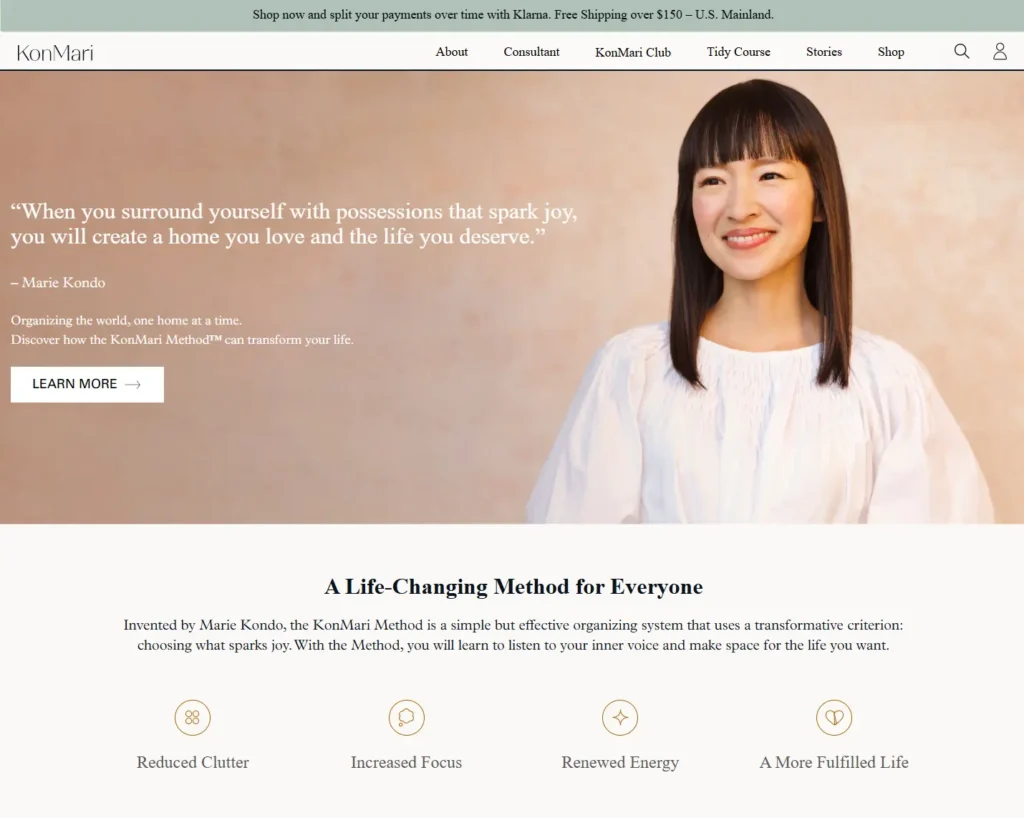
    Marie Kondo smiling, representing her KonMari Method as an example of turning passion for tidying into a global business

    Do you know Marie Kondo? She turned an unlikely passion – tidying up – into a multi-million dollar business. She didn’t just organize her own home; she created a methodology that solved a widespread problem, packaged it effectively, and delivered it to an audience desperate for solutions.

    Step 3: Develop Skills That Intersect With Your Interests

    Passion often follows mastery. The better you get at something, the more likely you are to enjoy it.

    This counterintuitive truth is backed by research. A study in the Academy of Management Journal found that entrepreneurs became more passionate about their businesses the more effort and progress they invested, regardless of initial interest levels.

    Think about it – when you first try something new, you’re usually terrible at it. And being terrible at things isn’t fun. But as you develop skill, you start experiencing small wins. Those wins trigger dopamine releases that make you want to continue. Eventually, what started as just a job can become a genuine passion.

    This is why Cal Newport argues that “passion is the side effect of mastery.” You don’t need to start with passion – you can develop it through dedicated skill-building in areas that align with your strengths.

    The key is choosing skills that:

    1. Have market value (people will pay for them)
    2. Match your natural strengths (you can become good at them)
    3. Solve problems you find interesting (to maintain motivation)

    This approach flips the traditional “follow your passion” advice on its head. Instead of starting with passion and hoping money follows, you start with marketable skills and allow passion to develop naturally through mastery.

    Step 4: Learn to Navigate or Create New Games

    In every domain, there are established “games” with clear rules. The corporate ladder game. The freelancing game. The startup game. Each has its own rulebook, scoring system, and victory conditions.

    You have two options: play an existing game well, or create your own game where you make the rules.

    Playing existing games requires understanding the unwritten rules. For example, in the corporate world, technical expertise alone rarely leads to advancement – you also need political savvy and relationship-building skills. Acknowledge these realities rather than fighting them.

    But the most interesting option is creating your own game. This is what innovators and entrepreneurs do – they establish new rules and systems that others eventually follow.

    Digital nomads are collectively creating a new game – rejecting the traditional work-location connection and designing careers around lifestyle rather than the other way around. Some take remote jobs, others build online businesses, and many combine multiple income streams. They’re not playing by old rules; they’re writing new ones.

    Think about PewDiePie (the gaming YouTuber) or Marie Kondo. Neither followed conventional career paths. They identified gaps, created their own rules, and built systems that aligned their passions with market demand.

    Creating your own game isn’t easy, but it offers the greatest potential for aligning passion and profit. The question to ask is: What unique combination of skills, interests, and market needs could I address in a way no one else is?

    Step 5: Accept the Grind Behind Every Dream

    Here’s an uncomfortable truth: even when you “do what you love,” parts of it will still feel like work.

    Look at Olympic athletes. They’re pursuing their passion at the highest level, yet their path involves brutal training sessions, injuries, sacrifices, and countless boring repetitions. The glamorous moments we see represent maybe 1% of their journey.

    Every dream job includes unglamorous elements:

    • The bestselling author still deals with publisher deadlines and marketing obligations
    • The successful chef spends hours on inventory and staff management
    • The digital nomad coder handles client calls at inconvenient hours due to time zone differences

    Jiro Ono, that legendary sushi chef, didn’t just make creative sushi all day. He managed a business, trained apprentices, and surely dealt with paperwork and regulations. But these tasks were worth it because they enabled his true passion.

    Black-and-white portrait of Mike Rowe, known for “Dirty Jobs,” emphasizing bringing passion into all types of work within the ikigai framework

    Mike Rowe, famous for the show “Dirty Jobs,” offers a balanced perspective:

    “Passion is too important to be without, but too fickle to be guided by. Which is why I’m more inclined to say, ‘Don’t follow your passion, but always bring it with you.’”

    This means approaching even mundane tasks with curiosity and excellence, finding aspects to appreciate, and connecting them to your larger purpose. The digital nomad lifestyle isn’t all beachside laptops and exotic locations – it includes visa headaches, unreliable internet, and loneliness. Those who succeed acknowledge these challenges rather than being blindsided by them.

    The key isn’t avoiding the grind but finding a grind worth doing – one connected to something meaningful enough that the difficult parts become acceptable costs rather than soul-crushing burdens.

    Building Your Ikigai: Personal Responsibility in Finding Your Path

    No one will hand you your perfect career. Finding that sweet spot where passion meets profit requires personal responsibility and often quite a bit of experimentation.

    The ikigai framework gives us a target: the intersection of what you love, what you’re good at, what the world needs, and what people will pay for. But reaching that intersection is a journey, not an event.

    Remember the energy mapping exercise from earlier? That’s your starting point. Pay attention to what energizes you versus what depletes you. Then gradually shift your life and work toward more energizing activities.

    This might mean:

    • Taking on specific projects within your current job that align better with your strengths
    • Learning new skills that bridge your interests with market demands
    • Starting a side business to test ideas without risking your financial stability
    • Redesigning your work environment to minimize energy drains

    A common misconception is that “doing what you love” means perpetual ease and enjoyment. That’s false. Real fulfillment comes from meaningful challenge – what psychologists call “eustress” or positive stress. It’s the satisfaction of conquering difficulties in service of something that matters to you.

    Be cautious about mistaking temporary pleasure for genuine passion. I can say with certainty that mindlessly scrolling social media or binging Netflix, while momentarily satisfying, doesn’t create lasting fulfillment. These activities provide cheap dopamine hits without the deeper satisfaction that comes from creation, mastery, or service to others.

    Portrait of Viktor Frankl, author of “Man’s Search for Meaning,” symbolizing the role of purpose in building one’s ikigai

    Viktor Frankl, who survived Nazi concentration camps, wrote that

    “life is never made unbearable by circumstances, but only by lack of meaning and purpose.”

    Finding work that aligns with your values and strengths is about creating a life worth living.

    As you build your path, remember that perfection isn’t the goal. You might not find work that checks all four ikigai boxes immediately. Start where you are:

    • If you have work that pays well but lacks meaning, look for ways to incorporate more of your strengths and interests.
    • If you’re pursuing passion but struggling financially, explore how your skills could solve problems others would pay to have fixed.
    • If you’re still discovering what energizes you, try short experiments rather than making dramatic leaps.

    The journey to finding work you love that also pays well isn’t linear. It involves wrong turns, unexpected discoveries, and continuous adaptation. But by approaching it with intention and awareness, you dramatically increase your chances of creating a life that feels both meaningful and sustainable.

    Your ikigai won’t look exactly like anyone else’s. That’s the point. It’s built on your unique combination of strengths, interests, and circumstances. The framework gives you a destination; the path is yours to create.

    Black-and-white portrait of Maya Angelou, whose definition of success ties directly to the principles of the ikigai blueprint

    As Maya Angelou wisely defined it:

    “Success is liking yourself, liking what you do, and liking how you do it.”

    That’s the real goal – not some externally defined version of achievement, but a life where your work feels aligned with who you are and what matters to you.

    The choice is yours. But now you can’t say you don’t know how to find the way.

  • Red Pill Your Career: From Replaceable Employee To Irreplaceable Creator [Part 3]

    Red Pill Your Career: From Replaceable Employee To Irreplaceable Creator [Part 3]

    This is the third article of a 3-part series – make sure to read the previous ones here:

    Don’t Wait Until Perfect

    Nothing prevents you from coming up with your own music right from the start. A huge number of musicians had no musical education at all. One of my musical favorites, Armin van Buuren, an electronic music composer, the king of trance, a man who has been at the top of world charts of DJs, performers, and producers of musical compositions with a huge number of awards, has no musical education, and he learned everything on his own.

    Armin van Buuren represents the leap from replaceable worker to a unique creator in his field

    All he did was write music from childhood. Naturally, he was inspired by other composers, other compositions, because at that time it was the dawn of electronic music. Instruments and ways to synthesize such music were appearing, which he, in fact, began to engage with, implementing all this in practice.

    Therefore, nothing prevents you from doing the same and trying to write your own music. At first, it will turn out pretty crappy. If someone listens to your first compositions, there won’t be anything good there. Most likely, there will be some kind of cacophony, maybe traces of talent will be noticeable.

    It’s important to determine to what extent this set of interests and skills that you use to write your life composition is your essence. That is, what comes from within you, what you don’t need to force yourself to do, what happens on autopilot, what brings you pleasure, what puts you in a flow state.

    If you find such a combination, it’s one of the most wonderful options. It’s that very proverbial “do what you love,” and the result won’t keep you waiting. If you manage to find such a story, you’re simply lucky.

    I think that eventually, if we follow the path I’m talking about, the result will be such an occupation. But this requires some effort.

    Switch Yourself From Listener To Composer

    The next stage is to switch your life paradigm from a music listener to its composer, to its creator. I really like this analogy with music because it very well reflects this dynamic.

    As soon as we gather, for example, around a campfire, and someone plays a melody on a guitar, starts singing a song, who is at the center of attention? Who has their minute of fame today? To whom are all eyes, ears, and all sensory perception directed? Naturally, to the one who is now performing the song.

    All who listen to it remain just listeners. But today’s star is the performer. In fact, the performer can even be mediocre, average, it doesn’t necessarily have to be Bob Dylan or Justin Timberlake. If you’re the only one who knows how to play the guitar somewhat, that will already be enough.

    Because everyone else, most people around the campfire, simply don’t know how to do it, and they will look at you with open mouths.

    Approximately the same thing happens when you start to create something, synthesize, create for this world. All the attention and all the laurels of success will not necessarily come to you right away, but you have a huge chance to do it. The chance is much greater than for those who just listen to this music.

    At the very least, if you keep practicing, continue in the same spirit, then maybe from songs by the campfire, you’ll move to a stage. First, a small concert hall somewhere in an abandoned village, then a larger hall, one day, possibly, it will be a city stadium, and then a world arena or festival.

    All of this, naturally, won’t happen immediately, not with the first attempt. Your skills will over time acquire a clearer cut, because to extract a diamond, you also need to make an effort. You need to get rid of all the extra facets and leave only those that we want to see, and polish them to a shine when you see the final result – a diamond.

    But if you look at it while it’s not yet cut, it won’t even cross your mind that something beautiful could come out of it.

    Your Taste Matters

    Black and white portrait of Henry David Thoreau, symbolizing simplicity, clarity, and deliberate living

    “If a man does not keep pace with his companions, perhaps it is because he hears a different drummer. Let him step to the music which he hears, however measured or far away.” – Henry David Thoreau, writer (Thoreau 1854)

    So, this is the stage of switching your life paradigm from consumption to creation. Become a creator of anything. This absolutely depends on you. What instruments you will play, how you will select notes for your melody, how you will play them, at what speed, what sequence you will perform – entirely depends on you.

    Here your uniqueness already begins to play a role, because even if you will try to imitate other people, play their compositions written by someone else, quite soon you’ll want to bring something of your own, some of your own shade.

    Any cover performed by a cover band still sounds different. It sounds in the style of this band. They bring something of their own to it, making it better or worse, that’s another question. But the main thing is that they have their own audience, their own listeners, who like it.

    This is a very important point to understand: if you create something useful and interesting for someone else, it can turn out to be useful and interesting. You need to create something. You need to create a product, content, community, benefit, and value in this world.

    Infinite Combinations

    Become a creator. The person you’re working for now is a creator; he created jobs, some product, a business that brings value to the society where you live. You are now helping him with this; you need to switch places with him, you need to create something of your own.

    It doesn’t matter what scale your creation will be. It can be a song by the campfire; it doesn’t have to be, and, most likely, it won’t immediately be a performance at a world-class festival. Although some may have such an opportunity, grip, and sufficient skills right now to organize something like that.

    Here the possibilities are limitless, and they depend exactly on how you combine your skills. Someone possesses the skill of networking and connections that will allow them to immediately perform on the world stage. If there are such opportunities, please use them.

    But if not, then it’s enough to start with simple guitar parts at home. Start creating something, any project. The main thing is that it should not be only for you, but for someone else. Maybe it will bring benefit to someone, at least one person.

    It’s important to feel that you bring value to this society. It’s important to understand that you give something, can synthesize with your hands, intellect, skills, abilities. Something that will make another person’s life at least a little better.

    You can share knowledge with them and tell what you learned, for example, from this portion of content, which, by the way, I am creating. And I hope that my content brings you benefit. And not only to you but to someone else.

    Some time ago I published an article “The Creator’s Manifesto: Align Passion, Purpose and Income While Contributing to Humanity”, where I cover this topic very deeply, so if need a little bit more inspiration on that, read this one.

    Some Will Listen

    The next point is understanding that your melody, in principle, is interesting, and someone will listen to it. How does this work? We all know about the existence of notes and musical instruments.

    If you choose a certain musical instrument, then someone has an auditory or emotional predisposition to it, I don’t know exactly how it works, but someone likes a certain genre of music where there is its own set of instruments, and another, for example, doesn’t like it.

    And if forced to listen to this music, they won’t get any pleasure. Although for another person, it’s an incredible delight. Creation works approximately the same way.

    There is a unique set of skills and interests that are interesting to some person. If they are interesting to you, then there will be another person who will also be interested in this set. And in the combination that you offer, it will be a unique variation, because this composition, made up of notes, will be inherent only to you.

    The first point is that someone will have a natural attraction to what you create, because for them it’s close, this genre hit their emotional state or somehow resonates with the frequencies of their brain and makes their body move in time with this music.

    As happens with me and electronic music. At times, I can’t do anything with myself and start jumping like crazy if I hear certain rhythms. It’s some kind of madness, an uncontrollable process. I don’t have this with other music, but with certain genres of electronic music and patterns that I can distinguish, this happens constantly.

    Choose You Genre

    The second positive point is that the story about niching, about what they say that you need to choose your niche, in this case becomes inapplicable, because you have a wide range of interests, as a person.

    This means that you can talk about all your interests, as I, for example, do in my content. Despite the fact that I’m an IT specialist from head to toe, this is my main profession and the main value that I now bring to society, it is built around IT, inside the world of information technology.

    I can talk about psychology, business, startups, personal brand development, other skills that I possess, about system analysis, and so on. This is an absolutely unique combination that is inherent only to me.

    But if you’re interested in at least one of them, you will like my content. Then my task is to present it in such a way that it is interesting to you. Do you understand what I’m getting at?

    A person who is interested in one skill can later become interested in another skill, another instrument that accompanies an instrument already known to them. And this combination of instruments and skills will resonate with this person. Why not.

    If you write about several of your interests in your personal blog, you can attract a much wider audience than if you write about one narrow interest, which has only one.

    I talked about this in detail in my previous article about how the most profitable niche is yourself: read Beyond Niching Down: The Multi-Interest Personal Brand Business Part 1 and Part 2.

    What to create

    So, the question arises, what to create. Here the question is extremely broad. You need to figure out for yourself in your life what is interesting to you, what is your musical staff and set of instruments with which you can create your future and write your melody.

    For me, the most obvious answer to this question is business. Because business is such a broad concept that, firstly, allows you to play your melody, and secondly, play it on the instruments that suit you specifically, which are that unique combination that only you will play.

    Note that there are different types of business in the world; this is conditionally a certain genre of music that you can join, and there is room here for everyone. If you, for example, are a fan of some genre of music, and tomorrow a new group appears that plays in the same genre, maybe with slightly different combinations, melodies, or a set of instruments, you will listen to them with pleasure. Why not?

    It’s the same with business. As soon as you offer a unique product that is inherent to you, to your business, there will be a consumer who will listen to your melody.

    Naturally, building a personal brand fits very well here, which is not limited to one product; there can be a combination of products, they can be different, but all are built around your interests, and this is the key point to understand.

    By combining what you have, your skills, knowledge, you can build something unique, some product that will help other people. That is, actually, what makes your melody one of a kind and allows you to attract listeners.

    If you are building a personal brand, your melody will attract other people. Your task is to make as many people as possible hear it, to invite people to the campfire, because if you just light a campfire and start playing, most likely, there will be no one around you.

    You need to make an effort to gather this party. It may cost money, some skills that you may not have, you may need help from other people, as is usually the case.

    You may know someone who knows how to organize events. And here, again, there’s an unlimited number of possibilities and combinations of what can be done, and for each person, it will work differently. It will be an absolutely different mechanism and its own story.

    So here there’s no need to get fixated on one solution that works for me but won’t work for you, and my path will be different from yours, even if we go in the same direction of building a personal brand.

    Creating Your Own Red Pill

    Black-and-white portrait of Friedrich Nietzsche, symbolizing radical self-overcoming and creator philosophy in the red pill career journey

    “The individual has always had to struggle to keep from being overwhelmed by the tribe. If you try it, you will be lonely often, and sometimes frightened. But no price is too high to pay for the privilege of owning yourself.” – Friedrich Nietzsche, philosopher

    In conclusion, I would like to direct you to not let this become just entertainment content that you read, say: “Wow, cool thoughts,” but do nothing with it.

    Start with something simple, you don’t have to immediately do something complex.

    Come up with your goal. Try to draw yourself that lighthouse that will guide you through this field, even if you’re not planning to turn away from it yet.

    At the very least, you will be looking at it with your peripheral vision, sometimes turning your head and body in its direction, maybe at some point you’ll think that it’s time to turn from this well-trodden path.

    Set yourself some goal, ask what you want from this life, how you want it to go.

    Start creating something, bringing into this world, being not just a consumer, but also a creator.

    Do something that can be useful for another person. Even if it seems stupid, uninteresting, or no one will be interested, it doesn’t matter, the main thing is that you share it.

    This is our main strength as a species on this planet. We know how to create, transmit information to other people, make decisions, think, create.

    Become a person who creates something, create your own red pill and finally get out of the matrix.

  • Red Pill Your Career: From Replaceable Employee To Irreplaceable Creator [Part 2]

    Red Pill Your Career: From Replaceable Employee To Irreplaceable Creator [Part 2]

    This is the second part of the 3-part series around the topic. Please read the first part if you haven’t already: https://anticodeguy.com/articles/red-pill-your-career-from-replaceable-employee-to-irreplaceable-creator-part-1/

    The Neuroscience of Self-Direction

    The Power Of Focus

    I’m actually not a fan of goal-setting, such worn-out techniques. But from a neuroscience perspective, this thing is explained very simply and banally.

    I think you’ve heard, maybe played, a game about focus. You can try to play it yourself. Usually, it’s conducted at various trainings on different topics. But it consists of the following.

    You need to sit down, close your eyes, regardless of where you are, or stand up, anywhere you’re currently located, close your eyes and then on command. You can obviously command yourself. Wait for a moment, open your eyes and try to count the number of green objects or objects where there’s green color.

    Then close your eyes and wait for some time, think of a new color, open your eyes and count objects, for example, of red color, then blue and so on. Until it becomes obvious what’s happening now.

    If you’ve never done this exercise, I highly recommend doing it. Here’s what it involves: As soon as you close your eyes and you’re told to find specific colors, you think there are no green objects around me, there’s nothing green here. Where do I look for them? I’ll count, probably about zero.

    Then you open your eyes and somehow can find them. And so you find one, a second, a third, and objects become much more than you imagined. Then you’re given the red color. You say, well, there’s definitely no red.

    Most likely, the leader or whoever is running this game saw that there are green objects around, so they suggested it. Actually, it doesn’t even depend on the color you choose.

    The point is that as soon as you focus on something specific, your brain will be directed to find what you desire. What you focus on, it will begin to see. It’s a survival mechanism.

    Ancient Hunters In Concrete Jungles

    When we have a task to focus on something, for example, on prey, if we need to get food, as happens with predators around us, everything else simply ceases to exist. The only goal is prey. Because your survival directly depends on it. Whether you will eat today or not.

    For humans, it’s about the same. When, for example, danger comes, the focus narrows very much, nothing else interests you. A huge portion of adrenaline is injected into the blood, which spurs your actions to preserve your life, protect yourself, find yourself in a safe situation, in a safe place, or get rid of the opponent. Narrow focus.

    Moreover, this happens even unconsciously, you don’t necessarily need to think about it consciously. The subconscious does all this work, it regulates the body, injecting the necessary hormones into the blood, regulating temperature, muscle work. Read my article about the “Hidden Superpower You Possess: How To Use Your Subconscious To Solve The Hardest Problems In Your Life”.

    Stories where, during an adrenaline rush or when your life or your child’s life is threatened, incredible strength appears that cannot be achieved in a normal state – this is not supernatural, it’s simple regulation of the body, which stores these resources and reserves of emergency energy needed precisely for such cases.

    We’re used to living in a fairly luxurious state in modern society, where we almost never have situations in life that directly threaten it. Of course, all this is relative, but if we take it as a whole, it’s much safer to live now than it was, for example, 20,000 years ago.

    I think this doesn’t need explaining, but the fact is that this is an extremely short period for changing human physiology evolutionarily. And the brain is quite plastic, but it’s still too little time to evolutionarily make it different. Therefore, all these tools remain functional.

    Direct You Life

    So what about the goal? When you have this goal, some direction, the subconscious, as it searches for, say, colors and objects that you suddenly begin to see, even if it seemed there were none around you, begins to notice this. This is the power of focus.

    When you focus your consciousness, your subconscious also focuses on it, and it begins to build corresponding neural connections and search for that very path that will lead you to the intended goal, for example, to find the red color.

    It works exactly the same with goals. Once you implant in your subconscious the idea that you need to achieve a goal, it begins to subconsciously look for ways to achieve this goal, even if you’re not actively thinking about it.

    Cognitive science confirms that focused goals direct our perception and cognitive resources in ways that make achieving the goal more likely. The classic Baader-Meinhof phenomenon (or frequency illusion) illustrates that when you focus on something (e.g. a color or a new word), you start noticing it everywhere – not because it suddenly exists more, but because your brain filters in what it previously filtered out.

    If you think about it actively, it accelerates the process. If you get as much information as possible about how these paths to this goal can be built, then this process will go faster. So there’s no magic, no esotericism. It’s simple neuroscience.

    A similar mechanism was very well illustrated in Christopher Nolan’s film “Inception,” one of my favorite movies that I can rewatch again and again. If you haven’t seen it yet, I recommend watching it.

    Scene from Inception with the team in the street, used as a metaphor for layered realities and escaping the career matrix

    The trick of the film is that such an idea can be implanted through a dream. And this is done not just in a person’s consciousness, but directly in their subconscious, because dreams are the result of subconscious work, as neuroscience shows today.

    We don’t know for sure yet, but in general, it happens unconsciously. And if we can reach this subconscious and directly implant an idea there, some goal, then we can just wait, and the person will find ways to achieve this goal themselves.

    Being Flexible

    So, basically, this is where the journey along the beaten path begins. You set yourself a beacon. How to get to it is still unclear, because you’re in the middle of a field, you turned off that path that all other people follow.

    It’s not clear how this field will lead you and in which direction. But if somewhere in the distance you have a beacon, some light, then this will serve as the direction in which you need to go. This is the very thing you need to focus on so as not to lose your way.

    Yes, your path may be thorny, you may have a huge number of obstacles. After the field, there may be a forest, then a river, then a sea that will need to be crossed, but in the distance, that same beacon that you set for yourself will continue to shine. This is the very goal that needs to be achieved.

    And you go relentlessly towards this goal, and the main thing here is not to change it along the way. Rather, it can be adjusted, and this is probably a very correct story, because you can’t know for sure where this path will lead you, and your goals, interests, your life will change.

    We are very flexible beings, and there’s nothing predetermined here that will be carved in stone. Goals can be flexible. A person by their nature is flexible, and if you have a goal from which you don’t deviate, it’s wonderful and excellent, and this will serve as an excellent method.

    Black-and-white portrait of Thomas Edison holding a glowing light bulb, symbolizing innovation and creative focus in career transformation

    We can see many examples of successful people who narrowly specialize in some one task, goal, hit this point ten thousand times. Thomas Edison immediately comes to mind, for example, who didn’t invent the light bulb, but discovered ten thousand ways how not to create a light bulb.

    This is also a working mechanism, but changing goals, changing your direction, adjusting it during life – this is normal, because you won’t know from the very beginning where you need to go. Your interests will change, you will receive new information, something will appear as new inputs, the situation around you will change, you will make new decisions.

    And this is wonderful. The main thing is not to forget that a person is a flexible creature, and our brain becomes rigid over time if we don’t teach it, don’t train it to constantly adapt, learn, and not be that rigid.

    Seven Notes For All Songs

    Black-and-white portrait of Sir Ken Robinson, representing education reform and creative self-discovery in the red pill career journey

    “Creativity is as important as literacy, and we should treat it with the same status.”Sir Ken Robinson, education reformer

    The next point is what does the matrix, education, and so on have to do with it. The thing is, as I’ve already said, there are certain scenarios in the matrix that are prescribed by that very education. This is that well-trodden path built by other people.

    If you follow it, the result will be absolutely predictable. You’ll end up exactly like other people. If this path suits you, okay, you can follow it and live a perfectly good life according to the norms that society has invented.

    If you feel that this is not your path and you want something else, then, as I’ve already mentioned above, you need to take a different path and compile your own list of skills and disciplines that you need to study to achieve your goal.

    What these skills are, what these disciplines are, I can’t tell you, because your path will be different from mine. I think you know what music is, I don’t need to explain that to you, and you’ve heard more than one song in your life, probably at least two. Maybe even three, or if you’re lucky – four.

    But you also know that there are only seven notes on a musical staff. And, strangely enough, based on these seven notes, we can create an almost infinite number of combinations and create new melodies.

    But such notes, disciplines, or skills that you can study to change your life, there aren’t just seven in the world, there are many more. There aren’t even seventy or seven hundred, there are many more of these skills.

    Now imagine how many possible paths, outcomes, careers can be built by combining these skills. Besides skills, there are also interests. It’s not just seven notes; there are also various instruments you can play. These are precisely your interests.

    By combining these notes and instruments, we get an infinite variety of musical compositions that we listen to, that we gladly use in life, that make us happier.

    And your task is to write your own composition, to select that very combination of skills and interests that belong exclusively to you and no one else, and to write your own song that you will play.

    To Listen Or To Create

    It’s important here to transform from a listener of music written by someone else into its creator. This is the second step. To understand that you have a certain set of skills, interests that you focus on, that you study at school, at university, in your specialty.

    And if this is the same set of skills that another person has, who, for example, graduated from the same specialty with you, then obviously you are interchangeable. Obviously, the two songs that you will play, using the same notes in the same combination on the same instruments, will sound different when you play them, but they will still be perceived roughly the same.

    They will be perceived differently by other people, but the melody itself will not change because of this. It will be the same song you’re trying to play, the same song already written by someone else.

    You take a certain template and play it on your musical instrument. If another person plays on the same musical instrument, possessing the same sciences, but essentially the same notes and on the same instrument, then the result of performing this song will be very similar to yours, which is actually what happens in life.

    We follow the same road, and the result turns out to be approximately the same. If you want a different result, you need to at least first learn to play these notes, learn to combine them with each other, possibly using the same skills, interests, and instruments that you own for now, but then adding something of your own.

    And that’s gradually how any learning happens. First, you imitate other people, other people’s songs, and then, when you have already developed the technical skills, you can come up with your own.

  • Red Pill Your Career: From Replaceable Employee To Irreplaceable Creator [Part 1]

    Red Pill Your Career: From Replaceable Employee To Irreplaceable Creator [Part 1]

    Most people in today’s society build their lives along pre-beaten paths. These scripts, written by someone else, get transmitted through upbringing, culture, education, and the examples of others around you.

    It’s a matrix that society has built around itself because it’s incredibly convenient for existence – the path of least resistance where you essentially don’t need to do anything. The answers to your questions already exist. You don’t even need to think about the meaning of the life you’re living.

    You become an NPC – someone who never receives the red pill to exit to the other side of this matrix. But if you’re reading this, there’s likely something that distinguishes you from an NPC. You’re like Mr. Thomas Anderson, who doesn’t yet know he’s Neo, but is ready to swallow the red pill if offered one.

    Why Most People Stay Trapped In The Matrix

    Here’s the problem though – Morpheus never shows up. The white rabbit you should follow never appears. And what seems like a white rabbit turns out to be a scam or another fairy tale designed merely to attract attention and generate online discussions. Everything veers off from where you actually want to go.

    So you continue living, walking in the same circle, the same beaten path that thousands, millions, hundreds of millions of people have already walked. Perhaps even billions, with billions more to follow behind you.

    Because finding the red pill isn’t so simple. Finding your own Morpheus takes serious effort. And it seems not every person can be Thomas Anderson, the chosen Neo.

    In human life, it’s not as simple as shown in films where there’s one main hero, one Neo, one Matrix, one Morpheus, and one red pill. One chance to exit the Matrix.

    Each person has their own Matrix. Each person is the main character in their own film. Each person can find their own red pill, swallow it, and begin to see the Matrix from the other side of the screen.

    Naval Ravikant portrait symbolizing leverage and transformation to creator career path

    We’ll return to a significant quote from Naval Ravikant, who once tweeted that someday there will be 8 billion monopolies. This will mean that each person living on Earth will exit the Matrix and become that Neo who swallowed the red pill, creating something for this world, creating their own version of reality.

    They won’t remain in that programmed environment where they can only be an NPC. So how do you do this? Even if your life is already following a beaten path, a script not written by you, and Morpheus doesn’t exactly want to come and give you the pill – in fact, he’s hiding from you, concealing himself and trying to stay as far away as possible.

    How We Become Dependent

    You don’t need Morpheus. You don’t even need the red pill. The trick is that you can invent your own. And you can connect to the Matrix and learn kung fu if necessary to achieve your goals, just like Neo in the film.

    So where do we start? You’re somewhere in the middle. Before you read these lines or watch this video, you’ve already lived a certain part of life. And likely, part of this life followed convention, that same script you want to break free from.

    You already have education, probably some school or university. It doesn’t really matter. You have some job. Maybe even remote, meeting modern digital nomad standards, but it’s still a job.

    Your income depends on it, and essentially your survival depends on it, because as soon as this job disappears, your income will immediately decrease or vanish completely, and you won’t even be able to pay for housing. Maybe you’re luckier and already have your own place, but then the question becomes what to buy food with.

    Basically, everything depends on some other person, by whose will you currently work and receive money. One day a decision might be made not in your favor, and suddenly everything changes. And unfortunately, this decision doesn’t depend on you, not on your will.

    Specialize Or Die

    You’d like to change this situation exactly in the opposite direction, so that all this happens exclusively according to your desire. Traditional education is structured in such a way that it implies a certain program. That is, there’s a template, schedule, and list of specific disciplines you need to learn and master.

    These disciplines are done in a specific order, and from the combination of different disciplines, a specialization is formed – the profession you’ll get, for which you’ll receive a diploma once you finish your education. A specialization you’ll be tied to for the rest of your life, or until you get another education, when another one will appear.

    And then your choice will be whether to follow this discipline, work in it, or go somewhere else. Of course, the combination of this education, your existing skills, and acquired skills can change this trajectory and direct you in different directions.

    For example, my specialty is systems analysis. But since I’ve been interested in computers, IT, web development, and so on since childhood, my career was built immediately in the IT field, and my first paid job was as a programmer. Since then, that’s how it’s been set.

    Although most of my classmates, even those who went to work in their specialty, started working in logistics because there was a specialization in systems analysis in that field. But for some reason, I always saw it differently.

    Systems analysis is an area that is used very widely and deeply specifically in information technology, and for me, it was always a path to IT. But the other guys saw it as a direct guide to action – that is, logistics is the specialization and, accordingly, the discipline of systems analysis. Okay.

    Determine your future

    Mark Twain illustrates how authenticity and originality define the irreplaceable creator mindset

    “I never let my schooling interfere with my education.”Mark Twain, author.

    Well, please answer me this question. How are you supposed to know what you want from life or which interests you want to pursue, what goals you want to achieve at 17-18 years old? How are you supposed to make this choice at 17 when all you want is to hang out with friends, go to parties, build relationships, and basically learn about life?

    How are you supposed to answer a question that essentially determines your fate – how your life will unfold? Because if the choice is made incorrectly, in a decade (put your own timeframe), some new technology appearing on the horizon might replace you. Hello, artificial intelligence.

    Studies show about 27% of jobs in OECD countries are at high risk of automation by AI, especially those involving repetitive skills. Indeed, jobs that follow a conventional template (the ones “thousands of people have done”) are exactly those AI can easily replicate. A Reuters report notes 60% of workers fear losing their jobs to AI.

    How are you supposed to see the future and understand that you could be easily replaced, that your life will simply be predetermined this way? You can’t, because the education system was built in an entirely different time, when everything was fairly predictable – much more predictable than now.

    When technological progress wasn’t changing the global landscape at today’s speed. When it was assumed that society’s development followed a certain trajectory, and it was clear that its advancement depended on human effort, on the direct impact of human labor, and how people invested their resources of time, strength (physical and mental), and intellect into societal development.

    However, even back then, science fiction writers speculated about how, at the very least, part of human labor would be replaced by robots, also created by humans but automated, and that humans wouldn’t need to perform complex physical tasks, for example. Well, now it’s the turn of intellectual tasks as well. We can delegate all this to machines, robots, AI.

    Attention, this opens up a dilemma about how I can restructure my life so as not to end up being replaced by robots, machines, or AI. And the answer here is actually very simple.

    The Path

    Ralph Waldo Emerson portrait symbolizing self-reliance in red pill career transformation

    “To be yourself in a world that is constantly trying to make you something else is the greatest accomplishment.”Ralph Waldo Emerson, essayist

    You need to turn off the beaten path of that same conventional scenario, which is pre-written by the same society I was just talking about above. If you follow it, the path is definitely predetermined. There’s simply no other option here.

    But as soon as you turn off it, many other options appear. And here lies the most interesting part. The number of these options is infinite. And your task becomes to find your own path, find your own road that will lead you to the desired result, not to the result desired by other people.

    And you need to start here with setting a goal to exit this matrix, to find that same red pill or, in our case, to create it yourself.

    It’s like in the movie “Limitless,” which shows a similar theme but from a slightly different angle, where the main character already received a magic pill that unlocks his mental abilities and allows him to use his brain at a much higher percentage of its real capabilities.

    But then, as the hero becomes dependent on this pill, his enhanced mental abilities allow him to realize that if someone invented this pill, he can synthesize it himself. Which is what he does. And this is the very solution that ultimately leads him to success.

    All of this is very allegorical and metaphorical. Maybe someday we’ll invent such pills, but the point is that you need to at least try to find another path that differs from the one where all the answers to questions already exist.

    You need to figure out how to do roughly the same thing he did. That is, invent your own pill, build your own path, blaze your own trail in a field where no one has walked yet. And in order to at least understand where to go in this field, if you’re not following the road that was built by other people, you need to understand the direction.

    And this direction is that very goal. The proverbial one.

  • Micro-Systems [Part 2]: The 5 Nails You Need To Nail to Create Micro-Systems That Follow You Anywhere

    Micro-Systems [Part 2]: The 5 Nails You Need To Nail to Create Micro-Systems That Follow You Anywhere

    If you haven’t read the first part of this 2-part series, I highly recommend doing so: https://anticodeguy.com/articles/micro-systems-how-daily-habits-create-more-flexibility-not-less-part-1/

    The second part is gonna be practical, so let’s start immediately with the steps you can apply to build your stack of micro-systems (aka atomic habits).

    Nail 1: Identify High-Impact Areas for Automation

    So, how to apply this in practice? Try to develop some micro-system that you will follow blindly and automatically.

    Naturally, there should be the stage of choosing the habit itself, that is, just think about what you would like to do, what will improve your life and start bringing it in order.

    So, the first step in creating micro-systems is identifying which areas of your life would benefit most from automation. For digital nomads, this typically includes physical routines (exercise, sleep), work startup sequences, environmental organization, and relationship maintenance.

    Look for areas where you experience the most friction or where inconsistency causes the biggest problems. These are prime candidates for micro-systems. As a digital nomad, consistency becomes even more crucial because your environment is constantly changing.

    Remember that your micro-systems should be location-independent by design. They need to function whether you’re in a luxury condo in Singapore or a budget guesthouse in Bali. The goal is to create habits that travel with you rather than being tied to specific places or equipment.

    Nail 2: Logical Validation and Self-Justification

    Then, determine how self-motivation happens for you.

    For me, for example, it’s a logical explanation, because I think rationally. That’s how my brain works; if I don’t explain to myself logically why I need this, it won’t happen. Perhaps you, for example, think more visually, and you need to draw some picture, maybe a vision board that will help you justify the need to make this habit. Do it.

    For me, the logical justification of a habit is critical. If my rational brain can’t understand the purpose and benefit, the habit won’t stick.

    Take some time to articulate exactly why a particular habit matters to you. Write it down. Make it personal and meaningful. For example, with my daily walking habit, I recognized that:

    • It helps counterbalance the hours I spend sitting at my computer
    • It prevents back problems by strengthening my spine and posture
    • It gives me time to think and process ideas, and create content (I dictated this article during my walking session)
    • It allows me to explore and connect with new places

    Once your logical brain is convinced, the habit faces much less internal resistance. You’ve essentially created a self-persuasion mechanism that makes compliance feel natural rather than forced.

    This also builds discipline, because once you learn to do this automatically, performing other tasks that you need to do with willpower becomes roughly just as not particularly costly. That is, you don’t need to use willpower.

    I’m not saying I’ve completely gotten rid of this, but I have no problems with starting to work on something if I already have a developed mechanism or algorithm for how I do it. That is, for example, I sit down at the computer, open certain programs, and immediately start working.

    There’s again a certain algorithm of actions, what I do first, for example, since I record these notes during walks, add material here, the first thing I do is save these notes to the computer, transcribe them, and then work with the text.

    Save it in the right format in my notes system. Then look at my post schedule and so on; in general, this is also a micro-system within the work system that allows me to do these tasks on complete autopilot without any distractions and without thinking about what I need to do at the next stage. No, all this happens almost automatically.

    If you’re a more emotional person than rational, then maybe you need to create some emotional attachment to justify a reason why you need this particular micro-system in your life. Or maybe some visualization could work as well. That’s a black box for me, so I leave this part for you to handle.

    Nail 3: Immediate Implementation (No Waiting)

    I’m surprised by all these stories about New Year’s resolutions, when you set yourself some goals for the year, start from the New Year, or start something from Monday. Of course, I did all this, like any other person subjected to media.

    But at one point, I realized how worthless and pathetic this thing is because it’s just self-justification and looking for some excuse to improve your life. If you want to improve your life, do it immediately and without any excuses; you don’t need to wait for the New Year to start a new habit.

    If you want to walk, okay, today is your first day, go for a walk. You can make up as many justifications in your head as you want, come up with reasons why you can’t do it today and need to start tomorrow, but this is the first sign that the habit won’t stay with you for long. Most likely, you’ll give up pretty quickly.

    A recurring lesson from both research and my experience is not to wait for a New Year, a Monday, or a burst of motivation to ignite a micro-system. Studies show only about 9% of people keep their New Year’s resolutions. The “fresh start” effect might give a temporary boost, but it often fades quickly.

    When I decided to start my daily walking habit, I didn’t wait for some perfect starting point. I made the decision and went for a walk that very same evening. There was no preparation period, no gathering of equipment, no waiting for the right moment. I just started.

    This immediate action sends a powerful signal to your brain that you’re serious. It also bypasses the mental negotiation that often leads to procrastination. Studies on behavior change show that “just getting started” (even for a few minutes) often overrides our brain’s tendency to imagine the worst and delay taking action.

    If you keep finding excuses not to start, there are only two possibilities: either the habit isn’t truly important to you, or you need to simplify it until it becomes effortless to begin. This is where the next nail comes in.

    Nail 4: Simplify Until Failure-Proof

    Of course, if you fill your day with such micro-systems, it seems there’s no space at all for maneuver or any freedom. But in reality, this isn’t the case, because if you have an understanding about habits and knowledge that you won’t betray yourself, conditionally, with complete confidence in this, there’s nothing terrible about missing one day of morning training if you’re on a flight today and having a jet lag.

    And immediately after the plane, after you get to the hotel, you have nothing left but to lie down to sleep and recover after a long flight. Okay, when you wake up, you’ll exercise again, and everything will fall back into place, that is, it will bring this in order.

    This is normal; in life, there are many such things that will knock you off course, but the main thing is to have a mechanism that will put you back on track.

    British professional cycling offers a powerful example of how small improvements compound. Under performance director Sir Dave Brailsford, the team implemented a philosophy called “marginal gains” – improving every tiny aspect of training and equipment by just 1%. These micro-changes included better bike ergonomics, teaching riders precise hand-washing techniques to avoid illness, and even painting the inside of the team truck white to spot dust that could impair bike maintenance.

    Each improvement seemed minor, but together they transformed British cycling from mediocrity to dominance. Within 5 years, Britain won 7 of 10 gold medals in track cycling at the 2008 Olympics, and British cyclists then won the Tour de France 5 times from 2012-2017.

    This case illustrates how a system of micro-habits seeking small improvements can yield world-class outcomes. The consistency of many micro-system outperformed any single major innovation.

    If you notice a pattern that you’re immediately looking for some justifications, then either forget it, you don’t need this habit, and try to change it, or try to overcome this urge with willpower and just do it immediately, without postponing, without transferring to another day.

    If you’re looking for justifications, it means either you don’t want to do it, or you don’t need this habit.

    When I created my walking habit, I deliberately made it extremely simple. I didn’t worry about tracking exact steps, buying special shoes, or following a specific route. I just put on whatever footwear I had (beach sandals) and went outside. The simpler you make a habit, the more likely it is to stick, especially when traveling.

    For digital nomads, simplicity is critical because complexity creates failure points. Equipment-dependent habits become vulnerable when you’re on the move. Location-specific routines collapse when you change cities. The key is to strip each habit down to its essential core that can be performed anywhere, anytime, with minimal requirements.

    Nail 5: Build the Feedback Loop

    If some tool is important to you, streak trackers work very well, that is, when you mark in the calendar that you did it, or keep track of the number of repetitions. This works very well for anonymous alcoholics when they keep track of how many days without alcohol they’ve had.

    And it’s the same here. How many days you’ve already maintained your habit, this will allow you to keep some track, which will be difficult to get off, because as soon as you see that you have progress, you’ve already repeated this habit a hundred times, you’re like: “Wow, cool, I can do this, it’s a great achievement, you won’t want to interrupt it.”

    This works excellently, so use it. And finally, the last stage is to adapt this system. Over time, it may change, and maybe you’ll want to make changes to it, and that’s normal.

    Adapt it to your lifestyle, maybe you won’t like something about it, maybe you’ll need to redo, add, or remove some exercises. Everything is very flexible here; don’t forget that you’re a flexible, non-rigid person who adapts to the surrounding environment and to what happens to you, to any situation.

    Black-and-white portrait of Jerry Seinfeld, referenced in micro-systems creation steps article for his productivity system "don’t break the chain"

    The comedian Jerry Seinfeld’s productivity system offers another powerful example of feedback loops in action. Seinfeld used a simple wall calendar to mark an “X” on each day he wrote jokes.

    “After a few days you’ll have a chain,” he advised a young comic. “You’ll like seeing that chain. Your only job is to not break the chain.”

    This simple tracking routine enforces consistency. By focusing on the process (write daily) rather than the outcome (write something brilliant), Seinfeld’s habit system kept him productive even on uninspired days. This approach works beyond comedy – research shows that consistent repetition is the single biggest factor in a behavior becoming automatic.

    A key study found that participants who repeated a simple health behavior daily took on average 66 days for it to become “second nature,” though individual times ranged from 18 to 254 days. They also found that missing one day did not doom the habit – what mattered was getting back on track and continuing, much like Seinfeld’s chain concept.

    When the Systems Run Themselves, You Run the World

    For anyone living a location-independent lifestyle, micro-systems are more than just productivity hacks – they’re the invisible architecture that creates stability amid constant change. While your environment shifts from city to city, these portable routines provide a grounding framework that keeps you productive, healthy, and centered.

    As we’ve seen, there’s a beautiful paradox at work: small constraints actually create greater freedom. By automating key aspects of your day, you free up mental bandwidth for creative work, meaningful experiences, and spontaneous adventures. The micro-systems themselves require minimal willpower once established, running on autopilot while you focus on what truly matters.

    Black-and-white portrait of James Clear, referenced in micro-systems creation steps article for his insight that every action is a vote for the person you wish to become

    The most powerful aspect of micro-systems is how they gradually shape your identity. As James Clear writes,

    “Every action you take is a vote for the person you wish to become.”

    Each time you perform your morning exercise routine, regardless of where you are in the world, you’re reinforcing your identity as someone who takes care of their body. Each time you follow your work startup sequence, you’re strengthening your identity as a focused professional.

    Over time, these habitual actions don’t just change what you do – they change who you are. The systems become part of you, operating effortlessly in the background while you navigate the world with confidence and ease.

    So start small. Choose one area where a micro-system would create the most immediate value in your life. Design it to be portable, simple, and logically compelling. Implement it today – not Monday, not January 1st, but right now. And remember that flexibility comes not from absence of structure, but from having the right structures in place.

    The world is full of chaos and uncertainty. Your micro-systems are the stable foundation that lets you embrace that chaos with confidence, knowing that regardless of what changes around you, you have the framework to stay on track.

    Use it, don’t be rigid, and develop your life for the better.

  • Micro-Systems: How Daily Habits Create More Flexibility, Not Less [Part 1]

    Micro-Systems: How Daily Habits Create More Flexibility, Not Less [Part 1]

    Throughout my life, for as long as I can remember (except maybe very early childhood), I’ve had various habits. Over time, I’ve become more conscious about them, and now I build a set of habits that align with my goals, with what I want to achieve, and so they help me on my journey.

    When I talk to people, they tell me they can’t start a habit, or they can’t quit one, or do something else. This always surprises me a bit because my method of creating habits, if I need something, doesn’t cause much discomfort. I don’t have a pattern of falling off track or giving up on a new habit. No, it’s all fairly easy.

    Honestly, I don’t know what the secret is, but I’ll try to figure it out here. I call these things micro-systems, and I’ve surrounded my life with them from practically every angle. They give me flexibility in my actions while keeping me on track. And this doesn’t happen because I have to force myself to do something with willpower – no, it all happens automatically and naturally.

    This isn’t just my personal experience. Research from Duke University found that about 45% of our daily actions are habitual – performed in consistent contexts without active decision-making. In other words, nearly half of what we “decide” to do each day isn’t really decided at all – it’s governed by memory and environmental cues. These small routines (“micro-systems”) can powerfully steer our lives for better or worse.

    My Very First Micro-System

    Let me tell you specifically what I’m talking about. In childhood, I saw my father do morning exercises every day. I asked him why he did it, and he told me that, first, it’s an excellent way to wake up, physical activity, and second, it allows him to stay in shape.

    I think this served as an example for me that stuck with me for life, and I later started applying it myself. I didn’t start doing it right away, but looking back, I realize how much it influenced me because since I started exercising at 15, I adopted this habit from him and also began doing morning exercises, and for more than two decades since then, I’ve continued doing it every day.

    As a rational person, my brain needs a logical explanation to justify an action I’m taking. I have a huge number of logical chains that explain what I do in my head.

    And naturally, justifying daily exercise is quite easy for me. There are many positive aspects; I don’t think there’s a need to discuss them here. But basically, once a logical chain or pattern of explanation settles in my head about why I need to do something, the habit stops being questioned. I can just do it without any hesitation, doubt, or obstacles.

    In other words, I don’t need to explain it to myself each time; I just do it automatically. First thing, after I go to the bathroom in the morning, I do my exercises. And this habit lives with me regardless of where I am.

    Why Most Digital Nomads Struggle with Consistency (And How Micro-Systems Fix This)

    Because as a digital nomad, I travel and change my living location quite often compared to a settled person. And this doesn’t hinder me. Rather, it’s the opposite – I’ve created a set of exercises that are, first, universal, and second, I can do them anywhere, I don’t need any equipment or anything else, I literally just need my body. Ok, and a hard floor.

    So wherever I am, whether in Singapore, living on the last of my saved money on the roof of a condo where I rented a room with Asian students, or in a guesthouse in Bali where a room cost $300 a month, or in a house in Thailand, or in a hotel in Amsterdam – I can do these exercises, it absolutely makes no difference.

    And most importantly, it allows me to stay on this line, understanding that I’m at least monitoring myself to stay in shape, paying attention to it every day, every morning, I have this wake-up methodology.

    And this is one of the morning rituals that disciplines – because if you do one thing every day, regardless of what’s happening in your life, it allows you to put yourself back on track, back on the path you’re following.

    Because it’s something that remains unchanged, it means that even if you’ve gone off track somewhere, you continue going in the right direction. At minimum, that’s the feeling this approach gives.

    This is more powerful than most people realize. Behavioral research emphasizes that much of our behavior is driven by habit rather than conscious decision. The classic habit loop of cue, routine, reward explains why micro-habits are so effective. Each repetition strengthens the association between the cue and the behavior in our neural pathways. For example, the sight of your workout clothes laid out (cue) leads to exercising (routine) because you anticipate feeling energized (reward).

    When behaviors are repeated, the brain “chunks” them into automatic sequences to save energy – this is the essence of automaticity. Waking up and immediately doing 5 minutes of yoga can become as reflexive as brushing your teeth. The benefit is that automatic habits consume far less cognitive bandwidth and willpower than actions that must be consciously willed each time.

    It’s Cleaning Time!

    Probably the second similar reason I saw in childhood was regular cleaning. Every Saturday, my mom cleaned our house, and I helped her. That is, whatever I could do there, I don’t remember, vacuuming, dusting. The specifics aren’t important, but it was my responsibility. To clean and tidy up.

    Because, as we know, the universal law of the universe is the tendency toward entropy. And this applies to your living space as well. If you don’t look after it for a long time, it will be subject to the tendency toward chaos. Consequently, all things start to be scattered, dust and dirt accumulate. And if you don’t make efforts to clean and clear all this out, over time it turns into a dirty mess that’s unpleasant to be in.

    I wrote a separate article on how to organize your mind – “The Hidden Mental System Behind a Successful Life”, please read it. And an important part here is precisely organizing the space around you. Which is what such regular cleaning allows.

    This formed another habit for me. I don’t always clean now, for example. I can, if I don’t have time for it but have money, pay a cleaner who will do it all for me. But I prefer to maintain order by distributing it into micro-systems.

    For example, right after eating, I wash the dishes, thus keeping things tidy. And when I do this, I do it according to a certain system. For example, I have specific places for each item on the drying rack. For each procedure, there’s a specific algorithm of actions.

    For instance, which items I wash first, which I wash last. They probably don’t have any special meaning in terms of logic or some impact on the result. But essentially, it doesn’t matter, because for me, it’s just a system that allows me to perform all these tasks without thinking.

    I don’t have to think about them and somehow make decisions while performing these actions, what should I do. There’s a certain algorithm that I follow unquestionably, and there’s no variability here. It will be performed the same way each time, and each time it will bring the same result.

    What does this give me? Besides the fact that I don’t have to worry about what I need to do and how I need to do it, my mental energy isn’t spent on this. All of this is performed on complete autopilot, and it means I can, for example, spice it up with something useful.

    Like listening to a podcast, which I’m listening to now, and getting some new information I want. These are basic and obvious examples that give an understanding of how you can arrange your habits.

    How To Create Micro-Systems

    As soon as you’ve accumulated enough repetitions of the same action, it becomes automatic. This is the story about a certain number. Some think it should be 21, some 40 or 70. The specifics don’t matter.

    It’s about how you don’t have any questions about doing it; you just train yourself. We have such an inclination. No matter how much we want otherwise, we are still animals by nature, and our brain is designed to seek safety and calm.

    For it, the presence of such systems is equivalent to safety. Because it knows what to do, and it gets involved in this habit quite quickly, and even automatically develops this pattern, which allows us to do it all automatically.

    Just as food is automatically digested once it enters the body, as long as the body is completely healthy and has no blockers that prevent it from performing this function.

    A key cognitive reason to rely on habits is to avoid decision fatigue. Every time we make a choice, we tax our limited mental resources. Throughout a long day of decision-making, the quality of decisions can deteriorate. To combat this, many successful people eliminate trivial choices by routinizing them.

    Black-and-white portrait of Barack Obama, referenced in micro-systems daily habits article for his decision-making routine

    Former U.S. President Barack Obama once said,

    “You’ll see I wear only gray or blue suits… I’m trying to pare down decisions. I don’t want to make decisions about what I’m eating or wearing because I have too many other decisions to make.”

    This is a common strategy – Steve Jobs had his black turtleneck, Mark Zuckerberg defaults to a grey t-shirt – all to conserve willpower for high-priority work.

    Perhaps, thanks to such self-training and these micro-habits or micro-systems, as I call them, I have no problems with developing new habits.

    Let’s Go For A Walk

    For example, not long ago, I started walking 10,000 steps every day, the proverbial number, and for me, it was very easy to adopt this new habit.

    I didn’t do it from New Year’s, not from a new month, not from some key event in my life, not from Monday. I just decided one day that, okay, I want to walk every day now, I created a description and logical chain in my head of why this is important to me, why I will do it, such a self-justifying mechanism for myself.

    And that same day, as soon as I made this decision, in the evening I went for a walk. That’s basically it. And since then, it’s been a daily habit without a single break.

    I don’t need to endure 21 days for this, counting down, keeping track of streaks or anything else. No, it’s all done quite simply, and I simplify everything a lot. Someone might start complicating things, like “I need a pedometer, I need a tracker, I need special shoes to walk in.”

    No, I put on my beach sandals and went for a walk without any pedometers, without anything. I really don’t care. And I’m not so fanatical about it that I count my steps every day.

    But to achieve the desired results, one of which is straightening my own back, since I spend a huge amount of time at the computer every day. I want to do something preventive about this so that my back doesn’t break at some point.

    And one of these exercises that strengthen the back muscles, the sacrum, is walking. And I’ve always loved, love walking around the city, especially when I arrive somewhere new, my favorite activity is to just walk on foot in a new place.

    Go out and walk wherever I like, looking for new places. Exploring the area on foot is one of my favorite activities – looking at what’s happening around.

    And thus I have this logical chain in my head, I don’t need anything else, I don’t need pedometers, trackers, cool shoes for this.

    Just go and that’s it. You have two legs; basically, that’s all you need for this. Especially if you live, for example, in a rural area, you can do it even completely without shoes. And that would be even better. Here, the wish to touch grass is automatically fulfilled with the new habit.

    That’s it for this article. Next time we will dive deep into the practical steps of a system on how to create micro-systems. Yeah, we’re going meta with this.

  • Systems Analysis 101: The IDEF0 Secret Weapon That Will Transform Your Business Thinking

    Systems Analysis 101: The IDEF0 Secret Weapon That Will Transform Your Business Thinking

    You’ve mapped out your business workflows, but something still feels off. You have a vague idea of how your processes work, but when you try to optimize or delegate them, things get messy. You end up micromanaging, constantly putting out fires, and feeling stuck in your business instead of scaling it.

    This is exactly why 75% of organizations struggle with standardizing and automating their processes, according to recent BPM maturity research. Most entrepreneurs can describe what they do but fail to visualize how everything fits together, who’s responsible for what, and under which conditions tasks should happen.

    If you’ve been following along with my previous articles on Systems Thinking and the Black Box Method, you’re already ahead of the curve. You understand how to see the whole system and how to break down processes into inputs and outputs. But now we need to fill in the crucial missing pieces: the who, the how, and the when of your business processes.

    Today, I’m sharing the next level of systems analysis – the IDEF0 framework – a powerful yet simple modeling technique that big consulting firms use to transform chaotic businesses into streamlined operations. This is a practical skill that will give you the same analytical superpowers that consultants charge hundreds of thousands of dollars to apply.

    The Four-Component Framework That Brings Order to Chaos

    By now, you’re familiar with the basic system components we covered previously: elements (the objects or nouns in your system) and functions (the verbs or actions that transform inputs into outputs). You already know how to visualize these as “black boxes” with inputs going in and outputs coming out. (Again, read my previous articles if you have no clue what I’m talking about here, it will set the foundation for this material.)

    But if you’ve tried mapping your business this way, you’ve probably noticed that many crucial elements don’t fit neatly into this input-output model. What about the people who perform the tasks? The tools they use? The rules they follow? The triggers that start each process?

    This is where IDEF0 comes in, filling these gaps with two additional components that complete the picture: mechanisms and controls.

    Basic IDEF0 process mapping black box diagram with labeled inputs, outputs, controls, and mechanisms

    Let me explain each part of the IDEF0 model:

    1. Functions (the black boxes) – These are the activities that transform inputs into outputs, represented as rectangles with a verb phrase describing what happens.
    2. Inputs (arrows from the left) – These are the materials or information that get transformed by the function.
    3. Outputs (arrows to the right) – These are the results produced by the function, the transformed inputs.
    4. Mechanisms (arrows from the bottom) – This is the secret sauce. Mechanisms are the people, tools, or resources that perform the function. They answer the question: “Who or what does this?”
    5. Controls (arrows from the top) – These are the rules, constraints, or triggers that govern when and how the function is performed. They answer the question: “Under what conditions does this happen?”

    For example, let’s say you create content for your business. One function might be “Edit Video.” The input would be raw footage, and the output would be the finished video. But the mechanism would be the editor (person) and editing software (tool). The control might be your content calendar that triggers the editing process one week before publication.

    IDEF0 process mapping diagram showing video editing with inputs, outputs, controls, and mechanisms

    What’s powerful here is how this helps you see your role in the system. When I first mapped my content creation process this way, I realized something important. By labeling the mechanism as “Editor” (a role) rather than “Me” (a specific person), I could suddenly see that I didn’t have to be the one doing this task! I could hire someone else to perform this function while I focused on other areas of my business.

    This simple shift in perspective is why process modeling is so powerful. It helps you separate yourself from your business, showing you exactly where you can delegate or automate.

    Another crucial insight comes from the controls. When you map out your processes and see a control labeled “Manager’s command” or “My decision,” that’s a red flag. It means the process relies on manual intervention rather than a clear rule or automated trigger. These are prime opportunities for automation or systematization.

    Humorous IDEF0 process mapping diagram with red flags as a control input for making more money

    The research on this is clear: organizations that document and optimize their processes see significant gains. According to industry data, 21% of companies saved 10% or more of their costs by optimizing processes. Even more impressive, companies using BPM (Business Process Management) techniques increased their project success rates by up to 70%.

    But here’s the kicker – while 69% of organizations have documented their processes, only 4% actually measure and manage them. This means there’s a massive opportunity for those who not only map their systems but actively optimize them based on what they discover.

    Your Step-by-Step Process for Mapping Any System

    Ready to transform your chaotic business processes into clear, optimizable systems? Here’s how to create your first IDEF0 model:

    Step 1: Choose a Process That Feels Chaotic

    Pick a business process that currently feels disorganized or that you want to delegate. It could be your content creation workflow, client onboarding, product development, or even your morning routine if you want to practice on something simpler.

    Define the goal of this process clearly. This will be your north star as you map out the system. Write it down at the top of your page.

    Step 2: List Your Objects and Functions

    Create two separate lists:

    • Objects: All the physical or information items that flow through your process
    • Functions: All the activities or transformations that happen

    For a content creation process, objects might include raw footage, B-roll clips, music, edited video, etc. Functions might include record video, gather assets, edit video, publish video, etc.

    Don’t worry about organizing them yet – just brain dump everything involved.

    Step 3: Draw Your Function Boxes

    Grab a blank sheet of paper (yes, I recommend starting on paper) and begin drawing rectangles for your main functions. Arrange them in a rough sequence from top left to bottom right.

    Each box should contain a verb phrase describing the function. For example, “Edit Video” or “Publish Content.”

    Don’t worry about getting the arrangement perfect yet – you’ll refine this as you add connections.

    Step 4: Connect Functions with Object Arrows

    Now start drawing arrows between your function boxes to show how objects flow through the system:

    • Inputs enter from the left
    • Outputs leave from the right
    • Controls enter from the top
    • Mechanisms connect from the bottom

    Label each arrow with the name of the object or resource it represents.

    As you do this, you’ll likely realize you’ve missed some functions or objects. That’s normal! Add them as you go.

    Step 5: Identify Your Mechanisms

    For each function box, ask yourself: “Who or what performs this activity?” This is your mechanism.

    Remember, a mechanism can be a person (by role, not name), software, equipment, or any resource that executes the function. Draw these as arrows entering from the bottom of each function box.

    This step is particularly eye-opening. When I mapped my video creation process, I realized I had labeled myself as the mechanism for nearly every function! This made it obvious why I felt so overwhelmed – I hadn’t created the mental space to consider delegation.

    Step 6: Define Your Controls

    For each function, identify what triggers, constrains, or guides its execution. These controls enter from the top of your function boxes.

    Controls might include:

    • Standard operating procedures
    • Decision criteria
    • Schedules or deadlines
    • Quality standards
    • Event triggers

    This step reveals where your process relies on ad-hoc decisions rather than clear rules. A study by Forrester found that BPM initiatives yield 30-50% productivity improvements in part by reducing these manual interventions.

    Step 7: Analyze for Gaps and Opportunities

    With your completed diagram, you can now see the entire system at once. Look for:

    • Missing arrows: These indicate undefined flows of information or resources
    • Manual controls: Places where you’re micromanaging instead of establishing clear rules
    • Overloaded mechanisms: People or tools handling too many functions
    • Bottlenecks: Where outputs are needed by multiple downstream functions
    • Automation opportunities: Especially where controls could be systematized
    W. Edwards Deming portrait, quality management expert quoted in IDEF0 process mapping article

    As quality management guru W. Edwards Deming said,

    “If you can’t describe what you are doing as a process, you don’t know what you’re doing.”

    Your IDEF0 diagram now gives you that description – making the invisible visible.

    One particularly powerful pattern is to arrange your functions so that the output of one becomes the control for the next. This creates a natural flow where each step’s completion triggers the next step, reducing the need for manual intervention.

    For example, in a content process, the “Approved Content Plan” output from your planning phase becomes the control (trigger) for your “Create Content” function. This way, the system flows naturally without requiring constant decisions.

    Full IDEF0 process mapping diagram of a content creation workflow with functions, controls, and mechanisms

    Remember, process mapping isn’t just theoretical – it drives real results. According to Gartner, organizations that embrace BPM techniques increase their project success rates by around 70%. Why? Because they make implicit knowledge explicit, eliminate unnecessary steps, and create systems that don’t rely on heroic individual efforts.

    From Visualization to Automation: Your Path to Freedom

    The power of IDEF0 modeling goes far beyond making pretty diagrams. It creates a shared understanding of how your business actually works – not how you think it works.

    When you look at your completed model, you’ll see your business in a new light. You’ll identify:

    • Functions that could be delegated to team members or contractors
    • Manual controls that could be replaced with automated triggers
    • Mechanisms (people) that are overloaded with too many responsibilities
    • Missing or unclear controls that cause confusion and delays
    Russell Ackoff portrait, systems thinking pioneer referenced in IDEF0 process mapping article

    This visualization is the first step toward true business freedom. As systems theorist Russell Ackoff noted,

    “The righter we do the wrong thing, the wronger we become.”

    IDEF0 helps ensure you’re optimizing the right processes in the right ways.

    I’ve used this exact technique to transform a lot of processes at my previous jobs. By identifying each function, mechanism, and control, I could see exactly where was the bottlenecks and the opportunities to improve.

    If you’ve been following my systems thinking series, you now have a complete toolkit for analyzing and optimizing any process in your business or life:

    1. From “The Power of Systems Thinking,” you learned to see the whole instead of just the parts.
    2. From “The Black Box Method,” you mastered the input-output model of process definition.
    3. And now, with IDEF0, you can map the complete system, including who does what and under what conditions.

    The consulting firms of the world charge hundreds of thousands for this kind of analysis, but you now have the framework to do it yourself. This is a practical skill that will transform your business thinking and execution.

    Start small. Pick one process that’s currently chaotic or time-consuming. Map it out using the steps above. Then look for opportunities to delegate, automate, or eliminate unnecessary steps. You’ll be amazed at what becomes obvious once you see the whole system laid out in front of you.

    Peter Drucker portrait, management thinker quoted in IDEF0 process mapping conclusion

    Remember, as Peter Drucker wisely said,

    “There is nothing so useless as doing efficiently that which should not be done at all.”

    IDEF0 helps you not only do things right but ensure you’re doing the right things.

    Your freedom comes from building systems that work for you. This framework is your secret weapon for creating those systems.

    Now grab that pen and paper, and start mapping.